Research briefs

Keep up to date with the latest research on disaster risk and resilience on the PreventionWeb knowledge base.

Explore cutting-edge research on disaster risk reduction and resilience through PreventionWeb's dedicated research briefs section. Our platform curates and highlights the most recent academic studies, providing valuable insights into disaster risk management. Each research brief distills key findings from peer-reviewed journals and academic publications.

Submit a research brief.

These briefs are designed to keep you informed about the latest scientific advances. Links to the full publications are always included, ensuring easy access to in-depth knowledge. Please note that this section exclusively features academic research, distinct from reports by international organizations or Non-Governmental Organisations.

Uploaded on
Aerial view of people walking across exposed sandy sandbars on Danube River, highlighting extreme drought and low water levels caused by climate change.
Research briefs

The new study investigates how climate change contributed to the weather conditions experienced during summer 2026, with a particular focus on July's dry conditions and the role of increasing atmospheric drying.

Maynooth University
Heatwave on the city
Research briefs

Heatwaves over land worldwide are beginning earlier, ending later, and occurring over longer seasons, while the first heatwave of the season has recently shifted toward faster onset, according to a new study published in Nature Climate Change.

Chinese Academy of Sciences
Drone shot capturing the dry, barren landscapes near Halleck, Nevada.
Research briefs

As Western United States grapples with severe drought, leading cities to scramble for water and farmers to abandon some crops, a new study has found that 122 major oil, gas, coal, and cement companies and state-owned operations are partially responsible.

Yale Climate Connections
Research briefs

This article shows that it is vital to focus on who delivers the early warning messages. Messengers commanding high levels of trust need to be actively engaged to ensure information reaches people frequently and widely.

Conversation Media Group, the
Research briefs

Hurricane agency forecasts warn at the country-scale and not for one site. This paper introduces LiveCyc, a probabilistic forecasting system that takes any agency forecast and works out the wind distribution at the 1-km scale of a single neighborhood.

National Oceanic and Atmospheric Administration
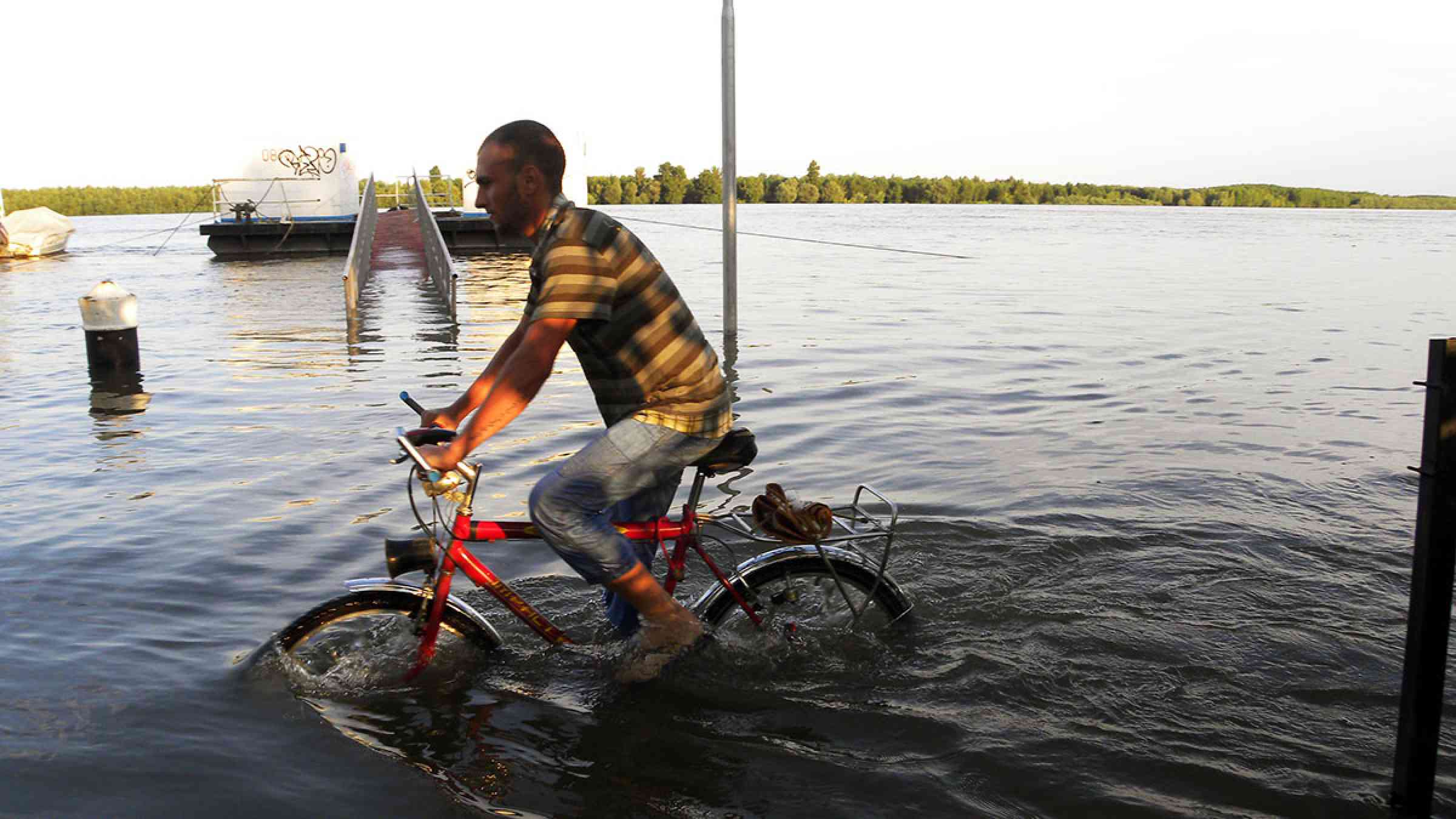
Romania - Danube flooding, 2010
Research briefs

The analysis points towards a common governance roadmap. It suggests better integration of flood‑risk information into urban planning, stronger and more actionable warning systems, more resilient critical infrastructure, and greater cooperation.

Centro Euro-Mediterraneo sui Cambiamenti Climatici (CMCC)
Research briefs

Because atmospheric dust overall has a slight cooling effect on the climate, researchers say its decrease may have contributed modestly to recent climate warming.

University of California, Los Angeles
Weather monitoring equipment with a sunset sky backdrop, highlighting technology and atmosphere.
Research briefs

Study reveals a hidden problem: Temperature proxies used in many climate-impact studies can contain substantial measurement error, leading to misestimation of true impacts of temperature and, potentially understate climate impacts by at least 15%.

Wake Forest University