Managing disaster risks in electoral processes
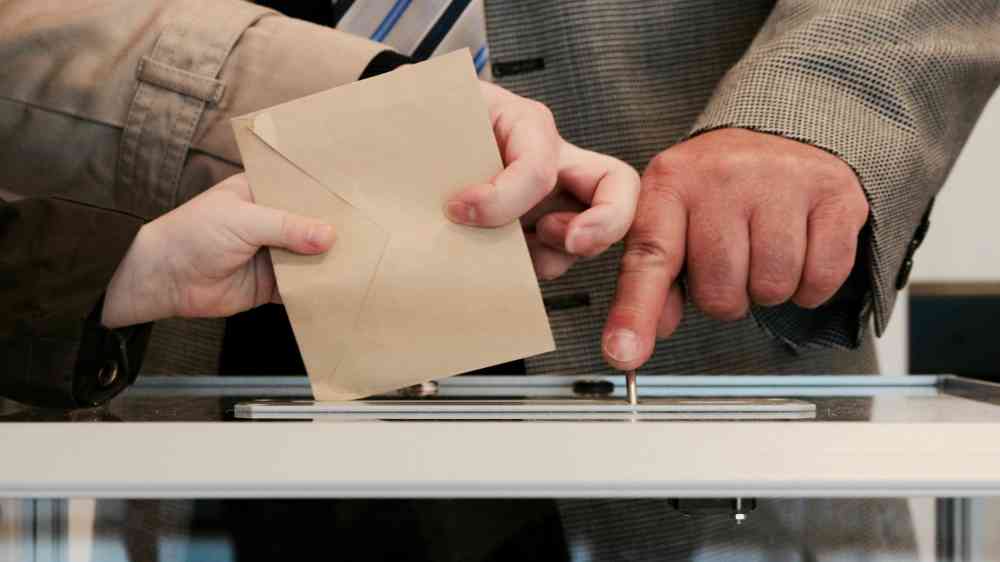
In 2024 alone, extreme weather disrupted 23 elections in 18 countries and this is only the beginning . New evidence indicates that natural hazards are increasingly becoming a threat to elections, especially in regions that are vulnerable to extreme weather events. As climate risks intensify, the pressure on already fragile democratic systems is expected to grow .
Elections face a vulnerability few other public services share: they are anchored to constitutional calendars that make postponement a democratic event, not merely a logistical one. Elections depend on the same roads, power supplies, telecommunications, public buildings, and transport that natural hazards routinely damage. Elections, however, are rarely named explicitly in national disaster risk reduction strategies or climate adaptation plans. Elections should no longer be treated as separate from emergency planning.
A global problem with no borders
Fortunately, there are many measures that electoral administrators have already successfully implemented to protect elections in this context, from alterations in election timing and special voting arrangements to contingency planing, inter-agency coordination mechanisms and effective public communication strategies. The need to roll out approaches such as these is an urgent priority across the globe. At least 94 election events - at different jurisdictional levels - in 52 countries were affected by one or more natural hazards between 2006 and 2025.
One of the key lessons of recent experience is that no type of country is immune from disruption. Natural hazards have affected elections in low-, middle- and high income countries as diverse as Bosnia and Herzegovina, Brazil, Canada, Haiti, India, Mozambique, Mexico, the Philippines, Portugal, among many others.
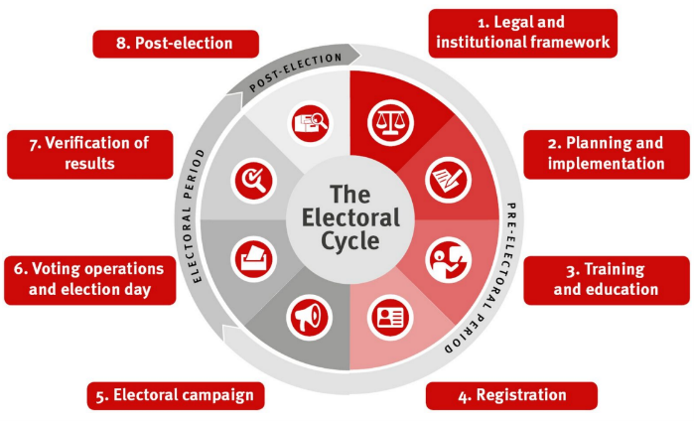
Meteorological, hydrological, climatological, and geophysical disasters have the potential to disrupt elections throughout the electoral cycle. This includes critical phases such as voter registration, electoral campaigns, voting operations and election day and the verification of results by damaging critical infrastructure, displacing voters and forcing last minute changes to the electoral calendar.
Disruption is not distributed equally
Natural hazard impacts on elections are usually unequally distributed. Citizens most likely to be prevented from voting are frequently those already marginalised: communities in remote or low-lying areas, older voters, and people with disabilities. By election day, the unequal effects of a flood may already have shaped who is able to participate. Hence, hazards do not merely disrupt elections but they risk silencing the voices of those who are already under-represented. Recent cases show how quickly these risks can move from general vulnerability to concrete electoral disruption.
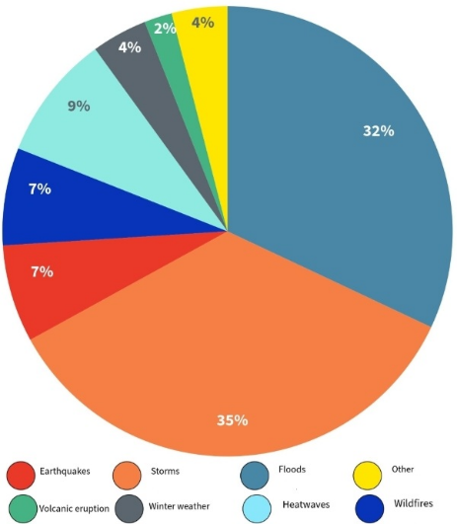
Recent examples include Portugal, which was hit by a series of storms (Leonardo and Kristin), causing wide-spread destruction, only days before the February 2026 General Election. In the end, 19 especially hard-hit municipalities delayed the vote by one week. Election officials justified the delay on the basis of public saftey risks, inaccessible poling stations, and the declared state of calmity. In April 2026, the Indian state of Bengal experienced an intense heatwave during the legislative assembly elections which resulted in the deaths of four voters despite measures introduced by the election authority, which included shaded waiting areas and drinking water at polling stations Based on a new publication by the International Institute for Democracy and Electoral Assistance (International IDEA), Managing Natural Hazards and Climate Risks in Elections , the most common hazards affecting elections are storms, floods, heatwaves, wildfires and earthquakes (see figure 2).
In some cases, the impact of a natural hazard is greater than what an election authority can mitigate, resulting in the postponement of an election. For instance, between 2006 and 2025, at least 26 election events were postponed in whole (13) or in part (13) in 22 countries. Recent examples include the 2023 Northwest Territories General Election in Canada which was postponed for 42 days because of a wildfire; as well as the 2025 General Elections in Vanuatu which were postponed for two days because of an earthquake.
Resilience is not only built on election day. Natural hazards can disrupt several aspects of the electoral process such as registration, procurement, campaign activity, observer deployment, transport routes, the vote or the count. The most difficult decisions are rarely only technical. Postponing an election, moving polling stations, extending deadlines or expanding special voting arrangement (such as early voting, mobile ballot box voting or postal voting) may be necessary, but such decisions can generate suspicion if they appear improvised or partisan. In disaster-affected elections, legality, transparency and communication are therefore as important as operational capacity.
Importantly, there are several strategies that can be deployed to protect elections in the face of natural hazards and climate risks.
Managing Natural Hazards and Climate Risks in Elections includes 11 action-orientated recommendations that focuses on protecting elections against the impact of natural hazards. This includes the overarching imperative of officially recognising elections as Critical Infrastructure, “as such a designation can secure the extra support of state institutions needed to ensure that elections and orderly political transitions can take place even under extreme circumstances”.
The study also emphasises the importance of incorporating the protection of elections into national disaster risk reduction strategies and climate adaptation plans. One of the reports' central recommendations stresses increased inter-agency coordination among electoral stakeholders and meteorological, environmental protection, disaster relief and humanitarian agencies. This collaboration would enable them to utilize early-warning systems effectively, integrate elections into broader disaster management frameworks, and establish permanent joint working arrangements with disaster response agencies.
For example, in Sri Lanka, the Election Commission and the national Disaster Management Center worked with more than 20 agencies to remain on standby in case of a disaster ahead of the 2019 and 2024 general elections. The coooperation also extended to the national meteorological agency, which supplied the electoral authority with regular weather reports ahead of election day.
The report also highlights that elections should be held when disasters are least likely. Alternations in election timing can reduce the likelihood of disruptions by short-lived disasters. For example, the Alberta provincial legislature, moved its fixed election date from May, during the wildfire season, to October as part of a broader bill about emergency powers. The change will take effect in 2027.
Other recommendations in the report includes, back-up voting arrangements, training and contingency planning, robust legal and funding mechanisms, public communication and post-election reviews that facilitate build-back -better approaches following disaster-affected elections that can help generate support and secure funding for new procedures, training and reforms that enhances inclusivity and reduces future risks.
A call to act before the next storm
The message for policymakers is straightforward: climate adaptation plans and national disaster risk reduction strategies should explicitly include elections. The cost of inaction is operational and democratic. Every election prevented, delayed, or distorted by a natural hazard is a failure of governance that better planning could have avoided. For the DRR community, integrating elections into national risk assessments, contingency frameworks, and climate adaptation plans would fill a meaningful gap and signal that democracy itself is worth protecting.
Erik Asplund is a Senior Advisor in the Electoral Processes Programme at International IDEA, with over 18 years of experience supporting electoral management bodies and civil society organizations across Africa, Asia, Europe and Latin America. He specializes in elections during emergencies and crises, risk management in elections, and training and professional development in electoral administration. Recent edited volumes Elections during Emergencies and Crisis: Lessons from Electoral Integrity from Covid-19 Pandemic .
Sarah Birch is Professor of Political Science in the Department of Political Economy at King’s College London. Her research interests include the political effects of extreme weather events and the role of political institutions in securing democracy for the Anthropocene. Sarah has worked with the United Nations Development Programme, International IDEA, the European Union, the Organization for Security and Co-operation in Europe, the US Agency for International Development (USAID) and the International Foundation for Electoral Systems, among others .
Ferran Martínez i Coma is Professor in the School of Government and International Relations at Griffith University (Australia). His research focuses on elections, electoral integrity, comparative politics, political parties and electoral behaviour. He has served as a senior advisor in the Policy Unit of the Office of the Prime Minister of Spain, and as a technical advisor at the Ministry of Internal Affairs and at Barcelona’s City Hall
This article is based on Asplund, E., Birch S., and Martínez i Coma, F., Managing Natural Hazards and Climate Risk in Elections, International IDEA, 22 April 2026, https://doi.org/10.31752/98760.
Disclaimer: Views expressed in this commentary are those of the authors, one of which is a staff member of International IDEA. This commentary is independent of specific national or political interests. Views expressed do not necessarily represent the institutional position of International IDEA, its Board of Advisers or its Council of Member States.