Living with the Indus: Building the enabling environment Pakistan needs for a resilient future
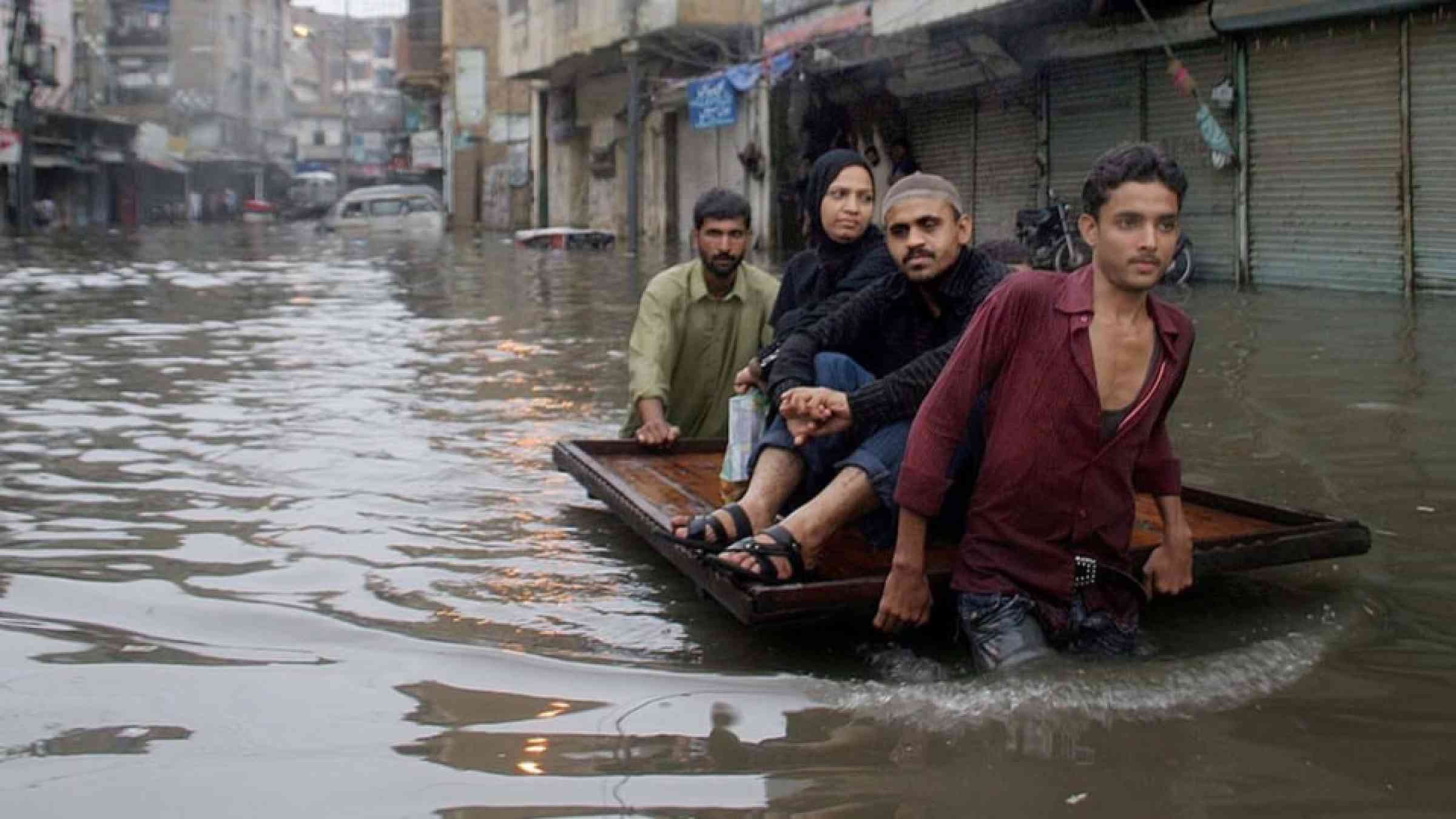
Pakistan's relationship with water has always been double-edged. The Indus River is the backbone of the country's economy and lifeline for millions, yet it can unleash devastation overnight. The 2022 floods, which affected 33 million people, were still fresh in memory when the 2025 monsoon brought another round of destruction, reminding the country yet again how climate extremes can upend lives and paralyse entire cities.
In August 2025, record monsoon rains inundated Punjab, Khyber Pakhtunkhwa, and Karachi. Cloudbursts over Islamabad and Rawalpindi sent torrents through urban nullahs. Flash floods killed hundreds, including over 300 people in Khyber Pakhtunkhwa alone, in mid-August. Karachi's streets turned into rivers, sweeping away vehicles and claiming lives. These are not isolated events; they reveal a sobering pattern of escalating climate volatility and are stark evidence of the country's acute exposure just three years after the historic 2022 floods.
Pakistan contributes little to global emissions but ranks among the most climate-vulnerable countries worldwide. The 2022 flood recovery needed USD 16.3 billion. While USD 8.5 billion was pledged by donors in the form of loans, the state of affairs demonstrates that financial resources for rebuilding require additional initiatives in the form of adaptation financing, which would require almost USD 152 billion from 2023 to 2030, and remains negligible.
Why Pakistan is so vulnerable
Pakistan's vulnerability to climate extremes stems from a combination of geography, rapid urbanisation, and chronic underinvestment in urban planning and preparedness. Much of the country's population and critical infrastructure sits on the Indus floodplain - an area that is both fertile and highly exposed to flooding. Yet the risk is magnified by the way cities have expanded: unregulated growth, the absence of effective land-zoning laws, and widespread construction in floodplains and drainage channels have left millions living in harm's way.
Nearly half of Pakistan's 96.4 million urban residents live in informal settlements, often in low-lying or hazard-prone areas where homes are built from fragile materials such as mud and rice husk and lack basic services. Outdated drainage systems, encroached waterways, and limited early-warning capabilities further heighten exposure, turning heavy monsoon rains into recurring urban disasters.
Underlying these physical vulnerabilities are influential socio-economic and governance factors. High poverty rates mean many families cannot afford safe housing or the ability to relocate from high-risk zones. At the same time, rapid rural-to-urban migration continues to strain cities already struggling to provide infrastructure and services. Weak enforcement of building codes, fragmented institutional mandates, and limited local government capacity make it challenging to implement risk-informed planning or maintain essential infrastructure.
Environmental effects, such as deforestation, habitat loss, encroachment into green spaces, and wetland degradation, impede the land's ability to absorb rainfall. Such complications transform climate hazards into disasters due to the extreme nature of these events which coincide with the limited adaptation capacity of contemporary systems.
Creating an enabling environment for risk-informed development (EE4RID)
Pakistan urgently needs to shift from reactive disaster response to proactive management of climate and disaster risks. The Enabling Environment for Risk-Informed Development (EE4RID) provides a pathway for this transformation. Its six dimensions -policy, institutions, knowledge, culture, partnerships, and finance- help identify gaps and opportunities for embedding risk considerations into everyday decision-making.
The framework's systemic lens encourages decision-makers to look beyond their own sectors and recognise how risks cascade across systems, and how development decisions in one sector might lead to higher risks in another.
Ultimately, EE4RID helps stakeholders build a shared understanding of systemic risks and prioritise measures to strengthen resilience at local and national levels. The approach has been introduced in several countries, including Colombia, Georgia, Lesotho, and in the context of the Zimbabwe Mozambique Zambia Transfrontier Conservation Area (ZIMOZA TFCA) in Southern Africa.
Where Pakistan stands today: Key entry points
Policy and institutions
Pakistan has developed strong policies - climate change frameworks, disaster risk management plans and strategies, the River Protection Act (e-g Khyber Pakhtunkhwa River Protection Act, Punjab Water Act 2019, The Punjab irrigation, Drainage and Rivers Act 2023), building codes, and anti-encroachment regulations. However, the real challenge lies in the effective implementation. Overlapping mandates, especially between federal and provincial authorities, limited local capacity, and resource constraints weaken enforcement.
Moving forward requires:
- Clearer institutional roles;
- Stronger enforcement mechanisms;
- Adequate resourcing for provincial and local authorities;
- Better inter-departmental coordination;
- Data-driven planning through tools like climate risk assessments and multi-hazard vulnerability risk assessments (MHVRA).
Effective governance is the bridge between policy intent and resilience on the ground.
Knowledge and culture
Disaster risk management in Pakistan often remains reactive, shaped by the belief that floods and storms are unavoidable "natural disasters". This mindset needs to shift toward recognising disasters as the result of unmanaged risks and vulnerabilities.
Strengthening risk culture means:
- Building capacity across government, institutions, and communities;
- Improving risk literacy at all levels of society;
- Expanding data sharing mechanisms and interoperable platforms;
- Conducting regular climate and disaster risk assessments to guide planning and investments.
Equally important is valuing indigenous knowledge. In northern Pakistan, innovations such as ice stupas show how community-led adaptation can complement scientific approaches, creating practical, locally grounded solutions.
Partnerships and finance
Pakistan's NDC 3.0 allocates around USD 139.1 billion for disaster preparedness and climate resilience - a sign of growing commitment. But achieving this vision requires sustained financing at all levels.
Priority actions include:
- Dedicated national and local DRR and adaptation budgets;
- Innovative financing: climate funds, insurance, and risk-transfer mechanisms;
- Stronger public-private partnerships to mobilise technology, expertise, and investments.
What lies ahead: A collective responsibility
The Indus has supported civilisations for thousands of years. But with climate extremes becoming the new normal, the question now is whether it will be able to support humans for the next 100 years. The current dynamics suggest that rather than managing climate change through a reactive approach, adaptation capacity should be built to address vulnerabilities. Pakistan's challenge lies in creating an enabling environment where climate and disaster risk management are hardwired into development planning, ensuring not only preparedness for the next flood but long-term resilience.
Institutional strengthening, stakeholder coordination, and infrastructure capabilities are essential for a system that promotes awareness, continuous financing, monitoring, and accountability, while serving as the principal foundation for the country's sustainable future. Building a comprehensive system requires not only the institutional aspect but also integration of all the facets to ensure that existing and future decisions are made with tangible consideration of risk factors.
Haris Mushtaq is a Climate Change Advisor at GIZ Pakistan. He holds a Master's degree in Energy Systems Engineering, and his work focuses on assessing climate and disaster risk impacts, conducting quantitative hazard and risk assessments, and contributing to the development of open-source climate data portals. He is committed to advancing data-driven policies and strengthening resilience across vulnerable sectors and communities.