
Building resilience also means protecting Indigenous languages
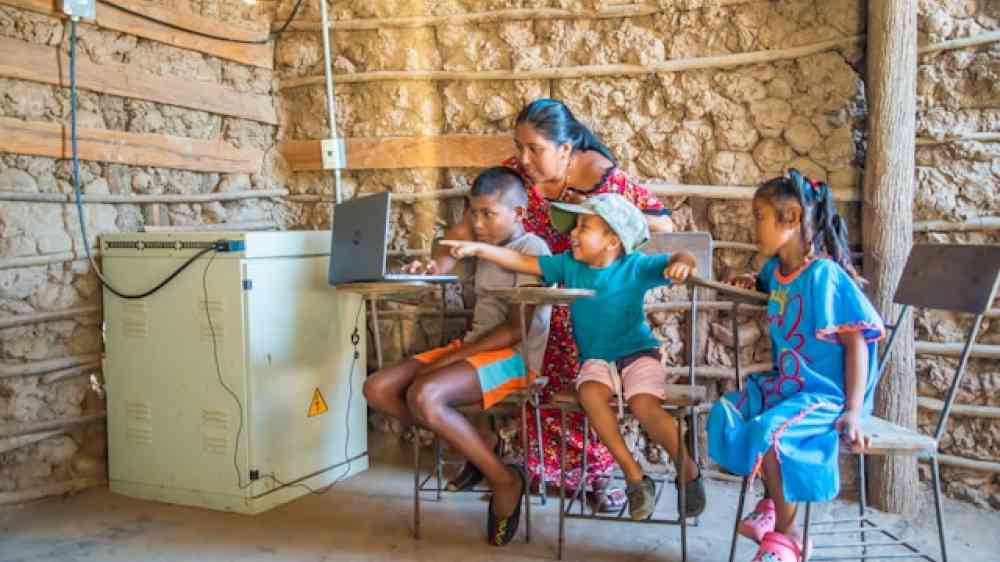
Every year, the International Day of the World's Indigenous Peoples celebrates Indigenous communities whose languages hold centuries of knowledge about the environment. These communities face increasing pressures from climate change, combined with inadequate infrastructure and limited resilience systems. Together, these challenges threaten homes and livelihoods and can force people to migrate.
When communities are displaced, they lose more than their homes. They also risk losing the savoir-faire (practical knowledge) and savoir-être (ways of being and relating to the world) that have enabled them to live with nature for generations.
Building resilience therefore means more than protecting infrastructure. It also means protecting the knowledge, languages and cultural practices that support communities' ability to adapt to changing risks.
Why language matters for resilience
The relationship between Indigenous languages and resilience is often overlooked.
Indigenous knowledge shapes communities' savoir-être by influencing how they communicate risk, interpret environmental change and pass disaster knowledge from one generation to the next. This, in turn, informs their savoir-faire—a living body of practical knowledge built through experience rather than written records.
When a language disappears, communities lose more than words. They also lose knowledge that supports disaster preparedness, climate adaptation and sustainable ways of living. Protecting Indigenous languages is therefore not only a cultural priority but also an essential part of building resilience.
Climate change, displacement and language loss
Across the Pacific, many island communities are facing increasing threats from sea-level rise and other impacts of climate change. As climate-induced displacement becomes more common, younger generations often adopt the dominant language of their new communities while gradually losing fluency in their ancestral language.
Tokelauan illustrates this challenge. Today, more Tokelauans live in New Zealand than in Tokelau, and the proportion of fluent speakers has steadily declined. Migration has therefore become not only a humanitarian issue but also a challenge for maintaining linguistic and cultural continuity.
How resilient infrastructure can help
Resilient infrastructure can help reduce climate-induced displacement by enabling communities to remain safely on their ancestral lands.
The experience of Barki village in Rajasthan illustrates this potential. Recurring summer water shortages previously forced families to migrate in search of water and livelihoods. UNICEF, together with Gram Gaurav Sansthan, supported the construction of conventional pokharas and paras (earthen water storage structures), underground reservoirs and solar-powered water systems. These improvements strengthened water security, reduced seasonal migration and enabled families to remain in their communities while improving their livelihoods. In doing so, they also helped preserve cultural continuity.
Resilient Infrastructure can also help preserve cultural identity by strengthening traditional built environments and the knowledge embedded within them. The G20–CDRI Compendium highlights how, in Afghanistan, indigenous construction practices such as mud architecture, earthquake-resistant timber and traditional seismic joints have helped cultural heritage survive disasters for generations. It recommends combining the traditional methods with modern resilience measures, allowing communities to preserve both their cultural heritage and disaster knowledge.
Together, these examples show that resilient infrastructure preserves communities in two complementary ways: by reducing forced displacement and by sustaining the traditional built environments that embody Indigenous knowledge.
Rethinking what resilient infrastructure achieves
These examples highlight an important lesson for disaster risk reduction.
Infrastructure should not be assessed solely by how well it performs during or after a disaster. It should also be evaluated by its ability to reduce forced displacement and strengthen community resilience.
A flood-resilient school, a drought-resilient water supply or a cyclone shelter protects more than lives and assets. It also helps sustain the cultural environments where Indigenous languages, traditions and local knowledge can continue to thrive.
International policy is recognising this connection
International policy increasingly acknowledges the importance of Indigenous knowledge and culture in resilience.
The Sendai Framework for Disaster Risk Reduction recognises the value of Indigenous knowledge in disaster risk management.
The United Nations Educational, Scientific and Cultural Organization (UNESCO) International Decade of Indigenous Languages has drawn global attention to the urgent need to safeguard endangered languages.
More recently, the COP30 Belém Adaptation Indicators , under Target 9(g), recognised that climate-resilient infrastructure should contribute to protecting cultural heritage and supporting Indigenous and traditional knowledge in adaptation planning.
Together, these developments reflect a broader understanding that resilience depends not only on stronger infrastructure but also on stronger communities.
Priorities for action
Protecting Indigenous communities requires action in four key areas:
- Invest in resilient infrastructure that enables Indigenous communities to remain safely on their ancestral lands wherever possible.
- Partner with Indigenous communities throughout the planning, design and maintenance of infrastructure so that investments reflect local knowledge, priorities and needs.
- Integrate cultural impact assessments alongside environmental and economic assessments in climate adaptation and infrastructure planning.
- Recognise Indigenous languages as assets for resilience by supporting community-led education, documentation and knowledge transmission.
Investing in resilience also protects culture
Climate change threatens not only critical infrastructure but also the languages that preserve generations of knowledge about living with nature.
Resilient infrastructure enables Indigenous communities to remain on their ancestral lands and protects more than lives and livelihoods. It also helps preserve languages, cultures and the knowledge systems that underpin resilience.
Infrastructure is truly resilient when it enables Indigenous communities to remain on their lands and sustain the languages and knowledge systems that support disaster preparedness. These knowledge systems embody generations of observation about hazards, ecosystems and adaptation practices that continue to strengthen community resilience.
Shubham Kashyap is a Senior Research Fellow at Jawaharlal Nehru University (JNU), New Delhi. He works on multilingual knowledge and communications for global initiatives on disaster-resilient infrastructure. His research interests include disaster risk reduction, climate resilience, risk communication, and translation studies, with a focus on making technical knowledge accessible to diverse audiences.