
All disasters are compound, cascading, complex, Natech, and hybrid
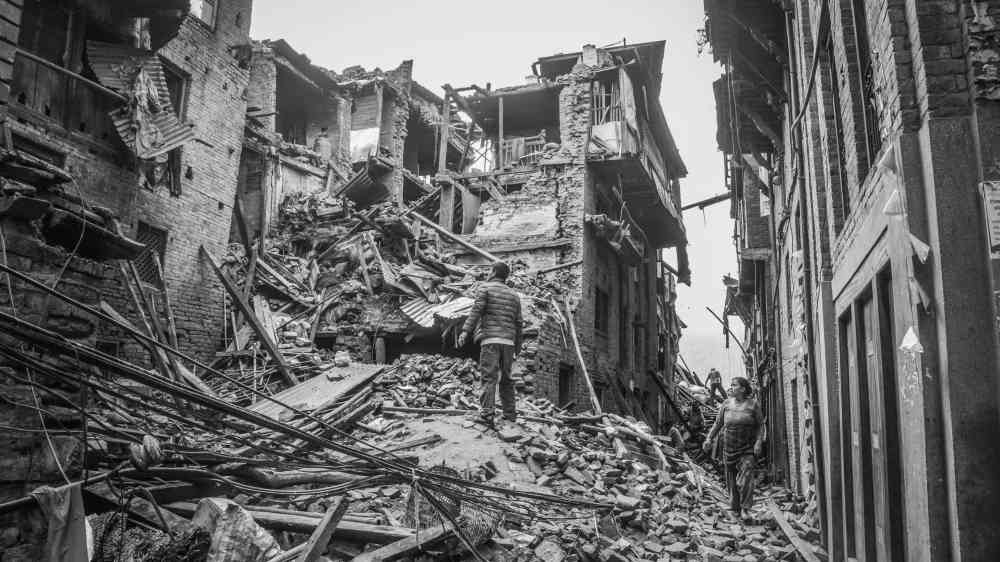
Disasters are not natural; they are human-made. This standard mantra for and from disaster-related practice, policy, and research has been mainstream for over 50 years after having been part of the topic for centuries. Many researchers, practitioners, and media outlets nonetheless use the phrase “natural disasters” without thought of or reference to the long-standing evidence for the hashtags #NoNaturalDisasters and #DisastersAreNotNatural
Why labels matter
The phrase “natural disasters” then demands a contrast with “non-natural disasters” or “unnatural disasters”, often expressed with the non-gender neutral phrase “man-made disasters” preferably rendered as “human-made disasters”. It also suggests possible amalgams of “natural disasters” and “human-made disasters”, leading to efforts to formulate vocabulary embracing all elements of nature and humanity required for disaster. Examples are “compound disasters”, “cascading disasters”, “complex disasters”, “Natech disasters” (natural hazard-triggered technological disasters), and “hybrid disasters”.
Vulnerability causes disasters
When using these concepts, many practitioners, policy-makers, and scientists nevertheless accept and promote that vulnerabilities cause disasters. Vulnerability is still taken to be a deep-rooted, chronic, societal process with multiple interacting causes over the long-term dictating who does and does not have choices regarding where and how people live. Sexism interferes with girls’ education or discourages them from succeeding at school meaning that women have fewer leadership positions and less education to help themselves avoid disasters. Evacuations and shelters can presume the ability to use stairs, forcing people who cannot use stairs to take longer, to seek help, or to be left out.
Neither women nor people with different mobility needs are inherently less intelligent or less capable than other groups. Societal decisions make them have fewer possibilities to deal with disasters. They are made to be vulnerable and then disasters occur irrespective of nature’s activity. These vulnerabilities emerge from social structures rather than individual characteristics. Intersecting historical, cultural, and political processes shape who has power, resources, options, and protection, and who does not.
Disaster drivers are interconnected across space and time
From this baseline description, vulnerabilities and efforts to reduce them are inherently complex, complicated, and cascading. Processes for positive change compound multiple influences across space and time, rippling through local, national and global scales, and across generations. How do we overcome discrimination and prejudice? Reducing vulnerabilities means alleviating poverty, ending sexism and racism, providing equitable access to education and healthcare, and so much more.
In the years preceding the 2014-2016 Ebola outbreak in West Africa, funding was slashed to the World Health Organization for epidemic preparedness and response. Global decisions impeded localised responses to stop the disease from spreading. In December 2019, Doctor Li Wenliang in Wuhan, China warned of an emerging respiratory infection and was reprimanded by local authorities. A local decision to suppress early warnings and to prevent action contributed to a sequence that culminated in the COVID-19 pandemic. This local decision was steeped in national culture regarding reporting, responsibility, and blame which had been witnessed during the previous coronavirus pandemic, SARS (Severe Acute Respiratory Syndrome) from 2002-2004. These examples demonstrate how decisions taken at one scale can influence outcomes at another, often years later.
Another example is the absence of an Indian Ocean tsunami warning system before 26 December 2004. Decisions from the 1970s to the early 2000s not to establish an early warning system meant that the vast majority of warnings on 26 December 2004 were highly localised. These warnings came from residents and visitors only minutes before the waves struck, rather than hours that places such as Maldives, Somalia, and Sri Lanka could have (and should have) had.
Why all disasters are cascading
These interconnected factors, spanning space and time, create and perpetuate vulnerabilities and therefore disasters. They are the norm rather than the exception.
The inevitable interactions among social, political, and environmental processes mean that cascading effects are ever-present. Since disasters emerge from interconnected vulnerabilities operating across multiple scales, then cascading processes are inherent to how and why disasters occur.
Why all disasters are also hybrid and Natech
An additional implication is that all disasters involving an environmental phenomenon are hybrid and Natech.
A school collapsing during a tornado and a bridge swept away by an avalanche involved a combination of environmental and human elements. In disaster risk terminology, these outcomes emerge through hazards and vulnerabilities interacting. That is, Natech being defined as nature-triggering-technological-disaster is a subset of broader process through which hazards expose the vulnerabilities creating disasters. As a combination of such elements, “disaster” further satisfies the various definitions of “hybrid disaster”.
Similarly, cascading hazards and hybrid hazards are the usual state of affairs. An explosive volcanic eruption may yield tephra, pyroclastic density currents, lightning, earthquakes, short-term climate change, lahars (a tephra-rain hybrid), and more. Floods are parameterised by water depth, water velocity, water flow rate, water duration, debris, and more. Many “natural hazards” are not entirely natural. Floods can be exacerbated by waterway engineering, droughts can be caused by water (over)use, and earthquakes can be set off by fracking and nuclear weapons testing. Not all “natech” are necessarily “natural”.
Focus on vulnerabilities, not labels
Naming disasters as “disasters” pinpoints and highlights their common basis in vulnerabilities. Focusing on vulnerability highlights actions needed to reduce risk and prevent hazards from becoming disasters. The extra vocabulary becomes merely “confusing about disasters”!
Ilan Kelman is Professor of Disasters and Health at University College London, England and Professor II at UiT The Arctic University of Norway. His overall research interest is linking disasters and health, integrating climate change into both. He can be contacted at https://www.ilankelman.org/ and Instagram/Threads/X @ILANKELMAN and Bluesky ilankelman.bsky.social