Restoring the Human Spirit Through Music
Restoring the Human Spirit Through Music and Involving Local People in DRR
Description
Soka Gakkai is a community-based Buddhist organization with a strong local network of members. In Tohoku our centers accommodated some thousands of evacuees in its community centers after the 2011 Great East Japan Earthquake and tsunami disaster.
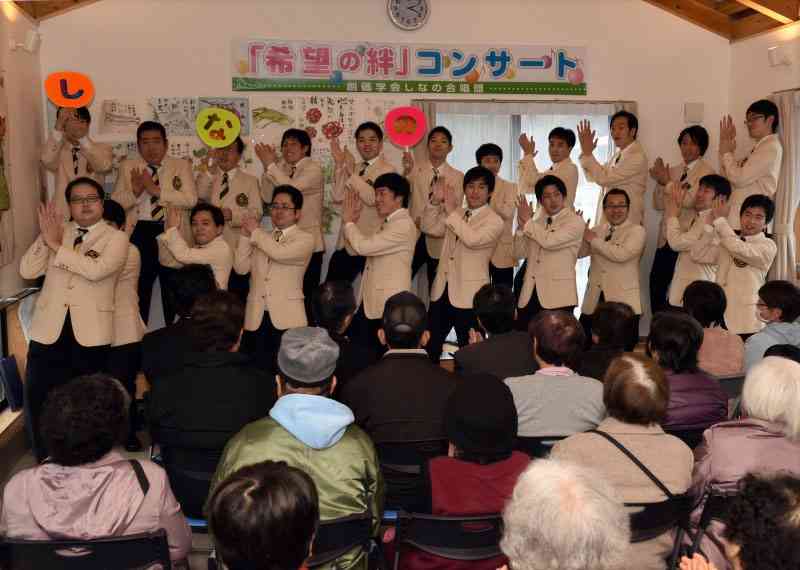
In addition, since 2014, Soka Gakkai has dispatched its volunteer choirs and orchestras to disaster-stricken areas and has held “Bonds of Hope” concerts, in the hopes of contributing to “recovery of the heart” of those affected by the disaster and encouraging them to become involved in DRR efforts in their local community. As of March 2023, the concerts have been held more than 180 times in the Tohoku region and other disaster-affected areas, including Kumamoto, Okayama, and Hokkaido, and in total, more than 76,000 people have attended.
The concerts are usually held at general concert halls, Soka Gakkai community centers, or communal spaces within temporary housing communities built after the disaster. On average, 30 to 40 people attend each concert. Prior to each concert, the music corps members consult with local communities about the best way to respond to local needs and decide on venues, timing, and type of music to perform.
We have witnessed several cases where the concerts impacted the lives of disaster victims. Some of them were battling with depression and could not express their pent-up feelings. However, after attending a concert, they could open their heart to speak and even begin to see the suffering of others. Encouraged by the music performances, the audience can eventually stand up and take action for the restoration of their community, and get involved in disaster preparedness activities.
Soka Gakkai will continue the initiative until “the very last disaster victim has recovered from grief,” which is the belief behind all the relief activities by Soka Gakkai.
Did the Sendai Framework change or contribute to changes in your activities/organization? If so, how?
The Sendai Framework made us aware of the concept of “Build Back Better.” It helped us reaffirm the purpose of the initiative and its role in contributing to the recovery process of disaster victims. During the past decade, we have witnessed that bonds among people in the affected areas became even stronger than perhaps existed before. There are many factors that contributed to it, and we believe that the concerts have played a part in it.
What led you to make this commitment/initiative?
What was your position before making this Voluntary Commitment / prior to the Sendai Framework?
A few years after the Great East Japan Earthquake, the affected people’s needs became more diverse, and the need for psychological care became prominent. To address the needs, Soka Gakkai’s music corps, which have long-term experience in performing for diverse audience, started to dispatch choirs and orchestras. Based on the comments from feedback forms the groups have collected, the concerts have received many positive responses from the audiences.
Individual testimonies, particularly from older male participants, also report how the concerts, in the context of a supportive community network such as Soka Gakkai, enabled them to share their emotions and connect with others, therefore leading them also to be able to contribute to their societies.
Deliverables and Progress report
Deliverables
Deliverables are the end-products of the initiative/commitment, which can include issuance of publications or knowledge products, outcomes of workshops, training programs, videos, links, photographs, etc.
Through concerts, Soka Gakkai was able to support the mental health of disaster victims. Some afflicted people who usually are reluctant to come to gatherings came to the concerts and were able to create relationship with others. Music has power to create bonds between people and opportunities for heart-to-heart communication which can become the foundation for restoring the human spirit. A video has been made showing the concerts and the impact they have had. (Only in Japanese).
March 2021 marks 10 years since the Great East Japan Earthquake. Due to the outbreak of COVID-19 in 2020, "Building Bonds of Hope" concerts did not take place in person. Though, the concerts have resumed online to continue the efforts for restoring the human spirit and raising awareness on DRR. Through the activities over the past ten years, the concerts have served as an opportunity for the participants to positively reflect the disaster, while performers and participants have mutually become the source of hope and empowerment. Mr. Hiroyuki Teraguchi, Leader of the Soka Gakkai music group, reflects on the 10 years of the activities in an article (Only in Japanese). *The article was updated in January 2023.
To share the lessons learned through the concert activities, we will create a short film that introduces voices from performers and participants. The film will be available both in English and Japanese.
Since 2011, Soka Gakkai music groups have been committed to restoring the human spirit and raising awareness on DRR through the “Building Bonds of Hope” concerts. In 2026, which marks the 15th year since March 11, 2011, we plan to publish a report on the progress and impact of the activities and how the commitment can further advance the Sendai Framework for DRR toward 2030.
Porgress report
The “Bonds of Hope” concert marks its 10th anniversary in 2024. In the pursuit of providing unceasing support for the people in disaster-affected areas in Japan, Soka Gakkai music groups continued to hold “Bonds of Hope” concerts virtually during the COVID-19 pandemic. In 2022, after careful examination of the COVID situation and with thorough prevention measures, the music groups finally restarted in-person concerts. As of November 2023, The Soka Gakkai music groups have held 188 concerts, and 76,000 people participated in total.
Although the physical reconstruction from the Great East Japan Earthquake is now mostly completed after 13 years, individuals in the area experience the “recovery of the heart” at a different speed. At the same time, other disasters hit different areas from time to time. Soka Gakkai music groups will continue to encourage the affected people and motivate them to enhance preparedness for a next disaster.
In March 2014, Soka Gakkai launched the "Bonds of Hope" concert. Concert details are decided through discussion with local people to meet their needs rather than taking a unilateral approach. The performers have collaborated with local chorus groups, including women and youth, to involve local community.
In 2018, the music groups expanded the areas beyond Northeast Japan and held the concert in other disaster-affected areas, including Kumamoto, Ōita, Okayama, and Hokkaido.
In 2022, the music groups restarted the concert after the COVID-19 pandemic in the areas severely affected by the tsunami of the Great East Japan Earthquake in 2011. In 2023, the concerts were held in Okayama and Hiroshima which were severely affected by heavy rain, as well as Miyagi. Some of the participants commented that the concert has reminded them of the lessons learned through the disaster and given them courage and hope to move forward despite the tragic experiences.
Organizations and focal points
Implementing Organization(s)
Focal points