1. Home
  2. Knowledge Base | PreventionWeb
  3. Themes

Early warning

An integrated system of hazard monitoring, forecasting and prediction, disaster risk assessment, communication and preparedness activities systems and processes that enables individuals, communities, governments, businesses and others to take timely action to reduce disaster risks in advance of hazardous events. Early warning systems are a key component of disaster risk management activities.

Early Warnings for All is a groundbreaking initiative to ensure that everyone on Earth is protected from hazardous weather, water, or climate events through life-saving early warning systems by the end of 2027. Stay informed about the groundbreaking "Early Warnings for All" initiative.


In Mozambique, experience from past disasters has helped shape a powerful national system for disaster risk reduction.

Latest Early warning additions in the Knowledge Base

Uploaded on
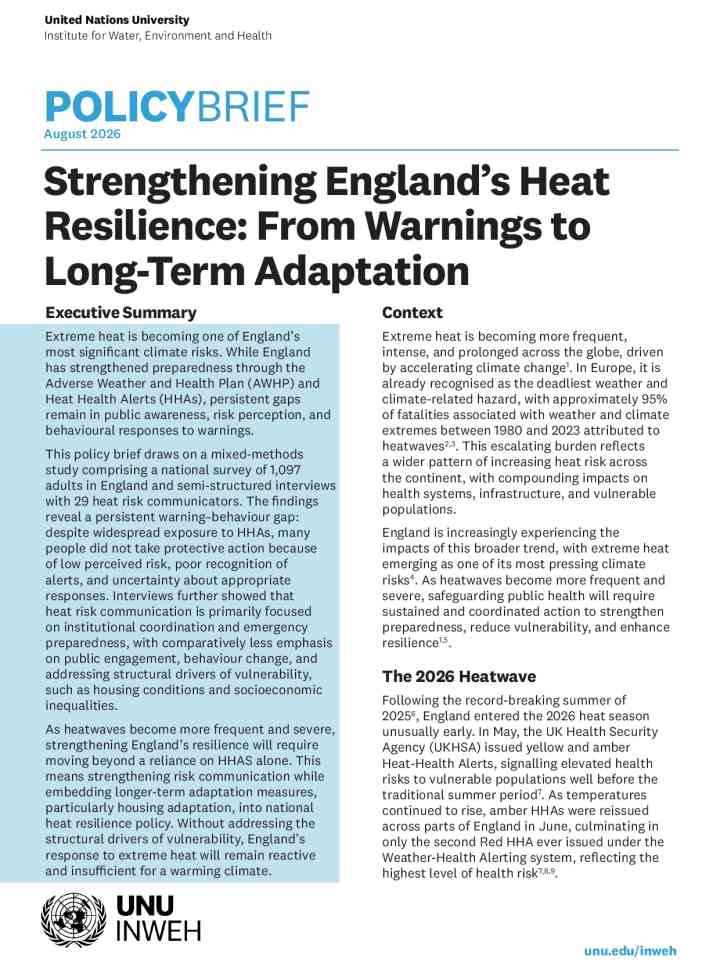
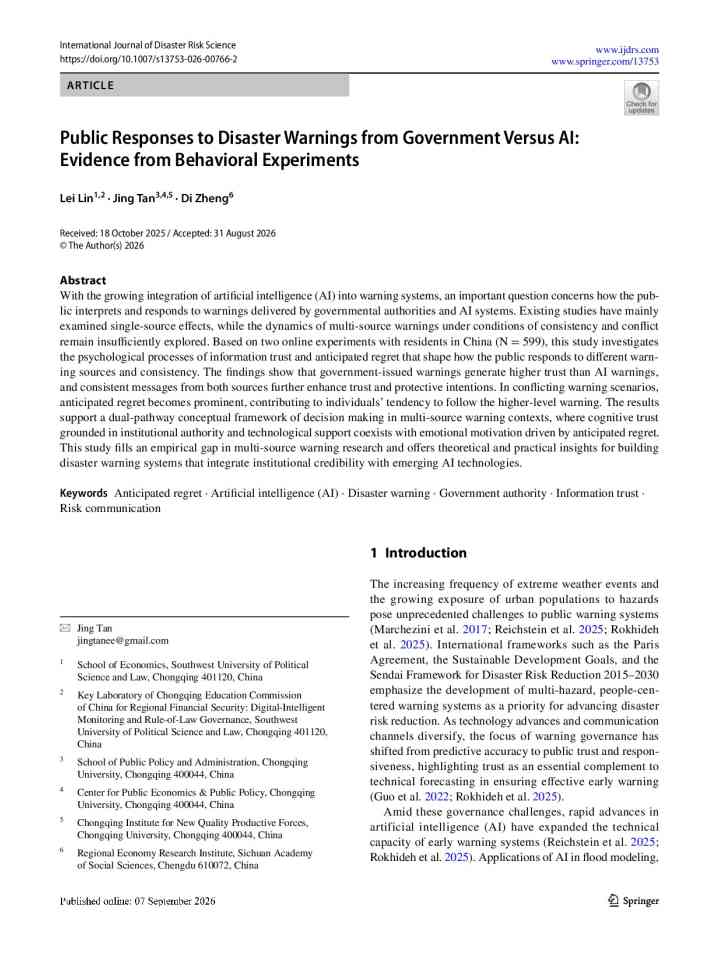
Bridging authority and citizens: An integrated framework of  social-mediated disaster communication thumbnail
Documents and publications

This study examines how social media influencers and entertainment-oriented community fan pages reframe disaster communication, showing how emotional and humorous storytelling can reshape official messages and public discourse during Typhoon Yagi

International Journal of Disaster Risk Reduction (Elsevier)
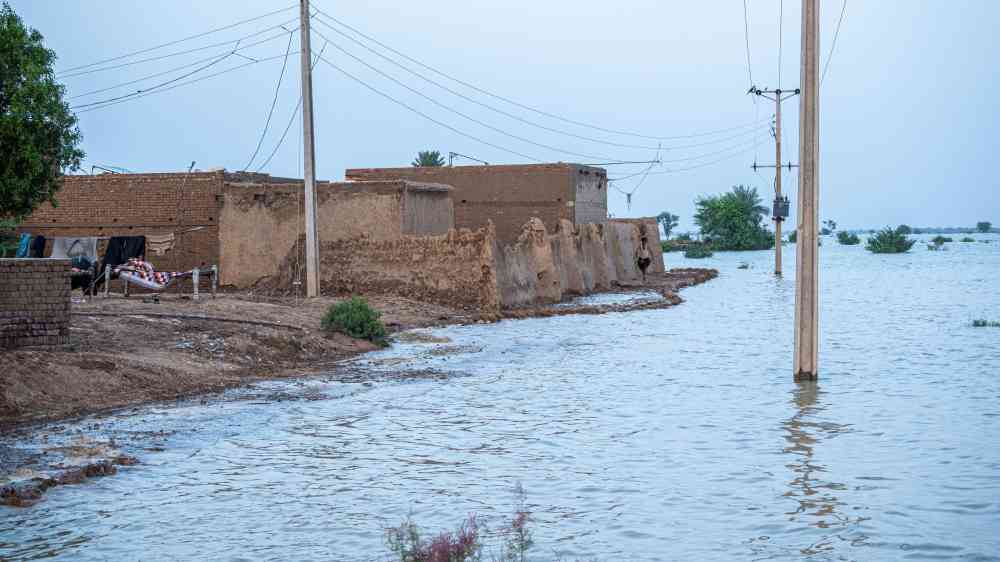
Flooded cars
Update

AI-driven forecasts can tell you when dangerous weather is coming. But what if you have nowhere to go?

Yale Climate Connections
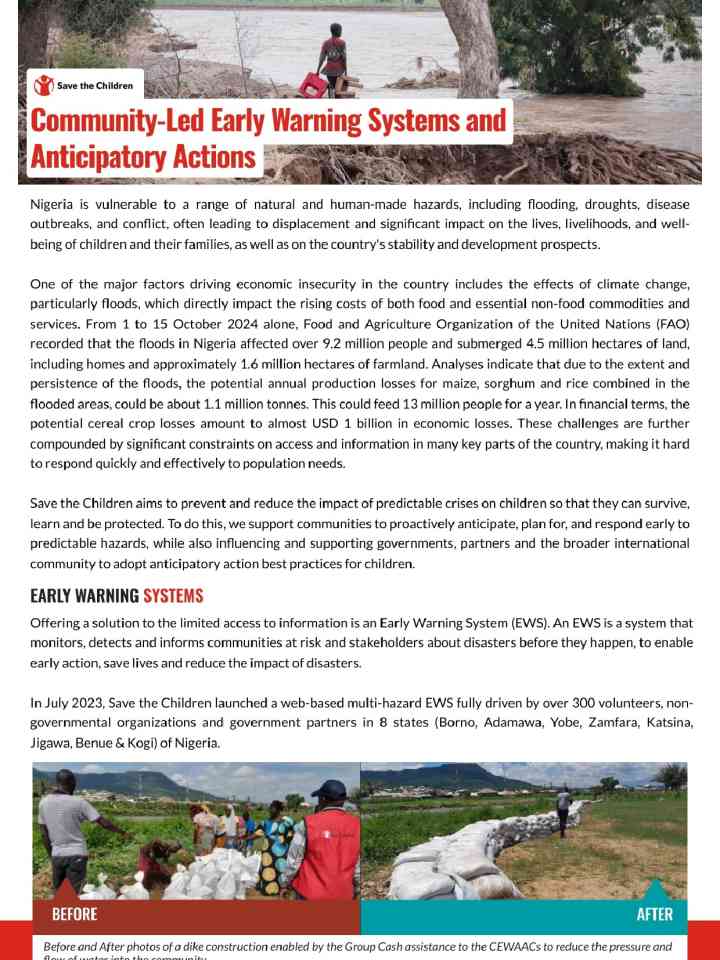
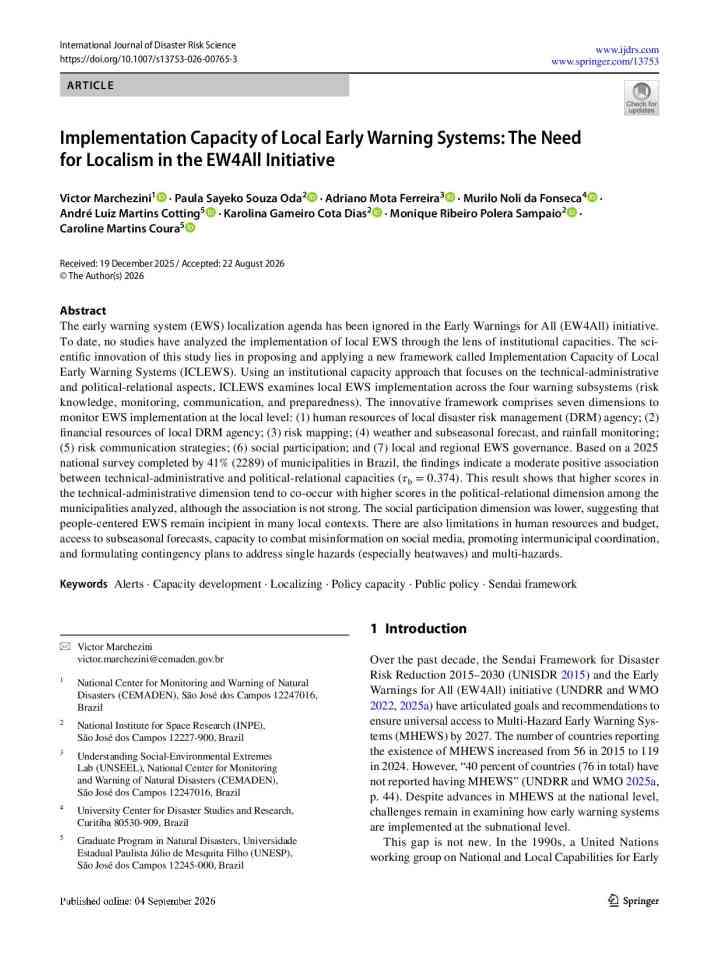
Web-messaging-based dissemination of urban rainfall and flood information: a Telegram bot framework thumbnail
Documents and publications

This study presents a Telegram bot framework for near real-time urban rainfall and flood information, combining automated data acquisition and probabilistic flood risk maps to support decision-making in resource-constrained cities.

npj Natural Hazards (Nature)
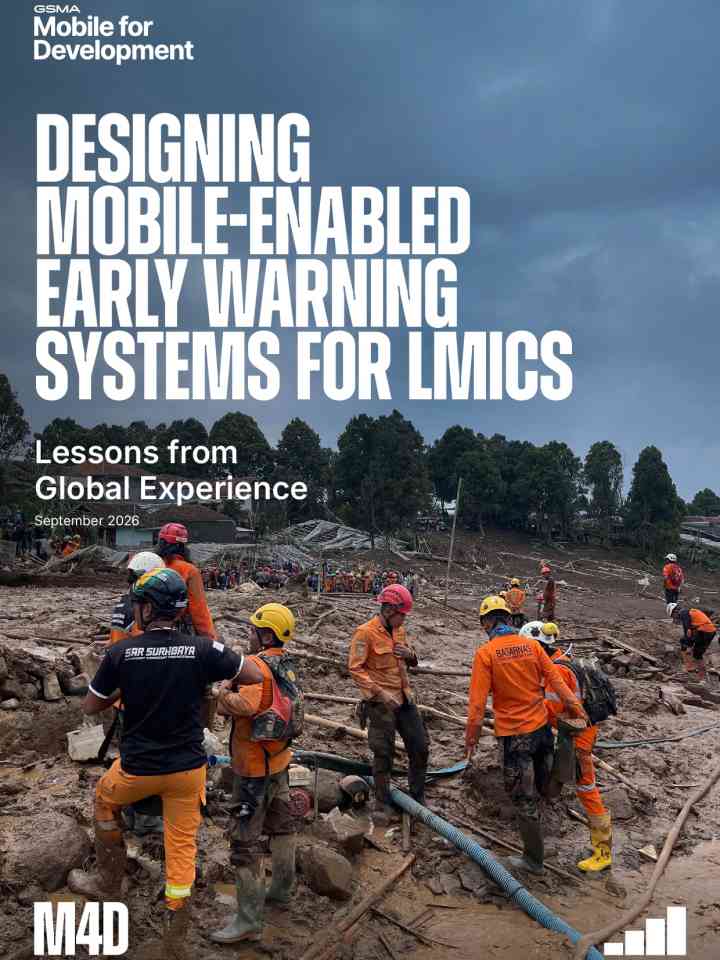
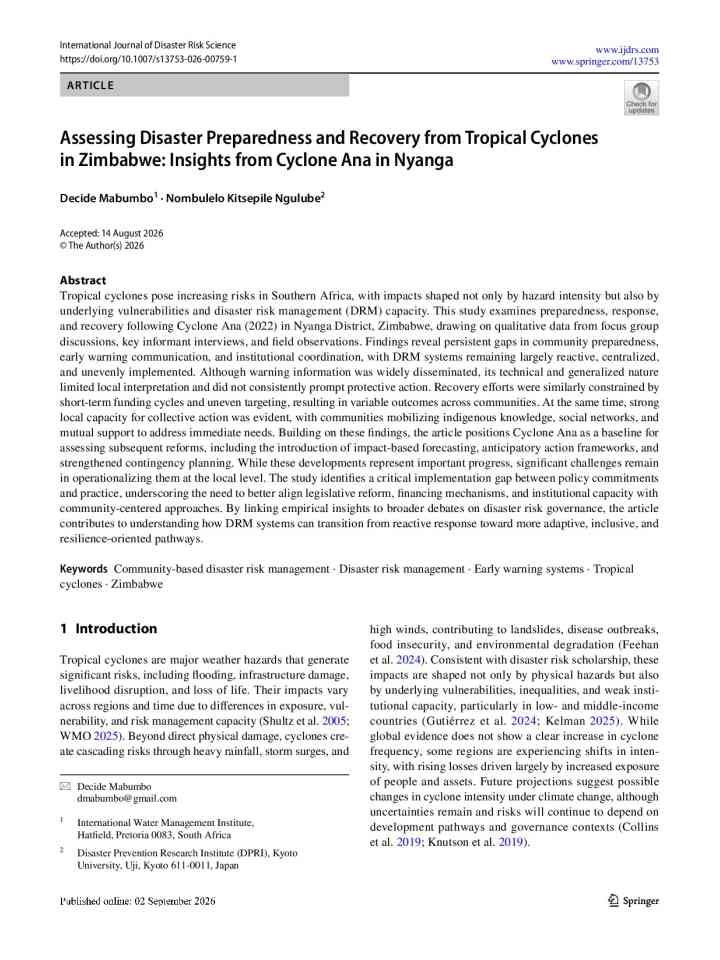
Leveraging AI to enhance multi-hazard early warning systems thumbnail
Documents and publications

This report assesses current applications of AI across all four MHEWS pillars, identifies operational gaps where AI can add value, and outlines the conditions required for responsible and effective implementation of AI.

United Nations Office for Disaster Risk Reduction (UNDRR)
World Meteorological Organization (WMO)
International Telecommunication Union (ITU)
International Federation of Red Cross and Red Crescent Societies (IFRC)
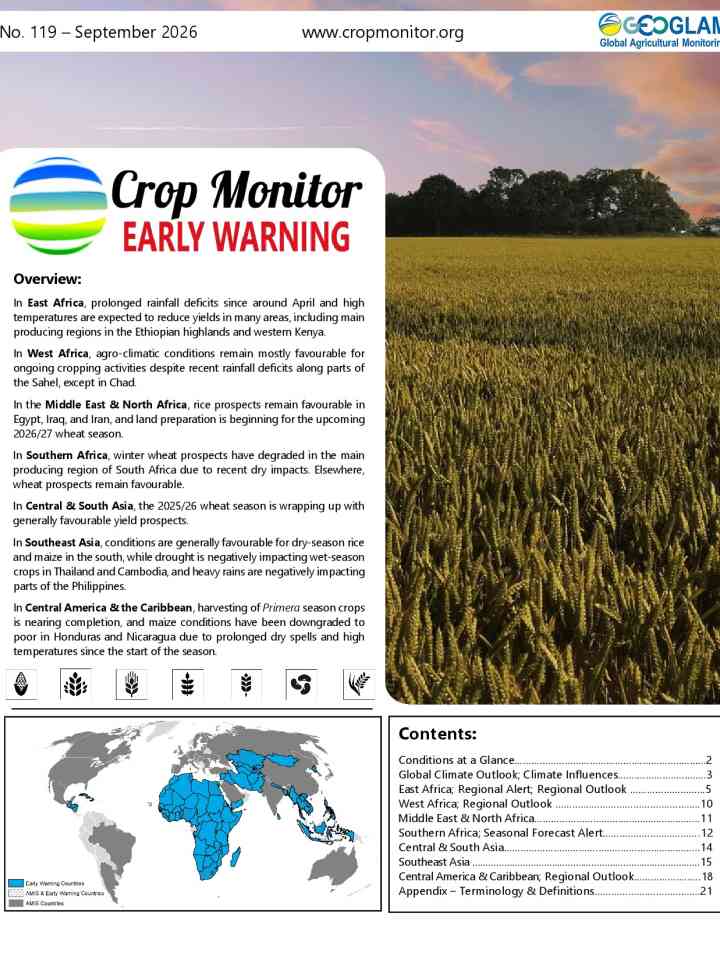
A strengthened and fit-for purpose State Hydrometorological Service in Moldova: a road map thumbnail
Documents and publications

This Roadmap presents an analysis of the current capabilities, including financial and human capital, and technical infrastructure of the State Hydrometeorological Services (SHS) of Moldova

Global Facility for Disaster Reduction and Recovery, the (GFDRR)
The Anticipation Hub publishes a new guide on how to facilitate after action reviews for anticipatory action thumbnail
Documents and publications

The Anticipation Hub has published the first edition of its facilitation guide for collective, multi-agency After Action Reviews. These events help partners to learn from how they planned for, coordinated ahead of and acted during a forecast hazard.

Anticipation Hub
Underwater sea turtle swimming in the sea by a coral reef.
Update

Every summer, communities across northern Australia brace for the tropical cyclone season. Tropical cyclones draw their power from the warm seas, extracting heat and moisture from ocean water.

Conversation Media Group, the
Avalanche in the Himalayas
Update

Turkey, particularly its northern, northeastern, and eastern regions, possesses mountainous areas with topographic and meteorological conditions suitable for avalanche formation

Ministry of Interior, Disaster and Emergency Management Authority
Uploaded on