
Depression or Cyclone (Low Pressure Area)
A depression or cyclone is a region of the atmosphere in which the pressure is lower than that of the surrounding region at the same level (WMO, 1992).
Primary reference(s)
WMO, 1992. International Meteorological Vocabulary, WMO-No. 182. 2nd Edition. World Meteorological Organization (WMO). Accessed 16 May 2025.
Annotations
Additional scientific description
A depression or cyclone is represented on a synoptic chart by a system of isobars at a specified altitude level (or a system of contours at a specified pressure level) which enclose relatively low values of pressure (or altitude) (WMO, 1992).
Metrics and numeric limits
A depression or area of low pressure generally refers to a low-pressure area with winds below storm strength of 89 km/h (WMO, 2015).
Key relevant UN convention / multilateral treaty
Sendai Framework for Disaster Risk Reduction 2015-2030.
Drivers
No Information Available
Impacts
Cyclones, including tropical and subtropical cyclones, can have far-reaching impacts, particularly in low-lying coastal areas located in the direct path of the storm. The severity of these impacts depends on the cyclone's size, intensity, and the combination of hazards such as wind speed, rainfall, storm surges, and flooding. While winds can cause significant damage, it is often the rainfall and storm surges that lead to catastrophic effects like flooding and landslides, especially in coastal and mountainous regions. Flooding can occur well ahead of landfall and persist long after, continuing to pose a risk to both lives and infrastructure, especially in densely populated or low-lying areas (UNDAC, 2024). These conditions can devastate infrastructure, disrupt communication lines, damage power grids, and result in significant casualties (UNDAC, 2024).
The health impacts of cyclones can be both direct and indirect, increasing the risk of drowning, physical trauma, and the spread of water- and vector-borne diseases. Floodwaters often carry sewage, chemicals, and sharp debris, which can cause injuries, diseases, and electrocution. Additionally, the disruption of public health systems during and after the cyclone limits access to essential healthcare services. Aside from physical health risks, mental health is significantly impacted, as many individuals experience stress, trauma, and anxiety in the aftermath of such disasters. Cyclone-related damage to basic infrastructure like food and water supplies and safe shelter only exacerbates these issues, increasing the risk of food insecurity and long-term health challenges (WHO, 2025; UNDAC, 2024).
The socio-economic consequences of cyclones are equally severe, as these events can cause long-term economic losses by destroying businesses, farms, and fisheries, resulting in income loss for affected families. The destruction of crops, livestock, and fisheries, along with flooding and saltwater intrusion, leads to immediate food shortages and long-term disruptions in the food supply chain. These impacts further undermine public health by increasing malnutrition and decreasing food security. Recovery is often slow, as repeated cyclones can compromise agricultural land, making it harder for communities to rebuild their food stocks and livelihoods (UNDAC, 2024).
Multi-hazard context
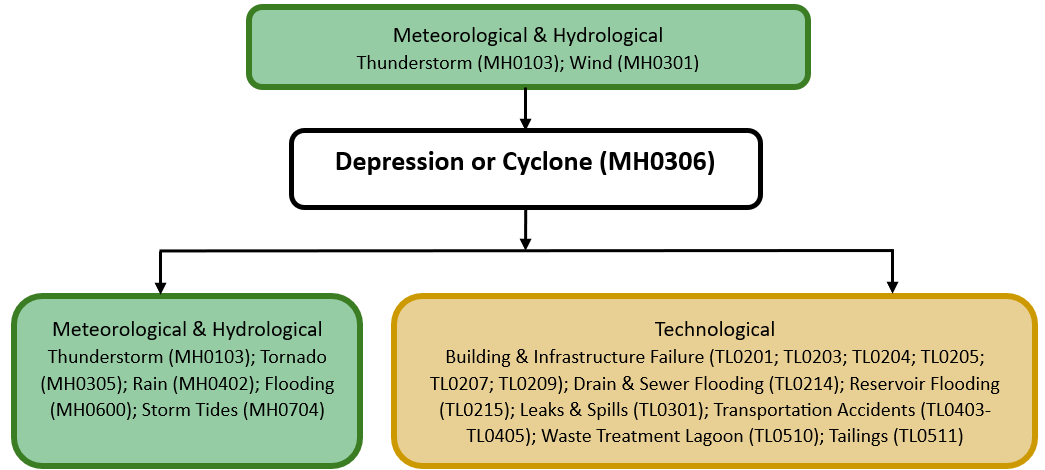
The figure below summarises common interactions between depressions or cyclones and other hazards. This information should be used with caution and not be solely relied upon in Disaster Risk Management, particularly as some interactions may not have been included. Note that hazardous events occurring together or locally in space or time may not necessarily cause, amplify, or be otherwise related to each other. Specific examples of multi-hazard context can be found in the ‘Hazard drivers’ and ‘Impacts’ sections above.
Multi-hazard diagram
Risk Management
A depression, also known as a cyclone or low-pressure area, is a region with lower atmospheric pressure than the surrounding areas. These systems are characterised by rising air, which leads to cloud formation and often results in unsettled weather conditions, including heavy rainfall, strong winds, and storm surge. The unpredictable nature of these weather patterns underscores the importance of multi-hazard early warning systems (MHEWS). MHEWS integrates various tools and technologies to monitor and predict multiple hazards, ensuring the timely dissemination of warnings to vulnerable communities. By leveraging advanced forecasting models, real-time data, and effective communication strategies, MHEWS enhances preparedness and response actions, thereby mitigating the adverse impacts associated with depressions and other related weather phenomena (WMO, 2025).
Monitoring
The section above and the table below offer an overview of monitoring depressions or cyclones. This information can be used for forecasting within a national early warning system (EWS). Since EWS capacities and processes differ across countries, the most current and specific information regarding EWS should be obtained from the appropriate national or regional agency/authority responsible for disaster management.
| Which institution(s) produce(s) Disaster Risk Data/Information? |
|
| How is the Hazard Observed/Monitored/Forecast? | Depressions and cyclones (low-pressure areas) are monitored using weather satellites, radar, and ocean buoys to track wind speeds, air pressure, and storm movement. Meteorologists analyse sea surface temperatures, atmospheric conditions, and wind patterns to predict storm development. Advanced computer models simulate storm paths and intensity, helping forecasters issue early warnings. These alerts enable communities, emergency responders, and industries to prepare for heavy rainfall, strong winds, and potential flooding. |
References
United Nations Disaster Assessment and Coordination (UNDAC), 2024. UNDAC Handbook – 8th Edition: Hazard Impact Summaries. Accessed 16 May 2025.
World Health Organization (WHO), 2025. Tropical Cyclones: Impact. Accessed 16 May 2025
World Meteorological Organization (WMO), 1992. International Meteorological Vocabulary, WMO-No. 182. 2nd Edition. World Meteorological Organization (WMO). Accessed 16 May 2025.
World Meteorological Organization (WMO), 2015. Report on Amendments to the Typhoon Committee Operational Manual. Accessed 16 May 2025.
World Meteorological Organization (WMO), 2025. Tropical Cyclone. Accessed 16 May 2025.