1. Home
  2. Knowledge Base | PreventionWeb

Research briefs

Keep up to date with the latest research on disaster risk and resilience on the PreventionWeb knowledge base.

Explore cutting-edge research on disaster risk reduction and resilience through PreventionWeb's dedicated research briefs section. Our platform curates and highlights the most recent academic studies, providing valuable insights into disaster risk management. Each research brief distills key findings from peer-reviewed journals and academic publications.

Submit a research brief.

These briefs are designed to keep you informed about the latest scientific advances. Links to the full publications are always included, ensuring easy access to in-depth knowledge. Please note that this section exclusively features academic research, distinct from reports by international organizations or Non-Governmental Organisations.

Uploaded on
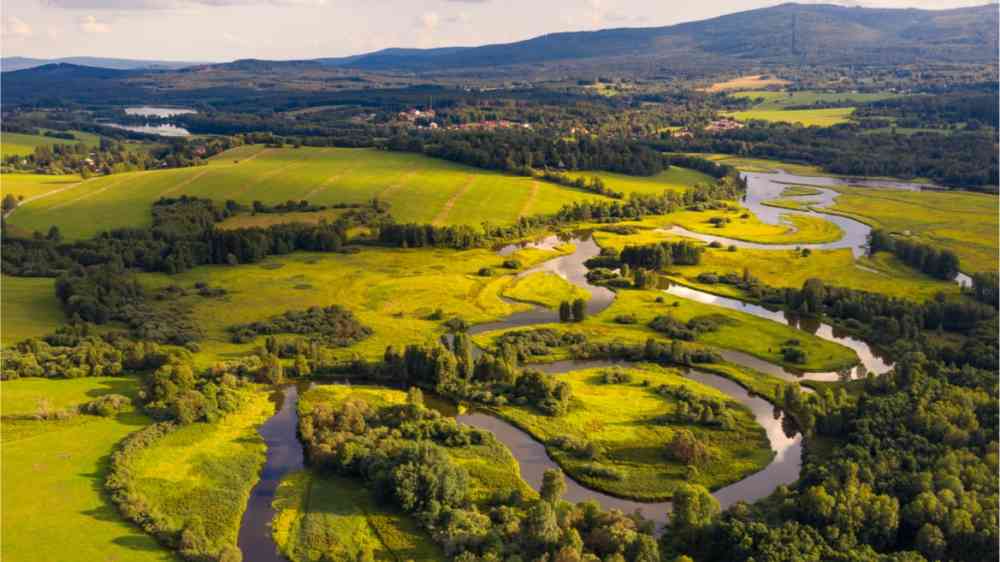
River flowing through green fields and hills.
Research briefs
Satellite data shows how flawed some river models can be

River models have long been used to estimate water in hard-to-reach or remote areas. New study from UMass Amherst shows the math can be off—way off.

University of Massachusetts Amherst
Lots of people and boats and the school at the village of Boca De Valeria on the Amazon River, Amazonas State, Brazil.
Research briefs
El Niño could offer early warning of extreme heat in the Amazon

El Niño and warming in the tropical Atlantic could help provide advance warning of extreme heat in the Amazon, with some signals appearing as much as seven months earlier, research has found.

ARC Centre of Excellence for Coral Reef Studies
Research briefs
How AI could help predict and explain water levels in the Great Lakes

An interpretable model is one that can be verified, discussed, and challenged. This is the prerequisite for AI to become a legitimate tool in water management.

Conversation Media Group, the
Research briefs
The techniques AI uses to create images can help predict floods

To produce predictions, generative AI models must be primed with existing information called training data, making predictions based on patterns observed in previous data sets.

Pennsylvania State University
Research briefs
The 2025 Kamchatka tsunami's rhythm could help early warnings

Seventy-three years after the magnitude 9.0 earthquake of 1952 in the same region, Kamchatka has reminded us that it is one of the most efficient tsunami sources in the Pacific.

PhysOrg, Omicron Technology Ltd
A vintage water pump amidst picturesque fields at sunset, capturing rural tranquility.
Research briefs
Can groundwater systems be resilient to droughts?

Team at Utrecht University developed a method to classify groundwater systems based on their ability to recover from long drought to better determine how groundwater systems recover after a drought and which groundwater reserves are most vulnerable.

Utrecht University
Research briefs
Including future generations in flood protection decision-making

The key message from the researchers is that investments made today in flood protection also affect opportunities available to future generations.

Deltares
Research briefs
Early heat waves hit wheat yields hardest

Research published in the Journal of Experimental Botany reveals that wheat crops are more sensitive to grain yield losses from heat waves that occur before reaching their flowering stage than those occurring later.

The Society for Experimental Biology (SEB)