News and announcements

Explore the latest updates on global disaster risk and resilience, with news stories that cover critical developments, expert insights, and emerging trends.

Whether you're looking for breaking news from the disaster risk reduction (DRR) community or in-depth analysis of efforts to build a safer, more resilient world, this is your page. Dive into a wide range of topics, from climate change impacts to community-based initiatives, technological innovations, and global policies shaping a more resilient future, at global, national or local level.

Submit your news article.

Stay connected to the pulse of DRR and join the global conversation to reduce risk and strengthen resilience—one update at a time.
Uploaded on
Uploaded on
Update

Voluntary government buyouts give owners of frequently-flooded homes the option to move away from vulnerable locations, while saving government insurers the financial responsibility to rebuild time and time again. On average, for every dollar invested in climate mitigation programs, there is a six dollar return on that investment by avoiding rebuilding.

Natural Resources Defense Council
Update

In 2017, America’s infrastructure conditions earned a D+ from the American Society of Civil Engineers. To design for a resilient future that can handle more weather extremes, experts call for solutions that are inclusive, collaborative, multi-disciplinary, multi-sectoral, and integrate climate science into infrastructure planning.

Union of Concerned Scientists
Research briefs

New research identifying climate vulnerability sites has found that the number of people affected by multiple climate change risks could double if the global temperature rises by 2°C compared to 1.5°C.

International Institute for Applied Systems Analysis
Update

The 2004 Indian Ocean tsunami has researchers reevaluating whether a magnitude 9.0 megathrust earthquake and resulting tsunami might also be a likely risk for the Caribbean region. Several large subduction zones and faults could be capable of producing earthquakes higher than 8.5, while another concern is a tsunami generated by submarine landslides that might occur after a more moderate-sized earthquake.

Seismological Society of America
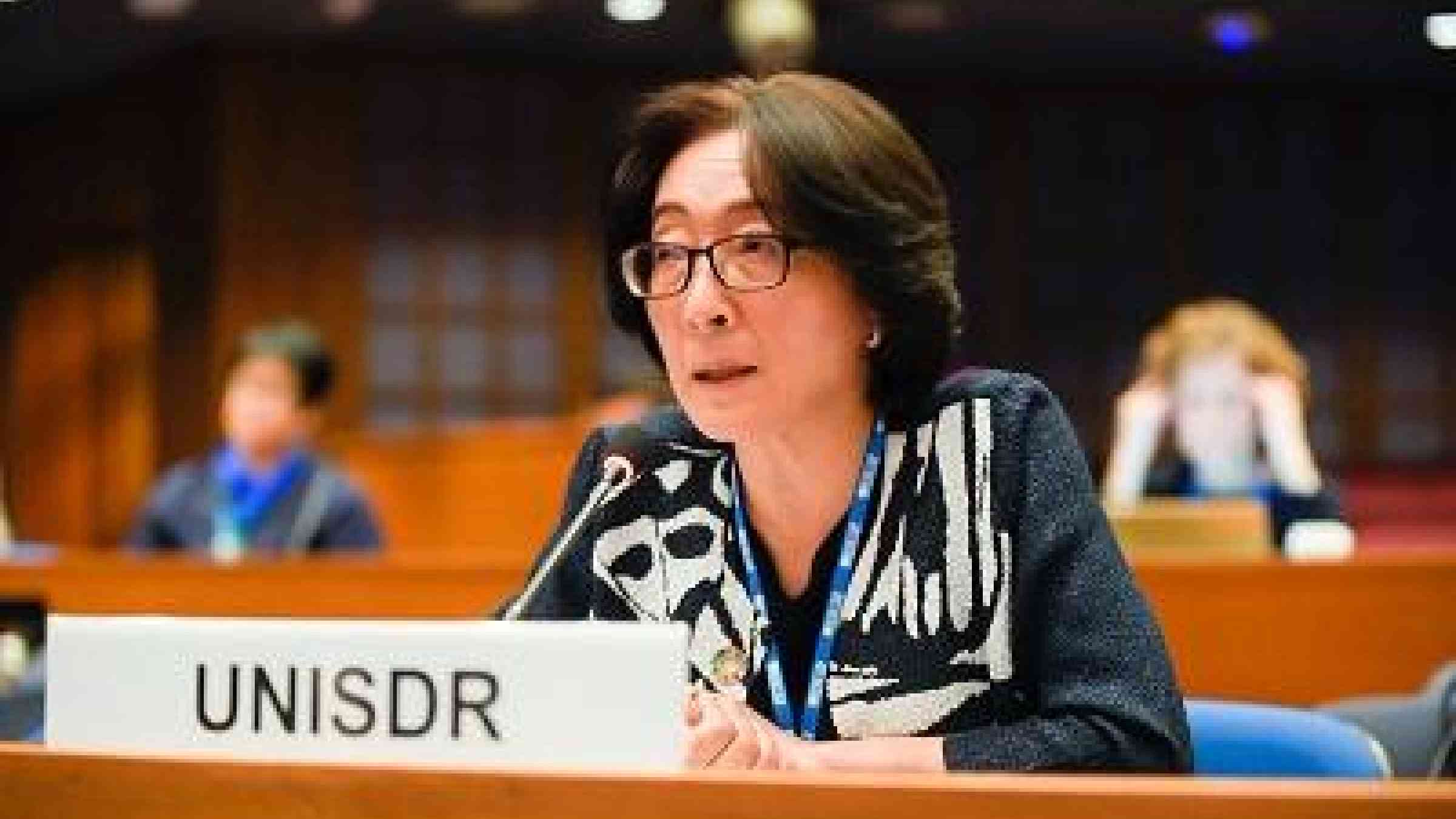
UNISDR head, Mami Mizutori, speaking at this week's 74th UN Economic and Social Commission for Asia and the Pacific (ESCAP)
Update

In advance of July's Asian Ministerial Conference on Disaster Risk Reduction, political leaders from Asia-Pacific have committed to tackling rising inequality across the region.

United Nations Office for Disaster Risk Reduction - Regional Office for Asia and Pacific
Update

Scientists have finalized a climate model that charts the Earth's atmosphere in unprecedented detail, and the new tools will help identify how climate change impacts weather-related natural disasters. This invention comes months before the Aeolus satellite enters orbit, which will allow scientists to identify wind speeds from tiny shifts in the light’s frequency.

European Commission
Update

Although many climate shocks are increasingly frequent and intense, they are no less difficult to forecast. As the world seeks to adapt to unprecedented climate conditions, states require new ways of building resilience in some of the world's most climate-threatened places.

Thomson Reuters Foundation, trust.org
Update

Pakistan has undertaken several measures to better handle and understand risk in Kashmir, such as creating emergency response centres to speed information flow. The country has also conducted studies to determine the specific disasters each area faces and developed logistics plans for emergency preparation. The real test, however, is whether other departments and sectors will be able to play their part.

Thomson Reuters Foundation, trust.org