
Items: 9
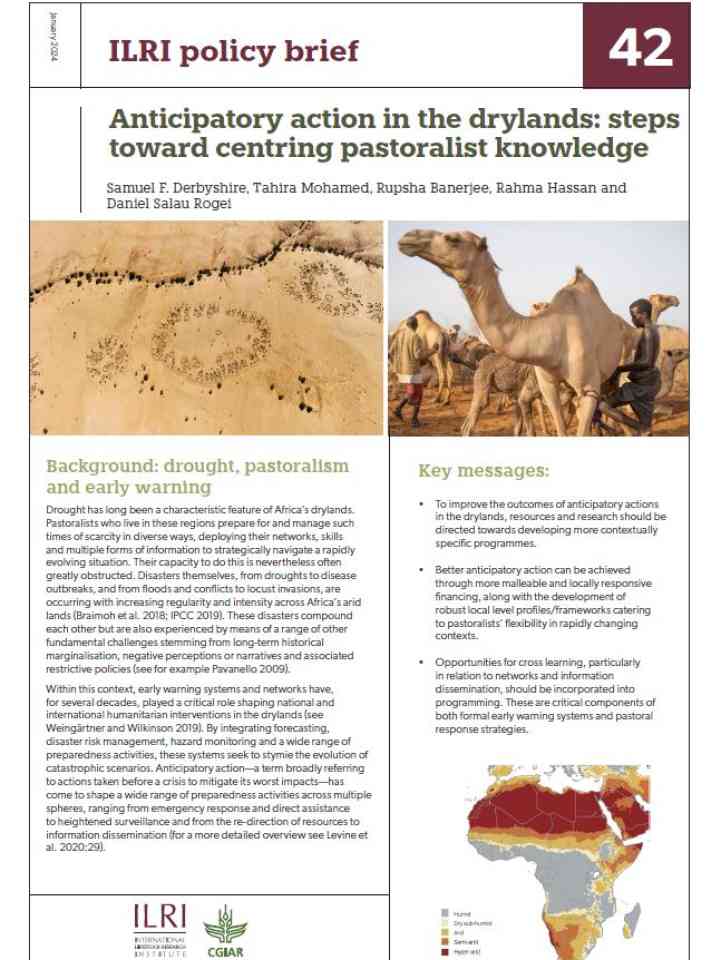
This brief sets out some key barriers to be overcome in the humanitarian sphere, highlighting the need for a more tailored approach to anticipatory action in dryland contexts, explicitly oriented toward pastoral economies and livelihoods.
To address the climate crisis, a paradigm shift in the global livestock sector is not an option—it is a necessity. But how and where should this transformation occur?

Index-based livestock insurance (IBLI) can protect livestock keepers from drought-related asset losses. This safety-net mechanism was developed in response to increasingly severe and frequent droughts in East Africa.
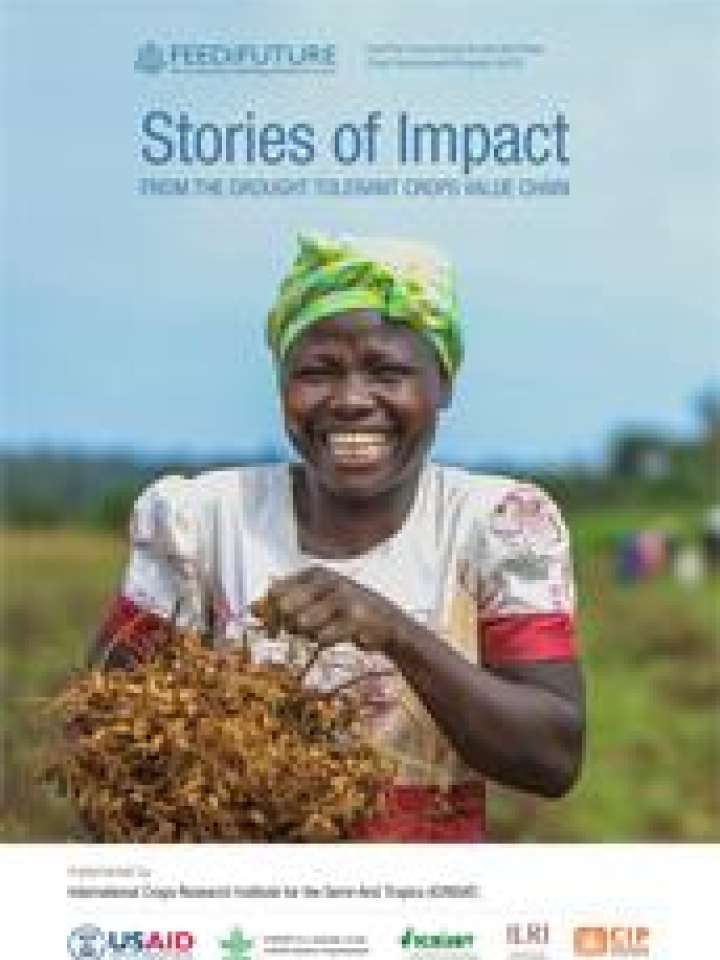
The Drought Tolerant Crops component of Feed the Future Kenya Accelerated Value Chain Development (AVCD) is a 3-year program (2015-18) working in Kenya to promote cereals and legumes that are not only climate smart but are als
The IBLI product was first launched in January 2010. It began with a pilot phase to test both the commercial viability of the product and the impact on the welfare of the target population.

Final report for project OSRO/RAF/915/RFF PR 44865, submitted by ILRI to the FAO Sub-Regional Emergency and Rehabilitation Officer for East and Central Africa:

In Philosophical transactions of the Royal Society A - mathematical, physical and engineering sciences:
A report to the European Union Delegation to the Republic of Kenya:
Voluntary Commitments
The organization has no registered commitments.
The Sendai Framework Voluntary Commitments (SFVC) online platform allows stakeholders to inform the public about their work on DRR. The SFVC online platform is a useful toolto know who is doing what and where for the implementation of the Sendai Framework, which could foster potential collaboration among stakeholders. All stakeholders (private sector, civil society organizations, academia, media, local governments, etc.) working on DRR can submit their commitments and report on their progress and deliverables.