1. Home
  2. Knowledge Base | PreventionWeb
  3. Themes

Disaster risk communication

This theme covers disaster risk communication, advocacy and awareness raising of disaster risk reduction (DRR) including through traditional and new media, as well as guidance for journalists reporting on disasters, guidance on communicating about climate change and extreme weather attribution. Raising awareness is a key disaster risk management activity.

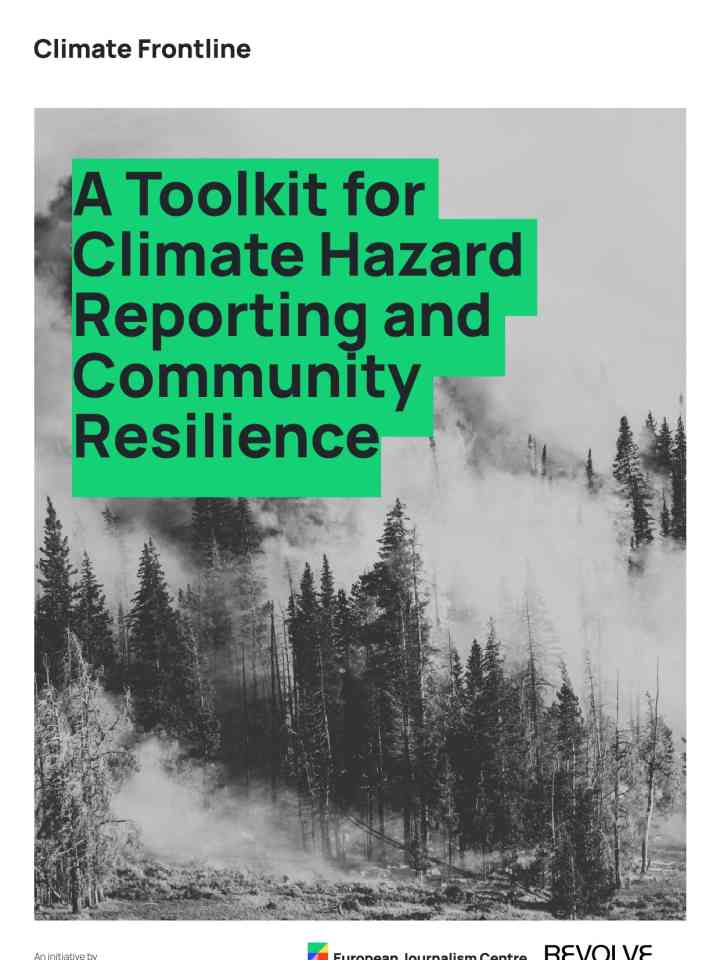
Visit the Risk Media Hub: a toolkit for news media professionals reporting on disasters and resilience. he toolkit provides an array of resources to help journalists tell the other side of the disaster story and raise critical questions to help societies become more resilient.

Explore the Disaster Risk Communication Hub: the risk communication hub aims to support practitioners - from any sector - who are planning public risk communication strategies with the general public.
When crises strike, fear, uncertainty, and information overload make people more vulnerable to false narratives and disinformation.

Latest Disaster risk communication additions in the Knowledge Base

Uploaded on
Update

Adaptation is not a substitute for mitigation. Cutting emissions remains indispensable to preventing the worst outcomes of climate change. Even if we succeed in limiting warming to 1.5°C, we will still face more floods, heatwaves, and ecosystem losses.

Global Investigative Journalism Network (GIJN)
Update

Climate science and adaptation strategies can only make an impact in the real world, when people can understand and act upon them.

International Water Management Institute (IWMI)
Rwanda wheat fields
Update

The farmer’s phone had vibrated just an hour earlier – a community alert of heavy rainfall expected within 48 hours. These messages now arrive regularly.

Water at the Heart of Climate Action
Satellite image of Hurricane Charley passing through in the Caribbean, 2004.
Update

The inland extent of watches and warnings will now be included, and an experimental cone will capture more areas at risk.

Yale Climate Connections
Towards multimodal geospatial reasoning: a foundation model approach for disaster detection from social media, news, and weather data thumbnail
Documents and publications

This publication explores how generative language models combine social media, news and weather data to detect disasters quickly and accurately, using satellite data to validate results from flood and wildfire case studies.

Natural Hazards (Springer)
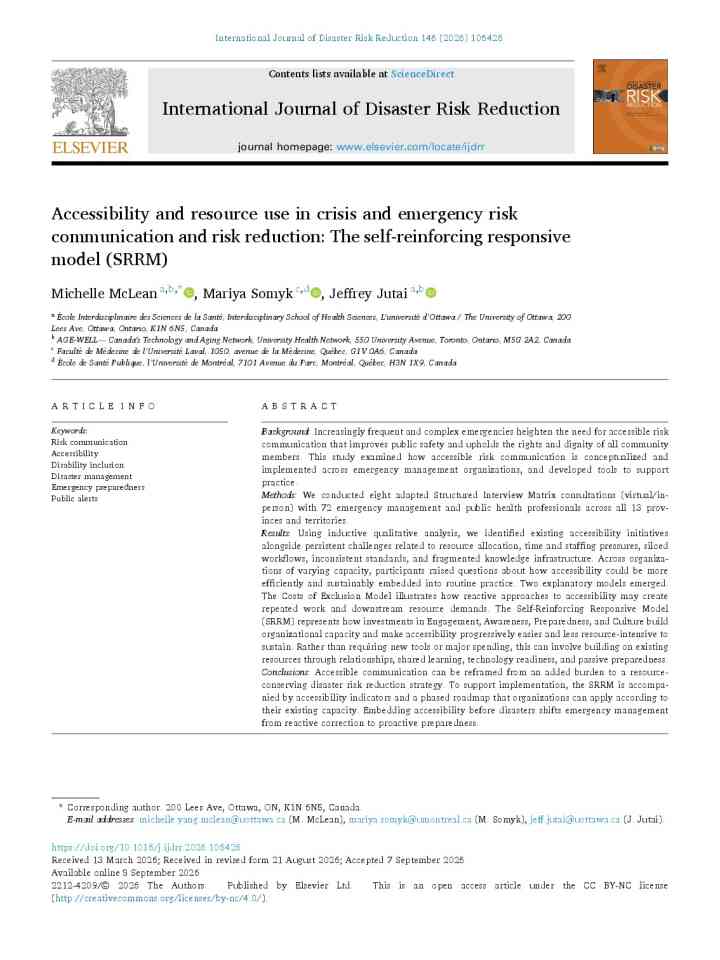
Bridging warning and adaptation addressing risk communication strategies for short-term natural hazard warnings and long-term risk adaptation – A scoping review thumbnail
Documents and publications

This review analyzes peer-reviewed studies to examine how risk communication strategies vary across temporal dimensions, hazard groups and intended purpose.

Progress in Disaster Science (Elsevier)
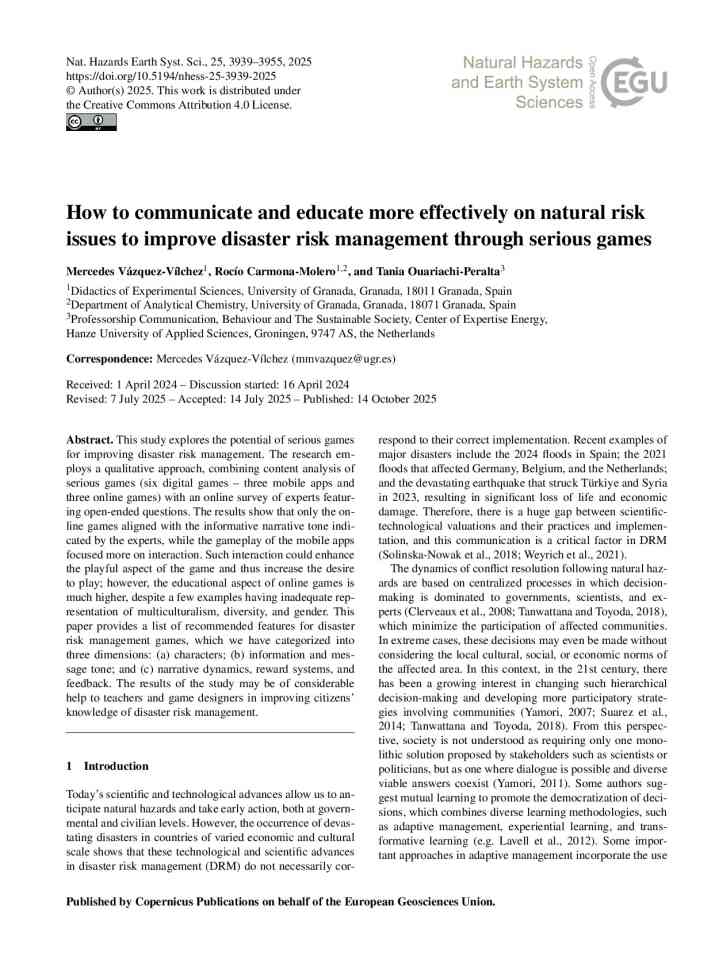
Seeing the Hazard: Effects of Visual Communication inFlood Warning Messages thumbnail
Documents and publications

The study examines how visual cues, especially maps and warning symbols, can improve flood early warning messages by helping citizens understand event magnitude, timing, impacts and recommended protective actions.

Journal of Flood Risk Management (Wiley)
Disaster Storylines and Knowledge Graphs from Global News with Large Language Models and Retrieval-Augmented Generation thumbnail
Documents and publications

This study aims to produce structured storylines and knowledge graphs for over 3,000 global disaster events by processing news articles through a RAG pipeline combining the power of LLMs for text generation and the semantic extraction of factual knowledge

European Commission Joint Research Centre
Uploaded on