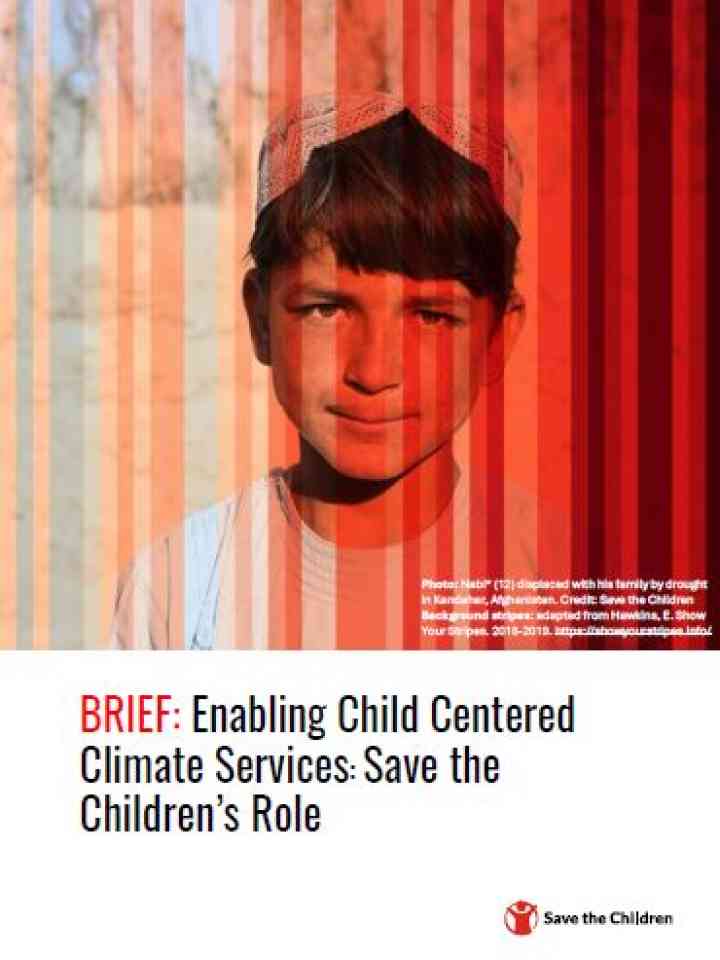
Enabling child centred climate services: save the children’s role
This document explains three ways that Save the Children can improve and leverage the power of climate services – or providing weather and climate information in ways that can support both individual and organisational decision-making and planning – to ensure children survive, learn and are protected.
These include:
- Systematically monitor and use near- and longer-term weather and climate information, including as part of ongoing risk management, and within program design and implementation.
- Support two-way, inclusive communication of information about weather and climate with and for children and communities, working with local EWS, social networks, schools and youth groups to enable children’s proactive engagement in the shaping, sharing, monitoring and evaluation of climate services that can prevent and minimise the climate-related risks that children face.
- Develop capacities for co-developing and advocating for child-centred climate services, systems and policies that can effectively support preparedness, DRR, AA, and adaptation, and protect child-critical services like health and education. Bringing together local and scientific monitoring and forecasting and working with children and communities and key sectors for children, to co-develop relevant, timely climate services for and with children and communities most directly impacted by near and longer-term climate-related risks.
The brief provides recommendations on how Save the Children can best use, communicate, shape and influence climate services for and with children and young people.
Number of pages
11 p.
Publication year
2025