The use of cohesion policy in disaster response and recovery
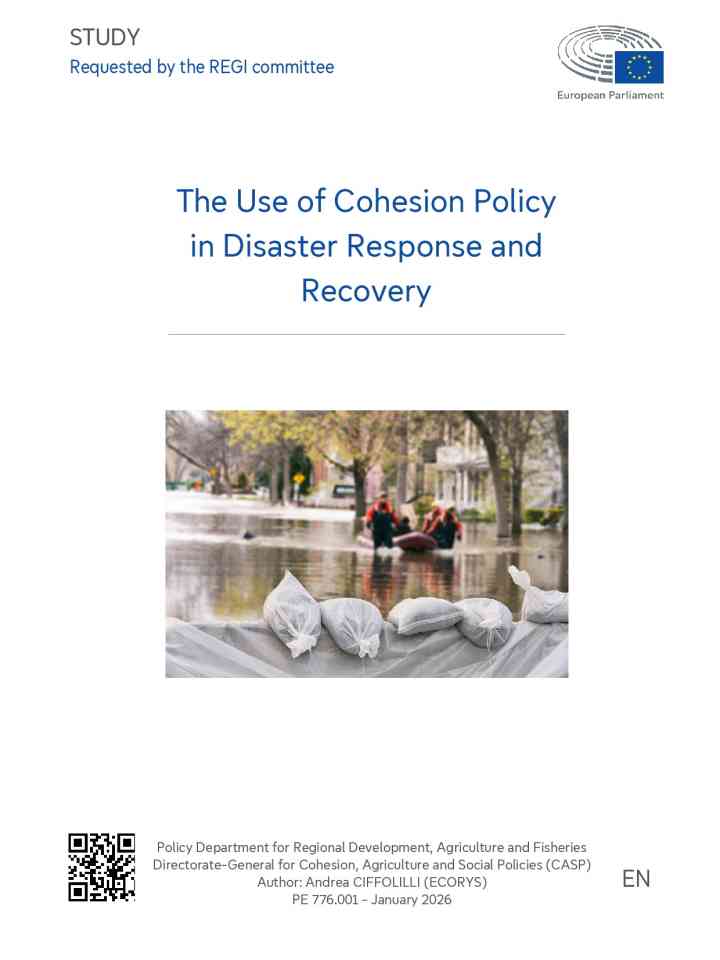
This study examines how European Union Cohesion Policy supports disaster risk reduction, response and recovery by financing prevention, climate adaptation and reconstruction across regions. It analyses the effectiveness of EU policy instruments in addressing hazards such as floods, wildfires, droughts and earthquakes, and highlights the role of Cohesion Policy in strengthening resilience through long-term investments, risk-informed planning and infrastructure development. Aimed at policymakers, practitioners and regional authorities, the report draws on policy analysis, surveys and case studies to assess how disaster risk management is integrated into regional development programmes.
The study finds that while Cohesion Policy is a key source of funding for prevention and preparedness, it is less suited to rapid emergency response and is constrained by administrative complexity and coordination gaps. It recommends strengthening policy coherence across EU instruments, streamlining procedures, and enhancing local and regional capacity for disaster risk management. The report also calls for stronger integration of the “Build Back Better” approach through risk-based planning, improved monitoring systems, and incentives for resilience-oriented reconstruction, ensuring that recovery investments reduce future risks rather than restore pre-disaster vulnerabilities.
Explore further