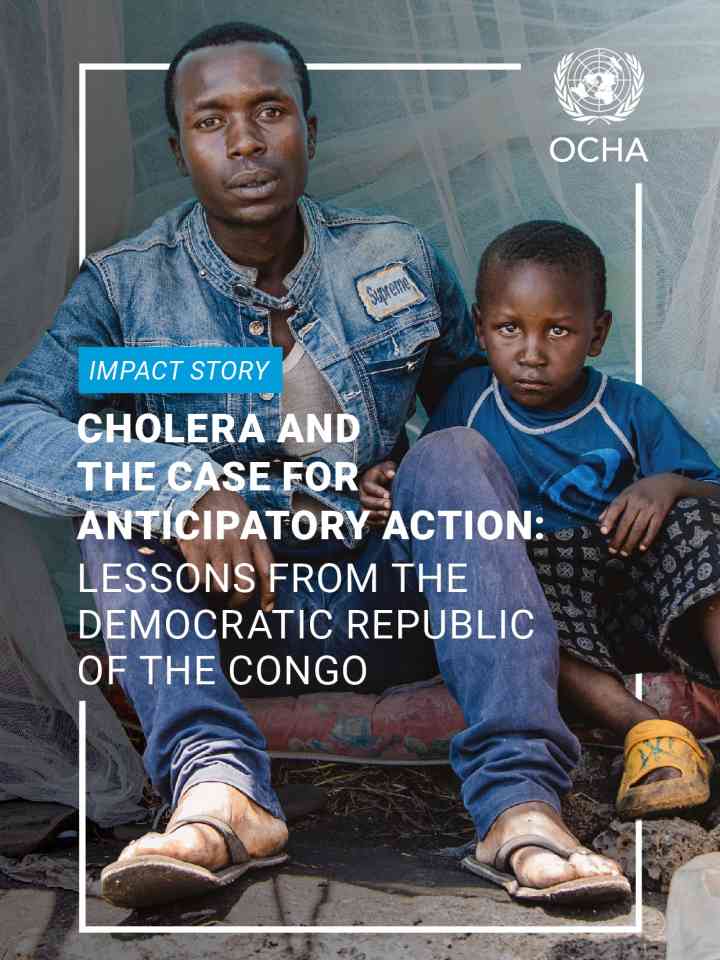
Cholera and the case for anticipatory action: Lessons from the Democratic Republic of the Congo
This case study examines how anticipatory action was used to tackle cholera in the Democratic Republic of the Congo (DRC), how it worked in practice and what lessons it offers for the future. The DRC’s experience offers more than a success story – it provides a scalable model. It proves that acting ahead of disease outbreaks is both possible and cost-effective. With cholera cases rising globally, now is the moment to match innovation with investment to ensure acting early becomes the norm.
Investing in water and sanitation in the world’s poorest and most vulnerable countries is critical to preventing cholera, and it remains the only way to achieve the Global Task Force on Cholera Control’s goal to eliminate the disease by 2030. The DRC pilot also shows that when partners act together, anticipatory action prevents cholera outbreaks from escalating, saves lives and delivers a more cost-effective response. In addition, a 2024 study on anticipatory action for cholera in the DRC found that acting early could reduce sexual violence, as women and girls did not need to boil water and therefore did not need to walk to find firewood.
Explore further