Items: 23

This report examines properties with multiple losses insured by the NFIP and the communities in which they are located to help inform decisions related to floodplain management, flood insurance, and mitigation efforts.
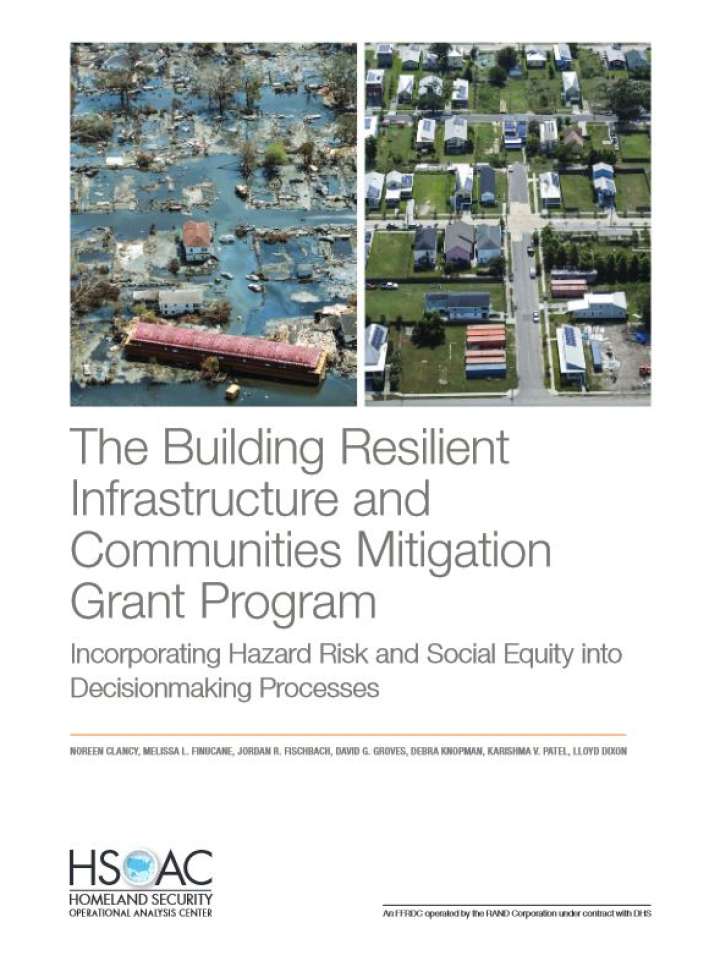
This report identifies ways for the BRIC program to develop a multihazard, forward-looking, risk-based approach to mitigation that also incorporates issues of equity and community well-being in its application and evaluation processes.
In 2021, extreme flooding from rain affected residents across the United States, causing property damage and loss of life. Preparing for and responding to climate change is a priority for the Department of Homeland Security (DHS).
In December of 2017, the Federal Emergency Management Agency (FEMA) Administrator requested the Department of Homeland Security (DHS) Science and Technology Directorate (S&T) research new and emerging technology that could be applied to wildla
The Community Emergency Response Team (CERT) program educates volunteers about disaster preparedness for the hazards that may impact their area and trains them in basic disaster response skills, such as fire safety, light search and rescue, team o
This document shows some tips or practices regarding how effective communication can help jurisdictions meet their obligations to carry out their disaster related activities in a non-discriminatory manner.
The National Mitigation Investment Strategy is a single national strategy for advancing mitigation investment to reduce hazard risks, and for increasing the United States’ resilience to natural hazards.
In Norfolk, Virginia, officials are taking action to reduce their city’s vulnerability to flood risks. The Vulnerability Reduction Scorecard enables communities to reduce their vulnerabilities to hazards across their network of plans – including transportation, parks, economic development, hazard mitigation, emergency management and comprehensive land use.
Voluntary Commitments
The organization has no registered commitments.
The Sendai Framework Voluntary Commitments (SFVC) online platform allows stakeholders to inform the public about their work on DRR. The SFVC online platform is a useful toolto know who is doing what and where for the implementation of the Sendai Framework, which could foster potential collaboration among stakeholders. All stakeholders (private sector, civil society organizations, academia, media, local governments, etc.) working on DRR can submit their commitments and report on their progress and deliverables.