Items: 18
The Samoa National Action Plan provides a day-to-day guide for operations and a monitoring, evaluation and learning (MEL) framework to assess performance and advance accountability of the Disaster Management Office.
Background:
Millions of dollars of new business investment will be made in Samoa in the coming years. Much of it will be spent in hazard-exposed locations.
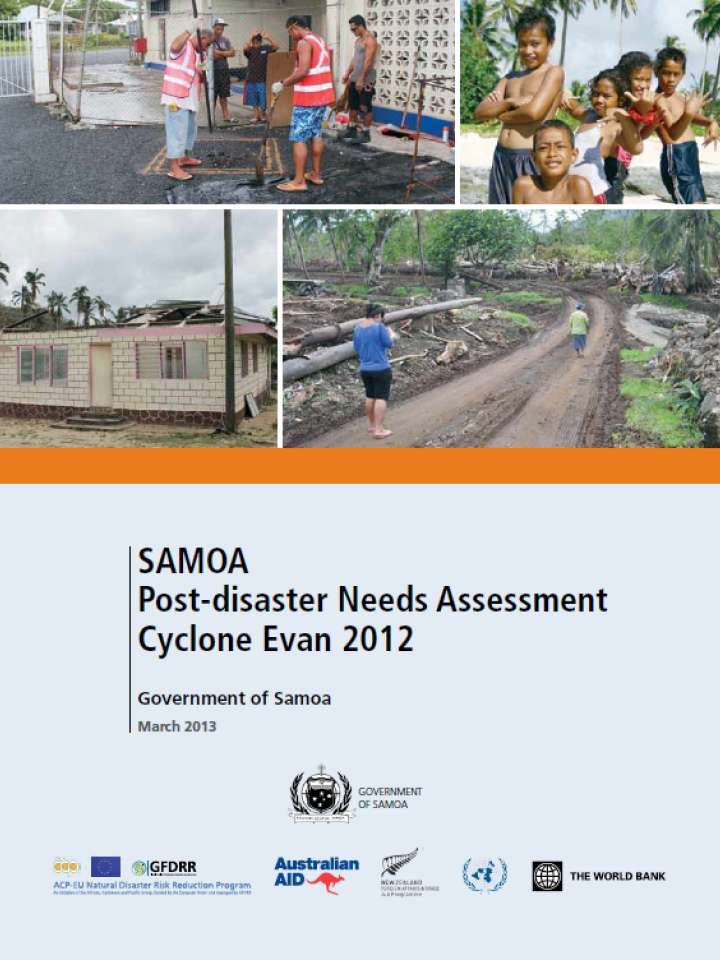
This post-disaster needs assessment report on Cyclone Evan was prepared in 2013 by the Government of Samoa in collaboration with international partners.
The Third International Conference on Small Island Developing States will be held from 1 to 4 September 2014 in Apia, Samoa, to be preceded by activities related to the conference from 28 to 30 August 2014, also in Apia, Samoa.
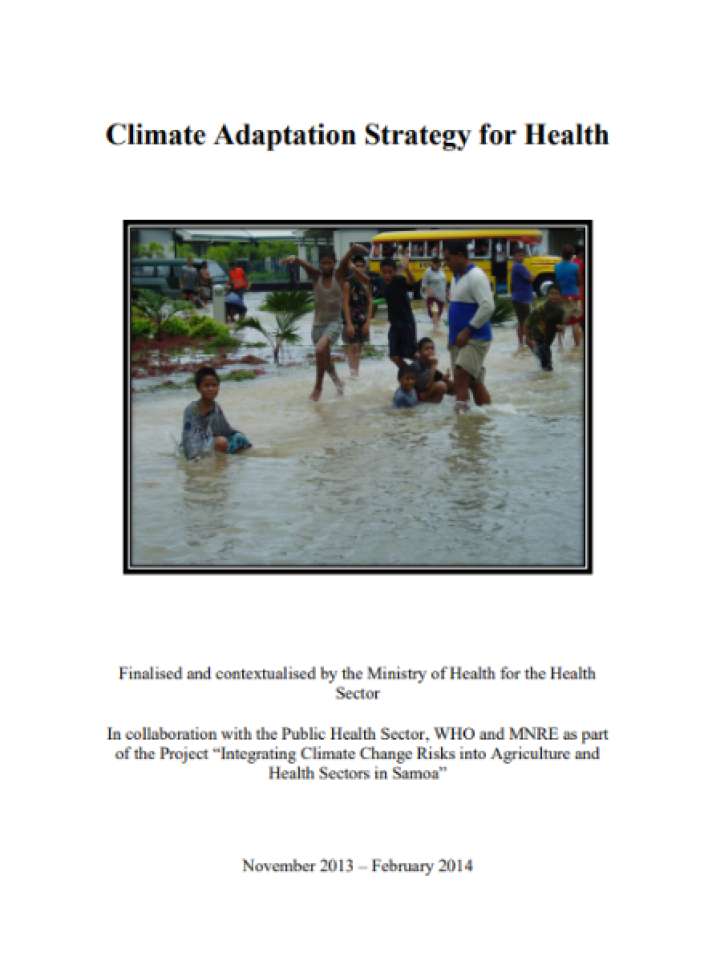
This strategy has been finalised and contextualised by the Ministry of Health to allow the Samoan health sector to anticipate on outbreaks and emergencies related to climatic conditions.
This report presents the institutional and legal framework for disaster risk reduction in Western Samoa, and describes its common disaster risks and natural hazards, such as drought, earthquake, cyclone and volcano.
The purpose of the Samoa National Action Plan (NAP) for Disaster Risk Management is to contribute to sustainable development by facilitating the inclusion of risk reduction and risk awareness as integral to societal functioning.
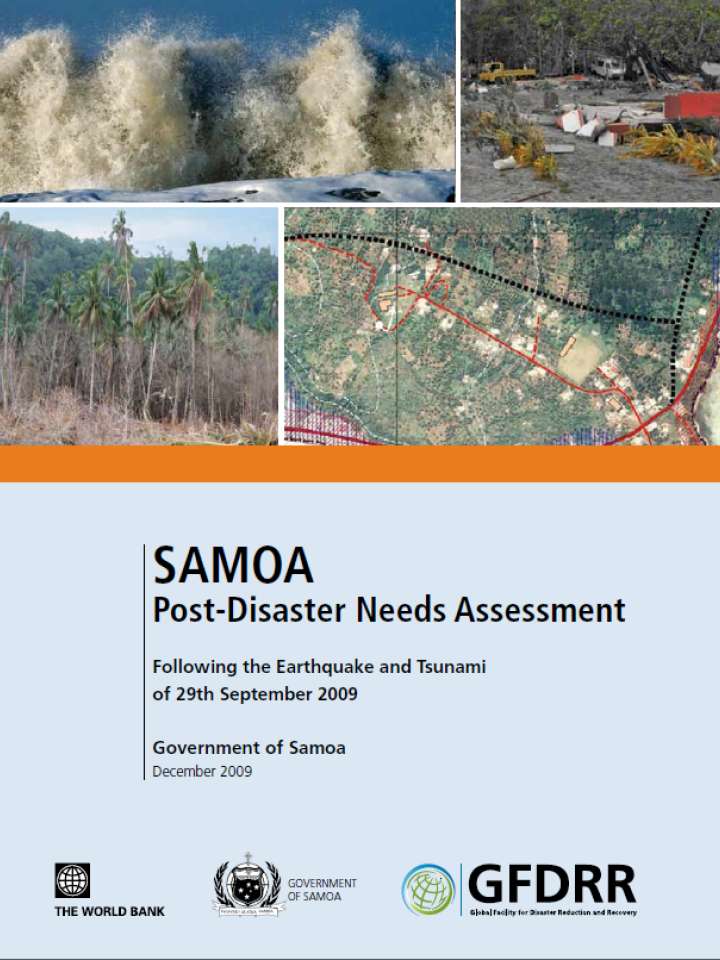
This Post-Disaster Needs Assessment (PDNA) draws upon the findings of various assessments carried out in the immediate aftermath of the disasters and presents estimates for loss and damage as a result of the 2009 earthquake and tsunami in Samoa.
Voluntary Commitments
The organization has no registered commitments.
The Sendai Framework Voluntary Commitments (SFVC) online platform allows stakeholders to inform the public about their work on DRR. The SFVC online platform is a useful toolto know who is doing what and where for the implementation of the Sendai Framework, which could foster potential collaboration among stakeholders. All stakeholders (private sector, civil society organizations, academia, media, local governments, etc.) working on DRR can submit their commitments and report on their progress and deliverables.