1. Home
  2. Knowledge Base | PreventionWeb
  3. Themes

Urban risk and planning

This theme contributes to the understanding of urban risk, which includes urban hazards, exposure and vulnerability. It also covers aspects related to improving awareness, as well as local governance and local capacity to effectively reduce disaster risk.
Latest Urban risk & planning additions in the Knowledge Base

Uploaded on
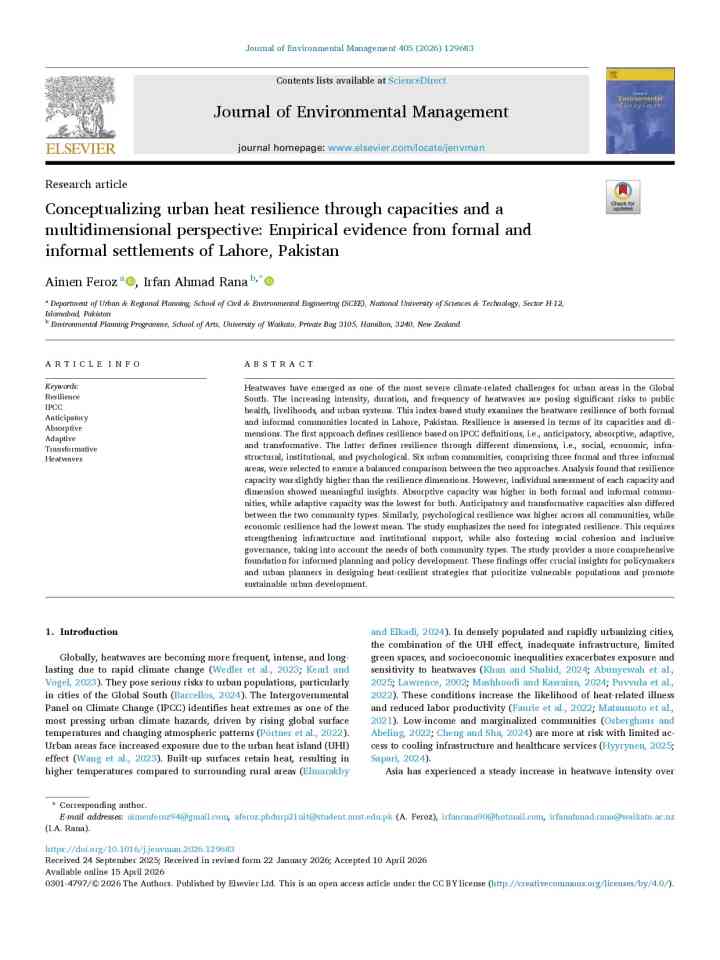
Conceptualizing urban heat resilience through capacities and a multidimensional perspective: Empirical evidence from formal and informal settlements of Lahore, Pakistan thumbnail
Documents and publications

This index-based study examines the heatwave resilience of both formal and informal communities located in Lahore, Pakistan. Resilience is assessed in terms of its capacities and dimensions.

Journal of Environmental Management (Elsevier)
Shade produced by trees in a city street in southern France
Research briefs

Cities around the world are planting more trees to cope with rising urban heat. But our research shows trees alone are often not enough.

Conversation Media Group, the
Update

A study of 138 Indian cities combines satellite vegetation data, night-light data, extreme-aware heat downscaling, and explainable AI to show why urban greening must be matched to humidity, canopy density, and airflow.

Indian Institute of Technology Gandhinagar (IITGN)
Research briefs

Scientists think it really is raining more often over cities, but perhaps not as much as we thought.

Conversation Media Group, the
Impacts of green space decline on urban heat in Huế City, Vietnam thumbnail
Documents and publications

This report analyzes the relationship between the decline of green spaces and rising summer temperatures in Huế City, Vietnam, over the period 2014–2024

Zurich Climate Resilience Alliance
A thermometer showing high temperatures. A city is blurred in the background.
Update

Paris, London and New York are more often associated with culture, finance and history than with dangerous heat. Yet each summer all three are increasingly exposed to extreme temperatures they were never designed to withstand.

Conversation Media Group, the
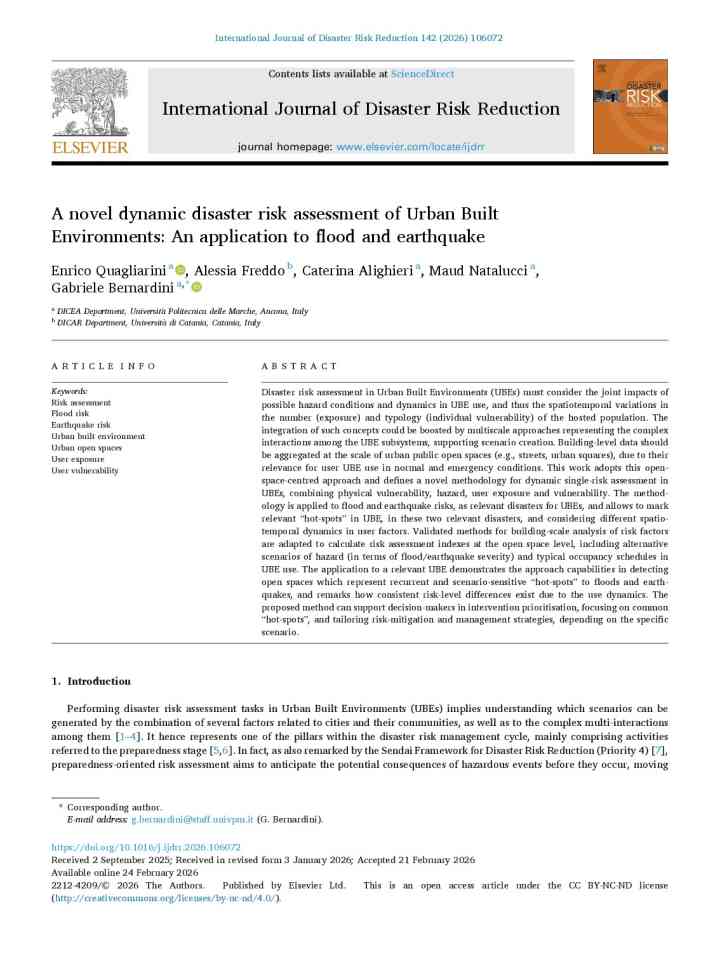
A novel dynamic disaster risk assessment of urban built environments: An application to flood and earthquake thumbnail
Documents and publications

This study presents a dynamic disaster risk assessment methodology for urban built environments, integrating flood and earthquake scenarios with spatiotemporal patterns of population exposure and vulnerability.

International Journal of Disaster Risk Reduction (Elsevier)
Update

Every year, disasters cost the global economy USD 202 billion, but when cascading impacts on education, supply chains and health are considered, the true cost rises to USD 2.3 trillion.

United Nations System Staff College
Uploaded on