1. Home
  2. Knowledge Base | PreventionWeb
  3. Themes

Inclusion

Ensuring an all-of-society engagement and partnership for DRR through empowerment and inclusive, accessible and non-discriminatory participation, paying special attention to people disproportionately affected by disasters, especially the poorest.

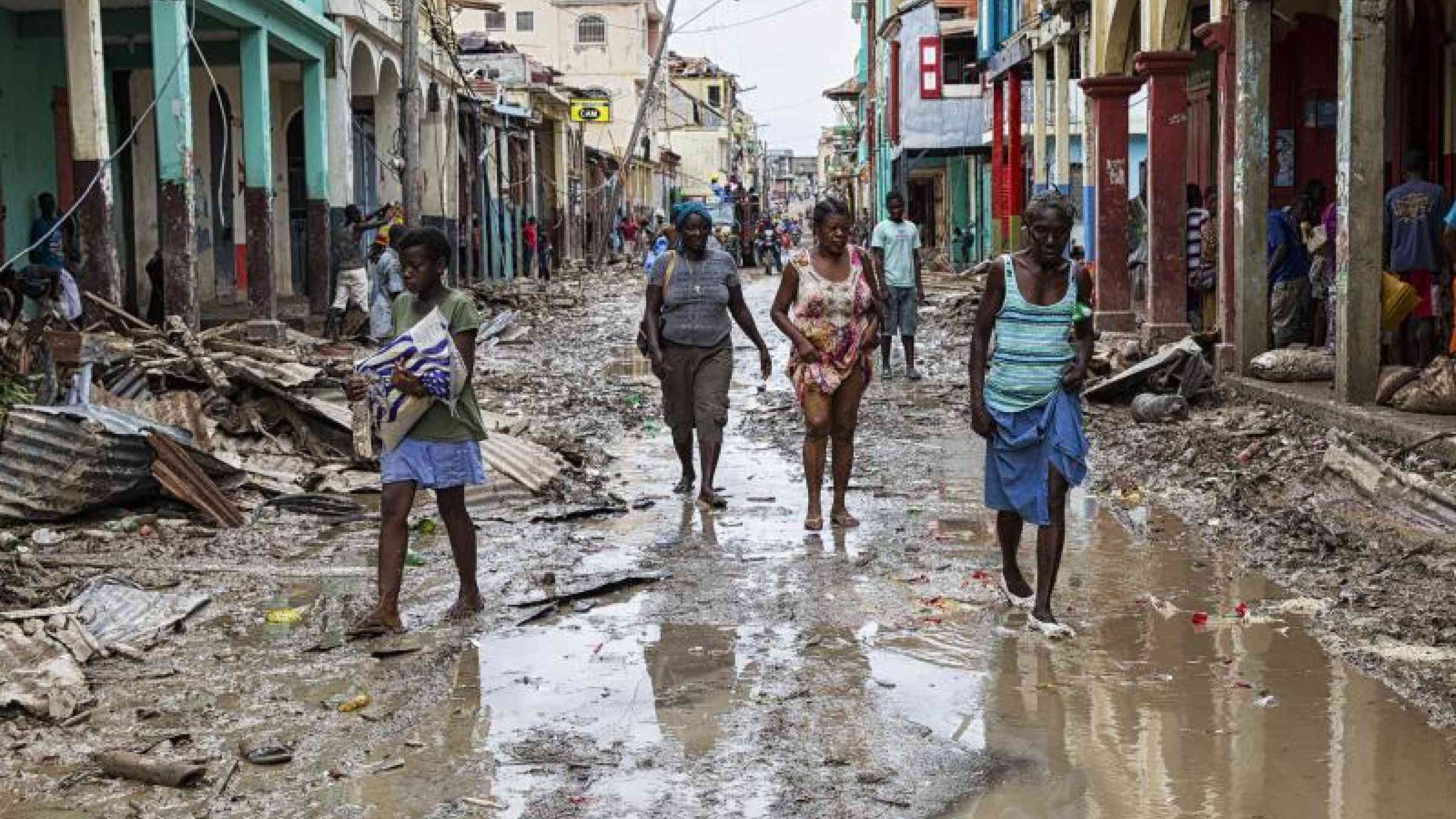
Here are five ways countries ensure persons with disabilities are not left behind when the next disaster strikes.

Latest Inclusion additions in the Knowledge Base

Uploaded on
Tsunami warning signs, such as this one posted in American Samoa, are a key tool to raise public awareness of how to react (Photo: FEMA)
Update

Early warning technology is vital to save lives if a tsunami strikes, but public awareness of how to react is the critical factor, according to experts at an international meeting.

United Nations Office for Disaster Risk Reduction (UNDRR)
Update

Research conducted in the aftermath of the Sri Lanka landslides suggests that while heavy rainfall was the trigger for the flooding, the root causes of the disaster were social.

Conversation Media Group, the
Update

While many governments and organisations seek to assist the people most vulnerable to climate change, few actively involve programmes’ beneficiaries, experts told participants at a conference on community-based adaptation to climate change in Kampala this week.

Reuters Institute for the Study of Journalism (RISJ)
Aaron Clark-Ginsberg, Postdoctoral Researcher at Stanford University, Stanford University

I worked as Concern Worldwide’s disaster risk reduction documentation officer from 2012-2014, and travelled to Bangladesh to review Concern’s

Update

Women and children can be disproportionately affected by disasters, but taking a closer look at disaster data could help reduce their vulnerabilities. Social media and smartphone apps can be used to disseminate warnings and weather alerts to decrease vulnerability.

Reuters Institute for the Study of Journalism (RISJ)
Documents and publications

This paper examines the exposure, vulnerability, and ability of households in Colombo, Sri Lanka, to respond to floods, and brings out significant policy implications. The study used detailed questionnaire-based surveys to obtain data on households, to

Global Facility for Disaster Reduction and Recovery, the (GFDRR)
Update

Cordaid, with local partners, has been implementing resilience projects in north-east Uganda since 2009. Resilience building programs have proven to reduce disaster risk, through risk mitigation, adaptation, preparedness, early action and adequate response in case of stress.

Catholic Organization for Relief and Development Aid
Update

As Thailand's rainy season gets underway, residents in and around Bangkok say they are experiencing more intense and frequent seasonal floods since 2011, when the capital was hit by its worst flooding in half a century. Experts warn that the the concerns of the urban poor are being overlooked.

Thomson Reuters
Uploaded on