1. Home
  2. Hubs: tools and knowledge
  3. Wildfire Portal

Water

Wildfires can affect water resources by damaging watersheds, degrading water quality and disrupting water supply systems.

Ash, debris and contaminants from burned landscapes can impact rivers, reservoirs and groundwater, while increased demand during firefighting and recovery can place additional pressure on water resources. Explore the latest research, insights and resources on the impacts of wildfires on water and the measures needed to protect water security and strengthen resilience.
Uploaded on
Update
US: Cascading climate disaster in California

While the storms will bring much-needed water to a parched California and should significantly lower the wildfire risk, they also bring dangerous new flood and mudslide risks, particularly in areas recovering from wildfires.

Conversation Media Group, the
Update
Wildfires are threatening municipal water supplies

Climate change is driving an increase in catastrophic wildfires; consumers see, smell, and taste the effects in their water. Water utilities must prepare for worse ahead.

Earth Observatory of Singapore - Nanyang Technological University
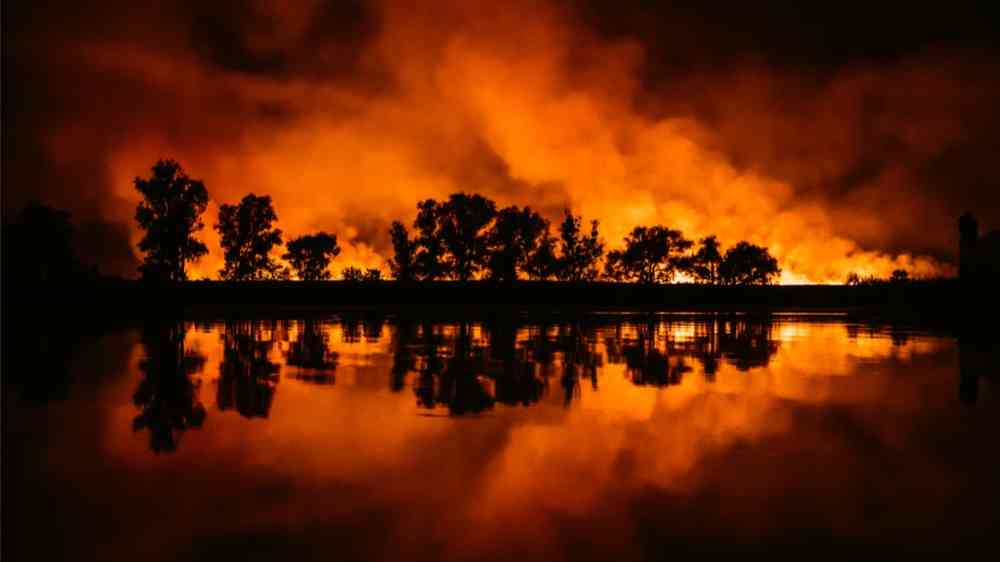
Wildfire during the night reflected in a water body
Update
Wildfires increasingly impact rivers and water supplies

Wildfires are increasing in frequency, severity, duration and extent with potentially catastrophic impacts on river systems and water supplies.

Water Science Policy
Documents and publications

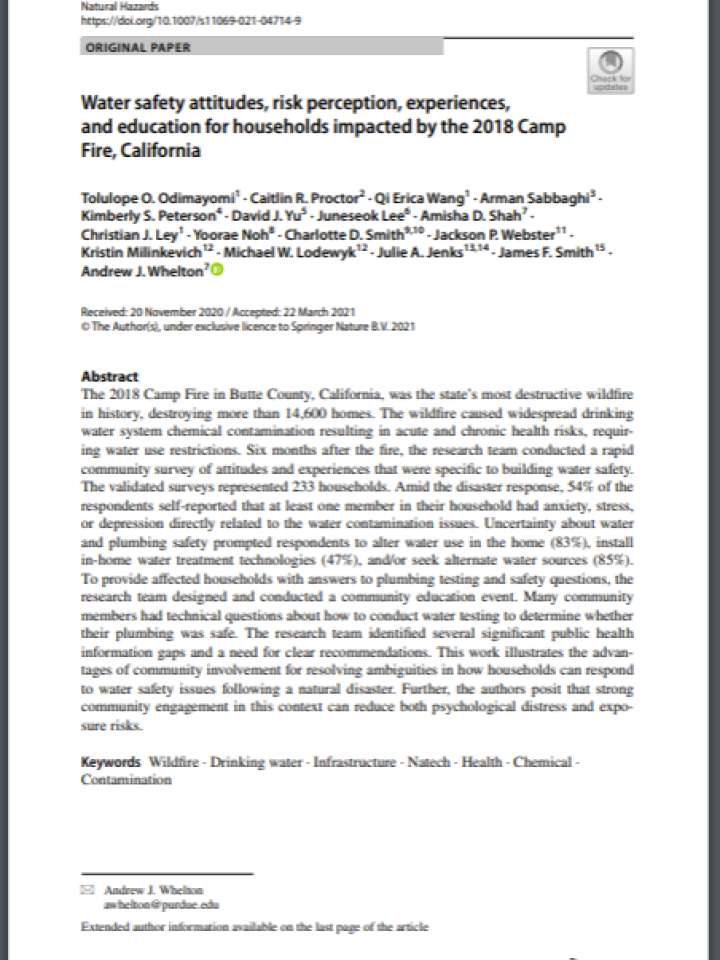
The 2018 Camp Fire in Butte County, California, was the state’s most destructive wildfre in history, destroying more than 14,600 homes. The wildfre caused widespread drinking water system chemical contamination resulting in acute and chronic health risks

Natural Hazards (Springer)
Research briefs
Wildfires are contaminating drinking water systems

Wildfires can do lasting damage beyond the reach of the flames – they can contaminate entire drinking water systems with carcinogens that last for months after the blaze.

Conversation Media Group, the
Update
Biggest risk to surface water after a wildfire? It’s complicated

Whether you’re considering short-term or long-term changes to water quality after a wildfire, scientists agree that sedimentation is a big concern.

Eos - AGU
Documents and publications

The Tubbs Fire (2017) and Camp Fire (2018) are the first known wildfires where widespread drinking water chemical contamination was discovered in the water distribution network and not in the source water after the fire. In both disasters, drinking water

American Water Works Association
Update
USA: Wildfires leaving toxic water behind – how to protect the public

Fires burning large parts of the western United States have penetrated populated areas, thus damaging drinking water systems.

Conversation Media Group, the
Uploaded on