1. Home
  2. Hubs: tools and knowledge
  3. Extreme Heat Portal

Latest extreme heat additions in the Knowledge Base

Heatwaves are quietly reshaping everyday life in ways many of us barely notice — but the impacts are serious and growing.
Uploaded on
Update

They explore the idea of appliances as “microinfrastructure”—from fans and air conditioners that reduce heat risk to refrigeration, cold storage, and solar water pumps that support food security and livelihoods.

America Adapts
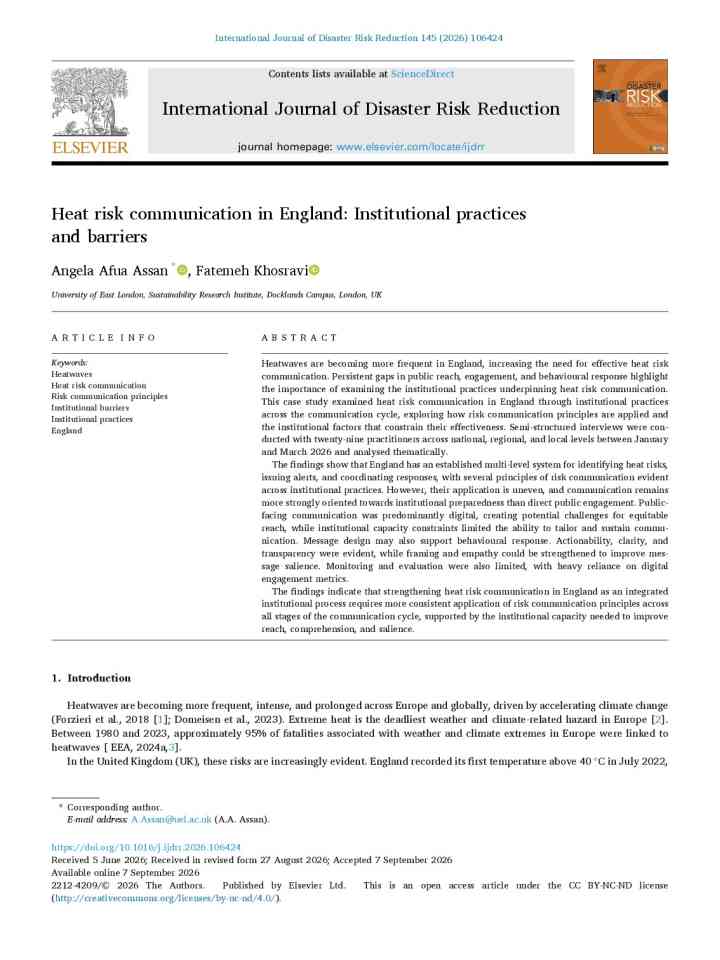
Heat risk communication in England: Institutional practices and barriers thumbnail
Documents and publications

This paper examines institutional heat risk communication in England. Interviews with 29 practitioners revealed strong alert and coordination systems, but uneven public engagement, limited evaluation and capacity constraints that hinder effectiveness.

International Journal of Disaster Risk Reduction (Elsevier)
Research briefs

Extreme heat has become more common—as both research and lived experience show—but when it arrives is a different question.

Columbia Climate School
Update

Estimates suggest drop in production with vineyards also concerned ‘smoke taint’ from wildfires may affect quality.

Guardian, the (UK)
Heat early warning system in Vietnam: Current status and recommendations thumbnail
Documents and publications

This case study of Vietnam’s heat early warning system finds that heat monitoring and forecasting are established, but risk knowledge, preparedness, targeting of warnings and institutional coordination remain limited.

Red Cross / Red Crescent Climate Centre
Zurich Climate Resilience Alliance
Update

Exceptionally high temperatures preceded the August mountain collapse that triggered deadly floods in Nepal and China. Scientists say heat may have contributed to permafrost thaw and glacier instability, but no direct causal link has yet been established.

Phys.org
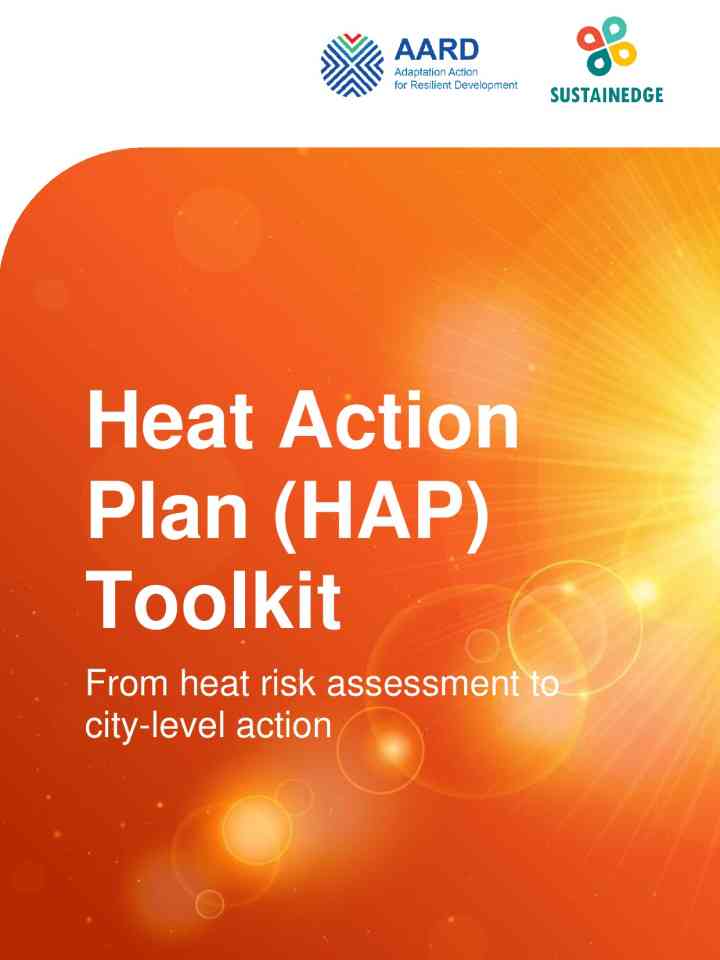
heat-action-plan-hap-toolkit_june-2026_v2.pdf thumbnail
Documents and publications

This toolkit provides a practical, step-by-step framework to support cities, urban local governments, planners, practitioners, and community stakeholders in developing and implementing Heat Action Plans (HAPs) to address the growing risks of extreme heat.

Sustainedge
Update

August was the hottest month of the year, with an average temperature of 25.6 C, up 5.2 ​C from the 1951-1980 average and 3.5 C ​above the 1991-2020 norm, according to Italy's research public body.

Thomson Reuters
Uploaded on