1. Home
  2. Hubs: tools and knowledge
  3. Extreme Heat Portal

Heat and public health

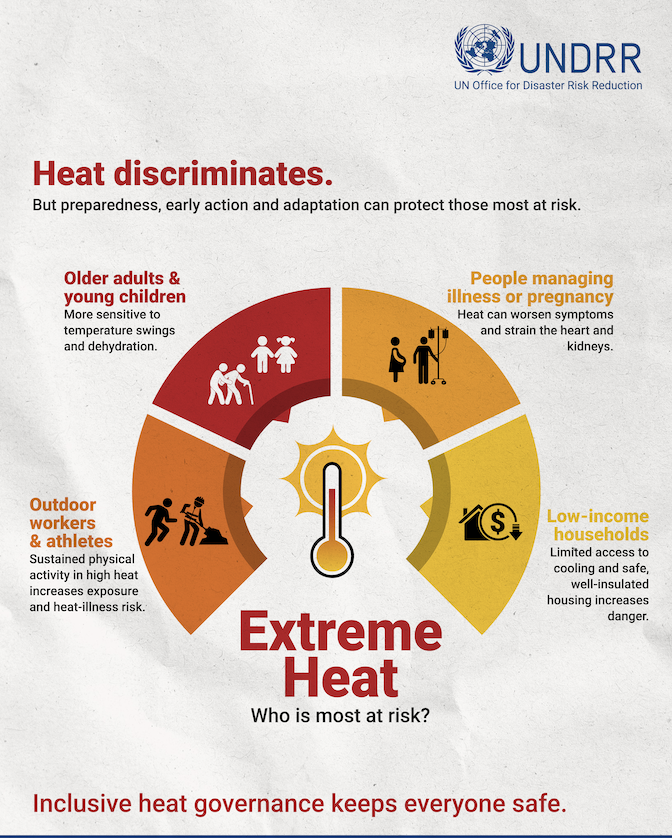
Who does extreme heat discriminate against?
Uploaded on
Breaking point: Heat and the garment floor, a HeatWatch and TISS study thumbnail
Documents and publications

Experiences of garment workers in this study show that extreme heat is not just uncomfortable but determines health, mental well-being, productivity, and livelihood. Yet workplace regulations and climate responses remain poorly equipped to address risks.

HeatWatch
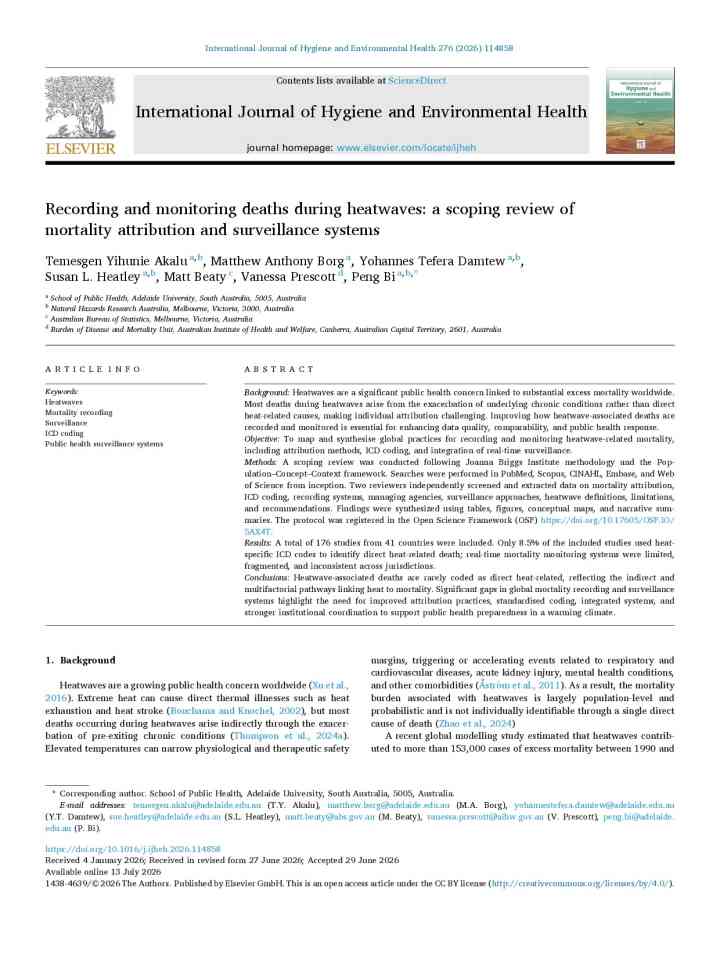
Recording and monitoring deaths during heatwaves: A scoping review of mortality attribution and surveillance systems thumbnail
Documents and publications

This scoping review of 176 studies from 41 countries found that heatwave-associated deaths are rarely coded as direct heat-related, while surveillance systems remain fragmented, highlighting the need for standardized and integrated monitoring.

International Journal of Hygiene and Environmental Health
 Resilience Beyond Relief: Integrating Psychosocial Support into Disaster Management  thumbnail
Documents and publications

This NDMA guide integrates psychosocial support into disaster management in Pakistan, emphasizing that early, inclusive PSS is key for mental health, resilience, and recovery—advocating MHPSS as central to sustainable development, not a stand-alone add-on

National Disaster Management Authority (Pakistan)
Update

A new survey by the Annenberg Public Policy Center finds that the majority of Americans believe climate change is increasing the risk of respiratory diseases and heat- and insect-related illnesses.

University of Pennsylvania
People walking on a hot day
Update

As heat overlaps with other intensifying climate events, scientists are uncovering how they compound each other – and how cities can adapt

Dialogue Earth
Dynamic image of a wildfire engulfing a countryside field, with thick smoke and flames.
Update

An increase in pollution from wildfires and heatwaves risks undermining international efforts to improve air quality and protect human and ecosystem health, according to a new WMO report, which traces interlinkages between air quality and climate.

World Meteorological Organization (WMO)
WMO air quality and climate bulletin thumbnail
Documents and publications

The sixth WMO Air Quality and Climate Bulletin examines links between air quality and climate change, highlighting aerosol impacts, wildfire smoke, ozone pollution and atmospheric monitoring needs.

World Meteorological Organization (WMO)
Three smiling children in vibrant clothing enjoying a sunny day outdoors.
Update

A team found that for every standard deviation increase marine heat wave occurrences in a 24-month period child mortality increases by 5.4 percent. Malnutrition related child wasting and child stunting also increased by 6.5 and 8.8 percent respectively.

Grist Magazine
Uploaded on