Aller au contenu principal
My account
Navigation loading…

Navigation failed to load. If you are on the UNDRR office network, your browser may be blocking access to external resources. Learn how to allow access.

Menu
Your experience on PreventionWeb

Please help us improve PreventionWeb by taking this brief survey. Your input will allow us to better serve the needs of the DRR community.

See the survey

Last updated 19 Mar 2026

USA: Los Angeles fires 2025
Upload your content
Image
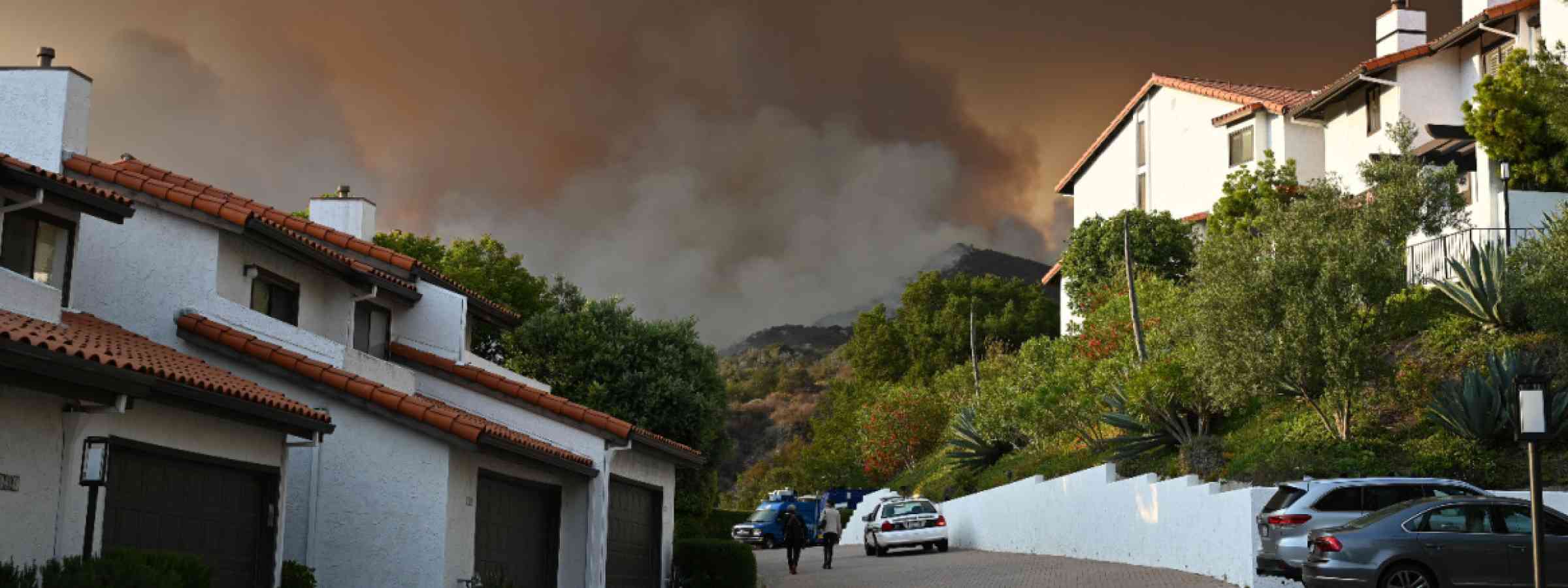
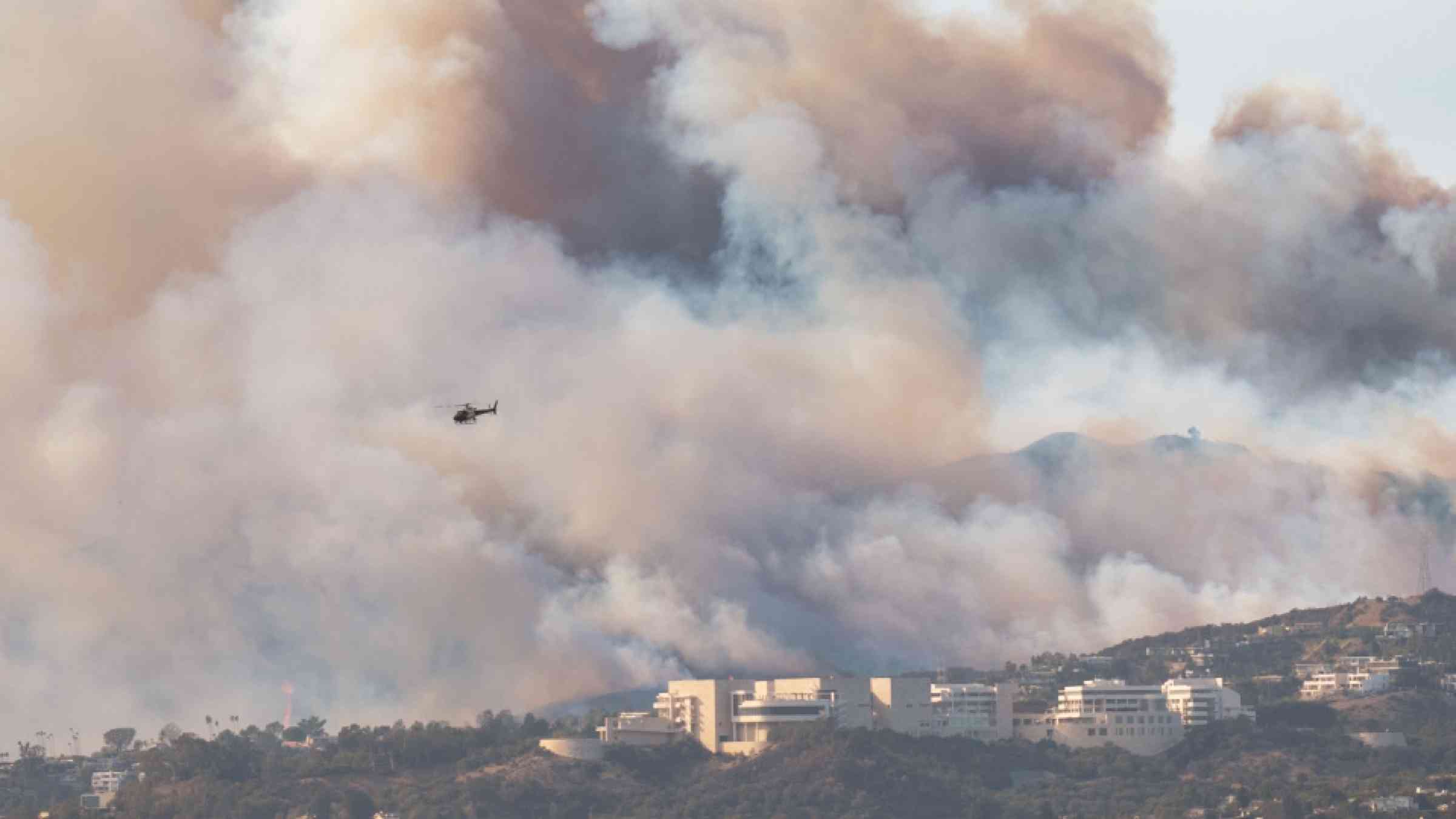
Fire in the background in the Palisades neighborhood, LA, USA (2025)
BrittanyNY/Shutterstock

Introduction

California's wildfires have become increasingly destructive in recent years. As of January 10, 2025, five major fires in and around Los Angeles have burned over 29,053 acres, leading to the evacuation of more than 180,000 people, the destruction of over 2,000 buildings (mainly homes), and an estimated damage cost of at least US$52 billion (£42.5 billion). 25 lives have been lost.

The exact causes of each fire are still under investigation. However, several factors have contributed to their rapid spread and intensity. The seasonal Santa Ana winds are particularly strong this year, bringing low humidity, dry air and high wind speeds. Southern California has received less than 10% of its average rainfall since October 2024, creating dry conditions that make the area highly vulnerable to fire. Unusually wet winters in both 2022-23 and 2023-24 led to increased vegetation growth, providing more fuel for the fires. This cycle of wet and dry extremes, known as "hydroclimate whiplash", is part of the increasingly intense climate cycles caused by climate change. Hydroclimate whiplash can occur virtually anywhere. These cycles can cause extreme wildfires, such as those in California, where rapid vegetation growth is followed by drying. They can also exacerbate flooding when unusually heavy rains hit the dry-baked ground, then run off over the land rather than seeping in, leading to flash flooding.

Discover this collection of content resources on the 2025 fires in Los Angeles, USA.
Related links
Managing the risks of wildfire smoke
USA: Hurricanes Helene and Milton 2024
Australia: Bushfire season 2019-20
Hazards
Wildfire
Country and region
United States of America

Knowledge base

Update
23 janvier 2025
Incendies à Los Angeles : le tissu urbain et social en proie aux flammes

La Cité des anges, qui a souvent été en proie aux flammes, n'a pas su endiguer la catastrophe, qu'ont aggravée la croissance urbaine et les inégalités structurelles au sein de la population.

Conversation Media Group, the
Fire on a Palisades hill in Los Angeles, USA (2025)
Update
16 janvier 2025
Les incendies de Los Angeles ne sont pas une catastrophe naturelle

Ce qualificatif est un leurre qui déresponsabilise l’humanité, évoquant des colères de la planète face auxquelles nous serions impuissants. L’exposition et la vulnérabilité découlent en réalité de choix humains.

Le Monde

Is this page useful?

Yes No
Report an issue on this page

Thank you. If you have 2 minutes, we would benefit from additional feedback (link opens in a new window).

PreventionWeb is the global knowledge sharing platform for disaster risk reduction (DRR) and resilience.

  • Newsletter
  • Submit your content
  • Blog pitches
  • Submission and publishing policy
  • About PreventionWeb
  • Contact us

Hazards

  • Avalanche
  • Cold Wave
  • Cyclone, Hurricane and Typhoon
  • Drought and Desertification
  • Earthquake
  • Epidemic and pandemic
  • Flood
  • Heatwave, extreme heat and heat stress
  • Insect infestation
  • Land subsidence
  • Landslide
  • Nuclear, biological, chemical (NBC)
  • Sea level rise
  • Technological hazard
  • Thunderstorm
  • Tornado
  • Tsunami
  • Volcano
  • Wildfire

Regions

  • Africa
  • Americas
  • Asia
  • Europe
  • Oceania

Themes

Understanding & managing risk

  • Preparedness
  • Early warning
  • GIS and mapping
  • Data and information management
  • Risk identification and assessment
  • Small Island Developing States
  • Earth Observation

Natural environment

  • Climate change
  • Environment and ecosystems
  • Food security and agriculture
  • Water

Cross-cutting

  • Systemic risk
  • Recovery

Human development

  • Capacity development
  • Children and youth
  • Civil society / NGOs
  • Community-based DRR
  • Cultural heritage
  • Gender
  • Human mobility
  • Inclusion
  • Social impacts and resilience

Science, knowledge & advocacy

  • Disaster risk communication
  • Traditional and Indigenous knowledges
  • Science-policy-practice interface

State, governance & economy

  • Financing DRR
  • Fragility and conflict
  • Governance
  • Insurance and risk transfer
  • Private sector

Infrastructure & critical services

  • Critical infrastructure
  • Education and school safety
  • Health and health facilities
  • Structural safety
  • Urban risk and planning
Loading