Research briefs

Keep up to date with the latest research on disaster risk and resilience on the PreventionWeb knowledge base.

Explore cutting-edge research on disaster risk reduction and resilience through PreventionWeb's dedicated research briefs section. Our platform curates and highlights the most recent academic studies, providing valuable insights into disaster risk management. Each research brief distills key findings from peer-reviewed journals and academic publications.

Submit a research brief.

These briefs are designed to keep you informed about the latest scientific advances. Links to the full publications are always included, ensuring easy access to in-depth knowledge. Please note that this section exclusively features academic research, distinct from reports by international organizations or Non-Governmental Organisations.

Uploaded on
Research briefs

Geographic information system (GIS) maps help researchers, policymakers, and community members see how environmental risks are spread throughout a given region.

Eos - AGU
Cow on a farm in Australia.
Research briefs

A study shows that grassland-based grazing systems – currently covering a third of the Earth’s surface and representing the world’s largest production system – will see a severe contraction as global temperatures rise.

Potsdam Institute for Climate Impact Research
Research briefs

Research shows that although large offshore faults like the Cascadia subduction zone draw much of the focus in the Pacific Northwest, other complex fault systems, such as the one beneath central Seattle—also pose serious hazards.

Geological Society of America, the
Lightning and thunderstorm in the blue night sky over the city lights in Manavgat Antalya, Turkey.
Research briefs

A new study by B. B. Cael, assistant professor in the Department of Geophysical Sciences at the University of Chicago, analyzed nearly 2,000 of the deadliest climate hazard events worldwide since 1988 and found a mix of progress and growing risk.

University of Chicago
Research briefs

Extreme 2019 Indian Ocean Dipole drove record marine heatwaves in the Arabian Sea, creating deep warm layers that fueled a rapid series of intense cyclones. Rising global temperatures may make such events far more frequent.

Research Matters
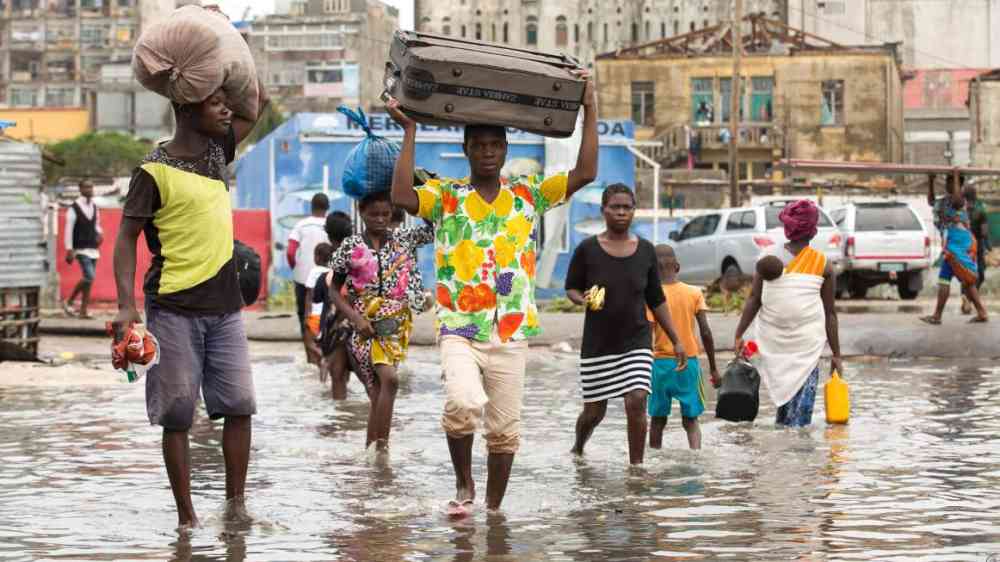
Mozambique - aftermath of Tropical Cyclone Idai, 2021
Research briefs

A new paper, Evolution of multidimensional poverty in crisis-ridden Mozambique, shows that progress in addressing multidimensional poverty stalled after 2015.

Conversation Media Group, the
Damaged building 2023 Türkiye-Syria earthquake
Research briefs

Researchers at Kyoto University have proposed a new physical model that explores how disturbances in the ionosphere may exert electrostatic forces within the Earth’s crust and potentially contribute to the initiation of large earthquakes.

Kyoto University 京都大学
Research briefs

Africa's coastlines are under growing threat as sea levels climb faster than ever, driven by decades of global warming caused by human activity, natural climate cycles, and warming ocean waters.

PhysOrg, Omicron Technology Ltd