Research briefs

Keep up to date with the latest research on disaster risk and resilience on the PreventionWeb knowledge base.

Explore cutting-edge research on disaster risk reduction and resilience through PreventionWeb's dedicated research briefs section. Our platform curates and highlights the most recent academic studies, providing valuable insights into disaster risk management. Each research brief distills key findings from peer-reviewed journals and academic publications.

Submit a research brief.

These briefs are designed to keep you informed about the latest scientific advances. Links to the full publications are always included, ensuring easy access to in-depth knowledge. Please note that this section exclusively features academic research, distinct from reports by international organizations or Non-Governmental Organisations.
Uploaded on
Research briefs

In this paper, researcher Sien Kok (Deltares/WUR) shows that the way we assess plans strongly determines which measures are considered “best”. Her PhD research is part of the European MERLIN project, which promotes nature restoration in rivers.

Deltares
Research briefs

A new study published in Earth's Future shows that managed retreat, the planned, government-supported relocation of people and infrastructure away from flood-prone areas, is being practiced across Europe at larger scale than thought.

Deltares
Research briefs

Research reveals that volcanic eruptions can trigger rainfall patterns remarkably similar to those produced by natural climate variability—effectively "projecting" their influence onto the ocean-driven cycles that scientists have long studied.

Chinese Academy of Sciences
Research briefs

Heavy, increasingly frequent Bay Area rainstorms are raising flood risks for homeless people living near streams. Researchers mapped socially vulnerable areas to guide warnings, resources, and planning as climate change intensifies extreme weather.

University of California Agriculture and Natural Resources (UC ANR)
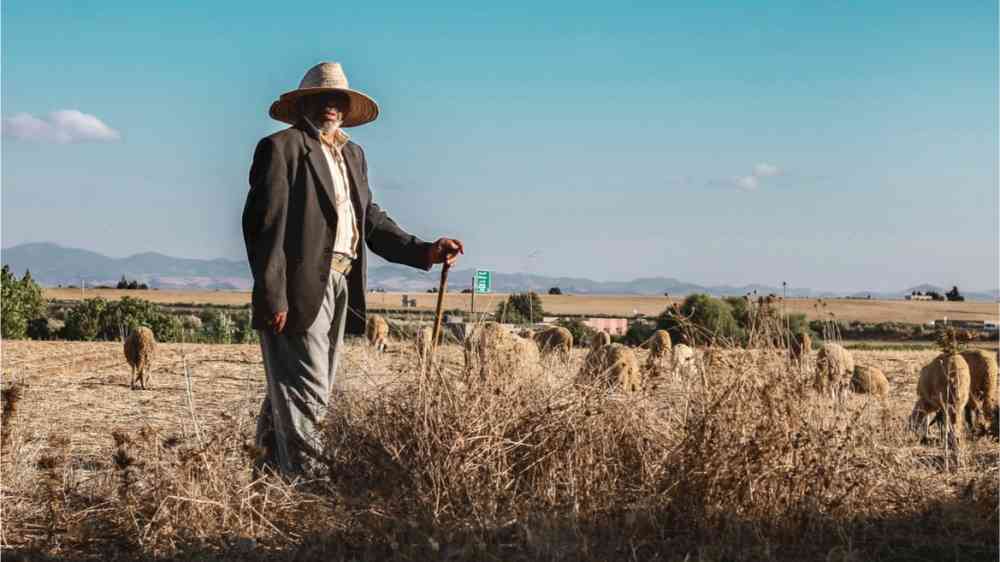
Moroccan farmer overlooking his heard of sheep on his fields.
Research briefs

Warming intensifies droughts – but the planet has a hidden stabiliser. Natural ocean and rainfall cycles prevent severe droughts from synchronising globally, affecting only 1.8–6.5% of land at any time.

Indian Institute of Technology Gandhinagar (IITGN)
Research briefs

A team of researchers at the University of Washington and The Nature Conservancy (TNC) embarked on an ambitious, multiyear study of snowpack along Cle Elum Ridge, an area of the eastern Cascades in the headwaters of the Yakima River Basin.

University of Washington
Research briefs

By combining long-term observations with cutting-edge measurement techniques, the research offers a rare historical and geographic perspective on the role of wetlands in climate mitigation.

Florida International University
Research briefs

Tropopause temperature biases create major tropical cyclone differences in models; cooler air boosts storm potential intensity, raising global cyclone frequency and hurricanes in experiments.

Eos - AGU