Research briefs

Keep up to date with the latest research on disaster risk and resilience on the PreventionWeb knowledge base.

Explore cutting-edge research on disaster risk reduction and resilience through PreventionWeb's dedicated research briefs section. Our platform curates and highlights the most recent academic studies, providing valuable insights into disaster risk management. Each research brief distills key findings from peer-reviewed journals and academic publications.

Submit a research brief.

These briefs are designed to keep you informed about the latest scientific advances. Links to the full publications are always included, ensuring easy access to in-depth knowledge. Please note that this section exclusively features academic research, distinct from reports by international organizations or Non-Governmental Organisations.


Uploaded on
An agronomist using a tablet computer collecting data with meteorological instrument to measure the wind speed, temperature and humidity and solar cell system in grape agricultural field.
Research briefs

The COST Action Understanding and modeling compound climate and weather events (DAMOCLES) has raised awareness and created a framework that centers the importance of compound events and their impacts across different scientific fields.

European Cooperation in Science and Technology
Rain clouds at the coastline
Research briefs

Multiyear La Niña events have become more common over the last 100 years, according to a new study led by University of Hawai‘i (UH) at Mānoa atmospheric scientist Bin Wang.

University of Hawai'i at Manoa
Research briefs

A new study has provided new insights into the extensive impact of metal mining contamination on rivers and floodplains across the world, with an estimated 23 million people believed to be affected by potentially dangerous concentrations of toxic waste.

University of Lincoln
Research briefs

As wildfires burn across the Western U.S., the people in harm’s way are increasingly those least able to protect their homes from fire risks, evacuate safely or recover after a fire.

Conversation Media Group, the
Research briefs

How can climate change science be made most accessible to the general population, as well as decision-makers and educators?

Geological Society of America, the
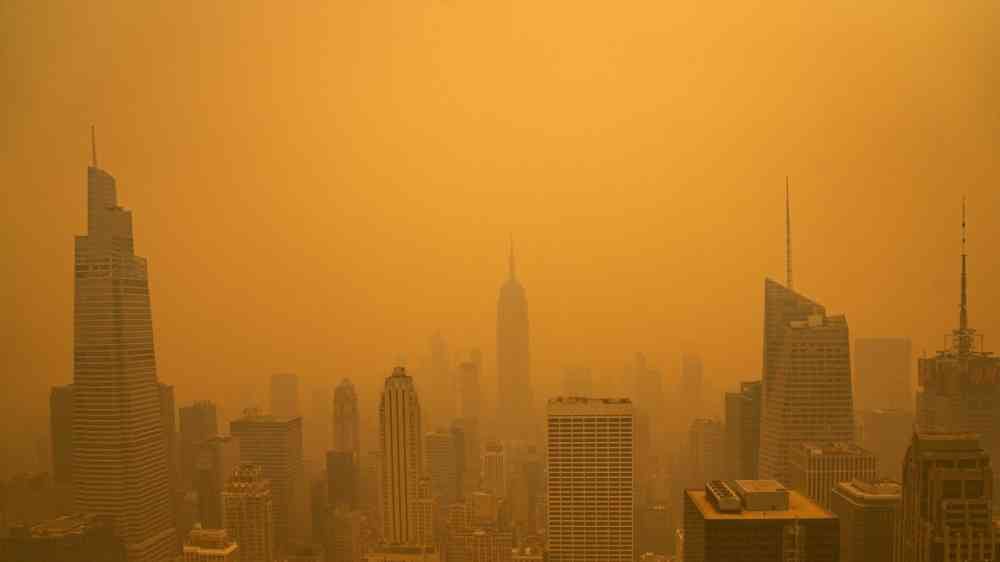
New York - wildfire smoke, June 2023
Research briefs

New research reveals the growing influence of wildfire smoke on air quality trends across most of the USA. Wildfire smoke in recent years has slowed or reversed progress toward cleaner air in 35 states, erasing a quarter of gains made since 2000.

Stanford University
Beach at Buzios, Brazil
Research briefs

A recent study unveils new information about escalating risks posed by climate change to Brazil’s extensive coastline, and reveals that nature-based solutions can significantly reduce these risks, and therefore support climate adaptation.

Nature-based Solutions Initiative
Research briefs

Torrential downpours sent muddy water racing through streets in Libya, Greece, Spain and Hong Kong in early September 2023.

Conversation Media Group, the