Research briefs

Keep up to date with the latest research on disaster risk and resilience on the PreventionWeb knowledge base.

Explore cutting-edge research on disaster risk reduction and resilience through PreventionWeb's dedicated research briefs section. Our platform curates and highlights the most recent academic studies, providing valuable insights into disaster risk management. Each research brief distills key findings from peer-reviewed journals and academic publications.

Submit a research brief.

These briefs are designed to keep you informed about the latest scientific advances. Links to the full publications are always included, ensuring easy access to in-depth knowledge. Please note that this section exclusively features academic research, distinct from reports by international organizations or Non-Governmental Organisations.
Uploaded on
Research briefs

Researchers from Florida Atlantic University ’s College of Engineering and Computer Science leveraged a computer-vision deep learning technique and adapted it for nonlinear analysis of extreme events in wall-bounded turbulent flows.

Florida Atlantic University (FAU)
Research briefs

The new tool shows the 10 U.S. counties most vulnerable to threats from climate change are in Louisiana, Kentucky, South Carolina and Texas.

Texas A&M University System
Research briefs

The increasing frequency and severity of extreme natural events and disasters and their cascading impacts on critical infrastructure highlight the importance of integrating risk and resilience into transport asset management.

Climate Adaptation Platform (CAP)
Research briefs

A recent disaster in China and a related study, demonstrate that landslides act as an impact multiplier, increasing the severity of the event by preventing rescues and hindering recovery.

Eos - AGU
Research briefs

The findings from new research, led by University of Arizona dendrochronologist Bryan Black, could have implications for seismic preparedness measures in the region.

University of Arizona
Research briefs

UNLV-led team explores relationship between warming post-Ice Age temperatures and intensifying summer monsoon rains on groundwater reserves.

University of Nevada, Las Vegas
Research briefs

A strong El Niño event is going to wreak havoc on global surface temperature and trigger several climate crises in 2023–2024, according to researchers from the Institute of Atmospheric Physics (IAP) of the Chinese Academy of Sciences.

Chinese Academy of Sciences
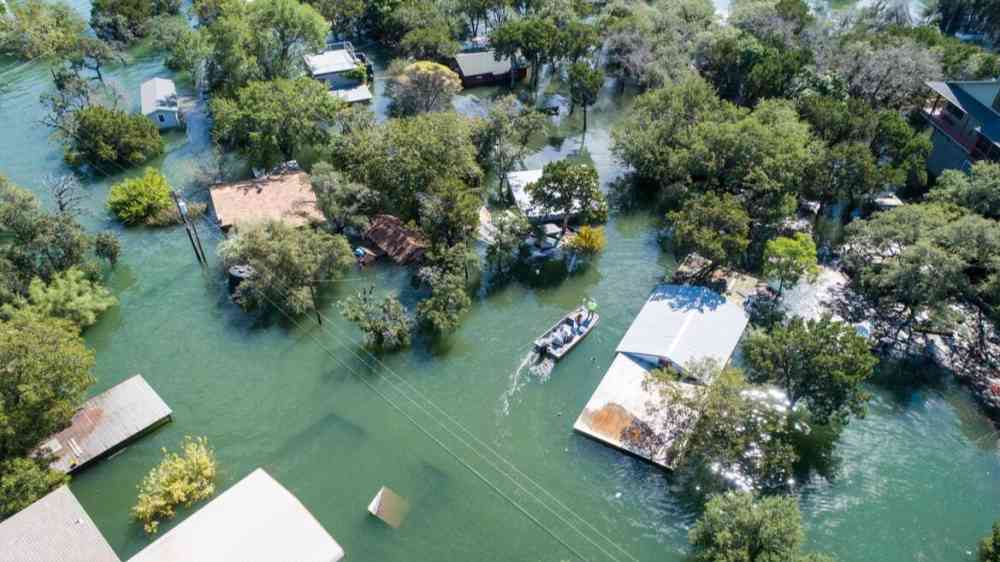
Aerial picture of a flooded Texan residential area
Research briefs

Argonne researchers and partners have developed a new methodology for estimating increased flood risk from climate change.

Argonne National Laboratory