Research briefs

Keep up to date with the latest research on disaster risk and resilience on the PreventionWeb knowledge base.

Explore cutting-edge research on disaster risk reduction and resilience through PreventionWeb's dedicated research briefs section. Our platform curates and highlights the most recent academic studies, providing valuable insights into disaster risk management. Each research brief distills key findings from peer-reviewed journals and academic publications.

Submit a research brief.

These briefs are designed to keep you informed about the latest scientific advances. Links to the full publications are always included, ensuring easy access to in-depth knowledge. Please note that this section exclusively features academic research, distinct from reports by international organizations or Non-Governmental Organisations.

Uploaded on
Woman fetching water from a borehole, Nigeria.
Research briefs

A new study maps, for the first time, the permanent loss of aquifer storage capacity occurring globally.

Desert Research Institute (DRI)
Research briefs

Global data, along with other ocean, satellite and regional seismic studies, show a decadeslong increase in wave energy that coincides with increasing storminess attributed to rising global temperatures.

Conversation Media Group, the
Research briefs

In order to understand the causes and consequences of climate fluctuations, researchers examine climate archives, such as trees, lakes and marine sediments or even ice. Over the course of millennia, climactic history left behind crucial traces.

Alfred Wegener Institut
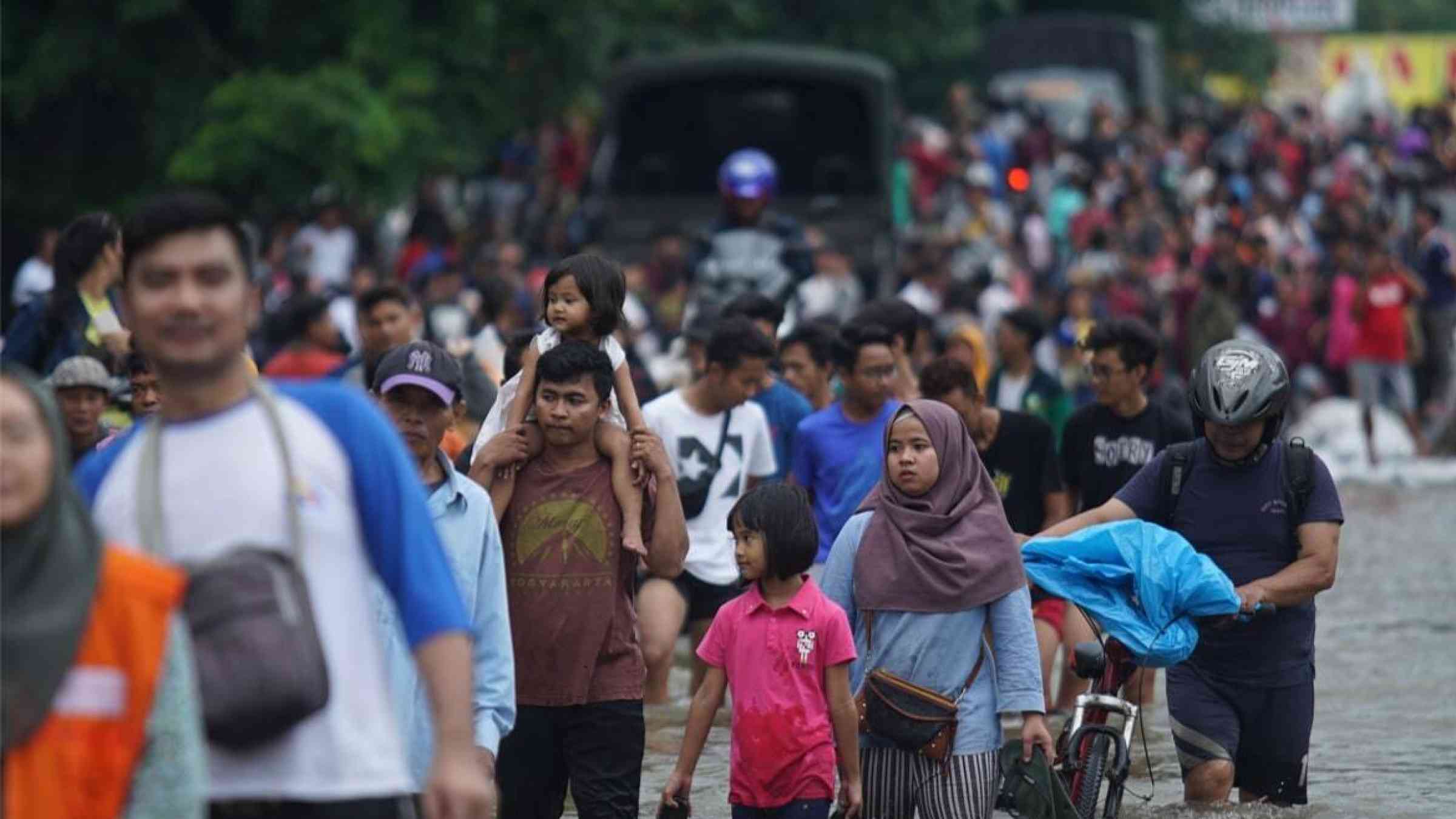
Commuters wade knee deep floods in Jakarta, Indonesia
Research briefs

Researchers at North Carolina State University have created a land change model that simulates interactions between urban growth, increased flooding and how humans adapt in response, offering a more realistic assessment of risk.

North Carolina State University (NCSU)
Indian women dressed in colorful clothes selling fish at a fish market.
Research briefs

Sea-level rise, storm surges and high waves in coastal area do not discriminate, but societal structures often do. This makes climate change a highly gender-sensitive issue.

Conversation Media Group, the
Research briefs

During the Holocene epoch, which began around 11,700 years ago, coastlines globally retreated due to thousands of years of rising sea levels. However, new research finds this was not true for Singapore's coasts.

PhysOrg, Omicron Technology Ltd
Research briefs

A new study has shown that the southern hemisphere has been drying out more than the northern hemisphere over the past two decades (2001-2020). The authors suggest the principle cause is the weather phenomenon known as El Niño.

Conversation Media Group, the
Research briefs

Research out of Drexel University suggests that over the next two decades people living in the Schuylkill Watershed could experience as many as 82 more days of water shortfalls due to localized weather impacts of climate change.

Drexel University