Research briefs

Keep up to date with the latest research on disaster risk and resilience on the PreventionWeb knowledge base.

Explore cutting-edge research on disaster risk reduction and resilience through PreventionWeb's dedicated research briefs section. Our platform curates and highlights the most recent academic studies, providing valuable insights into disaster risk management. Each research brief distills key findings from peer-reviewed journals and academic publications.

Submit a research brief.

These briefs are designed to keep you informed about the latest scientific advances. Links to the full publications are always included, ensuring easy access to in-depth knowledge. Please note that this section exclusively features academic research, distinct from reports by international organizations or Non-Governmental Organisations.


Uploaded on
Pump-jack mining crude oil with the sunset
Research briefs

More than 100,000 oil and gas wells across the western U.S. are in areas burned by wildfires in recent decades, and some 3 million people live next to wells that in the future could be in the path of fires worsened by climate change.

University of California, Berkeley
Creative design with human hands holding a speech bubble
Research briefs

As global temperatures continue to rise, heat waves are becoming more frequent and severe. Because of this, communicating heat-related risks to the public is increasingly important for both their own protection and to encourage mitigation policies.

Yale Program on Climate Change Communication
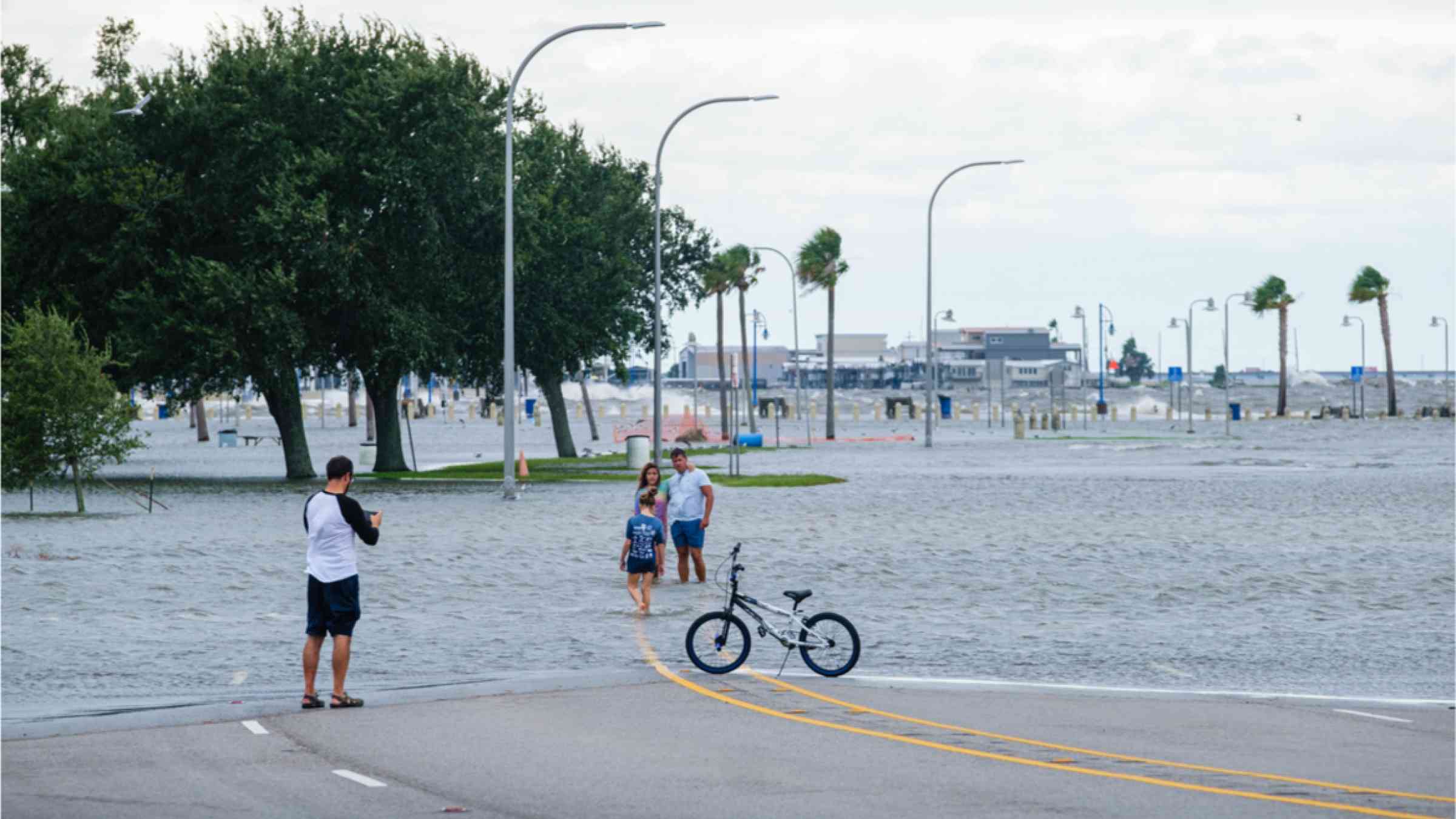
Family posing for photos amidst flooding and storm surge from Hurricane Sally along Lake Pontchartrain
Research briefs

A new UCS study released today, Looming Deadlines for Coastal Resilience, shows that risks are growing to vital infrastructure and services that millions of people in coastal communities depend on as global sea levels rise in the coming decades.

Union of Concerned Scientists
Wildfire raging near houses
Research briefs

The past seven years included the six most extreme in the 21-year period. This increase occurred in lockstep with global heating, with 2023 smashing temperature records and also having the most intense fires.

Conversation Media Group, the
Silhouette electricity pylons during sunset
Research briefs

University at Buffalo engineers, partners create model to make nation’s grid more resilient amid extreme weather, projected spikes in demand

University at Buffalo
Stranded boats on the Amazon riverbanks as drought hits the Amazon river
Research briefs

Brazil recognized an additional two Indigenous territories belonging to the Karajá peoples in Mato Grosso. This act alone could possibly be the best investment not just for Indigenous rights, but for securing the future climate stability of the state.

Mongabay
Research briefs

A research team from Pohang University of Science and Technology has published a study suggesting that anthropogenic greenhouse gases might actually mitigate droughts, offering a new perspective on the impact of human activities on nature.

Pohang University of Science and Technology
Research briefs

A study published on June 7 in Environmental Research Letters examines how the use of a fixed versus a 10-year moving baseline alters the perceived extremity of the 2022 heatwave.

Institute of Atmospheric Physics, Chinese Academy of Sciences