Research briefs

Keep up to date with the latest research on disaster risk and resilience on the PreventionWeb knowledge base.

Explore cutting-edge research on disaster risk reduction and resilience through PreventionWeb's dedicated research briefs section. Our platform curates and highlights the most recent academic studies, providing valuable insights into disaster risk management. Each research brief distills key findings from peer-reviewed journals and academic publications.

Submit a research brief.

These briefs are designed to keep you informed about the latest scientific advances. Links to the full publications are always included, ensuring easy access to in-depth knowledge. Please note that this section exclusively features academic research, distinct from reports by international organizations or Non-Governmental Organisations.

Uploaded on
Research briefs

A new study indicates that seawater will infiltrate underground freshwater supplies in about three of every four coastal areas around the world by the year 2100. Saltwater can make water there unusable, damage ecosystems, and corrode infrastructure.

National Aeronautics and Space Administration (NASA)
Pedestrians cross a snow-covered National Mall in Washington D.C.
Research briefs

A team of scientists, led by a climate expert from the University of Lincoln, UK, says that continued rapid warming in the Arctic may be linked to severe cold-air outbreaks in the UK and nearby parts of Europe as well as North America and Asia.

University of Lincoln
Infrared thermovision image panorama of Zagreb, Croatia, showing difference in temperature
Research briefs

Three leading climate scientists have combined insights from 10 global climate models and, with the help of artificial intelligence (AI), conclude that regional warming thresholds are likely to be reached faster than previously estimated.

Institute of Physics (IOP) Publishing Limited
Sun above a city
Research briefs

Artificial intelligence provides new evidence that rapid decarbonization will not prevent warming beyond 1.5 degrees Celsius. The hottest years of this century are likely to shatter recent records.

Doerr School of Sustainability, Stanford University
Aerial view of trees in a park
Research briefs

While trees can cool some cities significantly during the day, new research shows that tree canopies can also trap heat and raise temperatures at night. The study aims to help urban planners choose the best combinations of trees and planting locations.

University of Cambridge
Research briefs

Understanding drought dynamics in the Limpopo River Basin (LRB) is crucial due to its profound impact in the region. Innovative solutions, such as a digital twin platform, are emerging as critical tools to address these challenges.

International Water Management Institute (IWMI)
Crowd waiting for the train during a hot day in London, UK (2022)
Research briefs

The social force model mathematically describes pedestrian movement based on three "social forces" internally motivating each individual. It offers insights for safer venues and survival strategies for crowd crushes.

Northeastern University
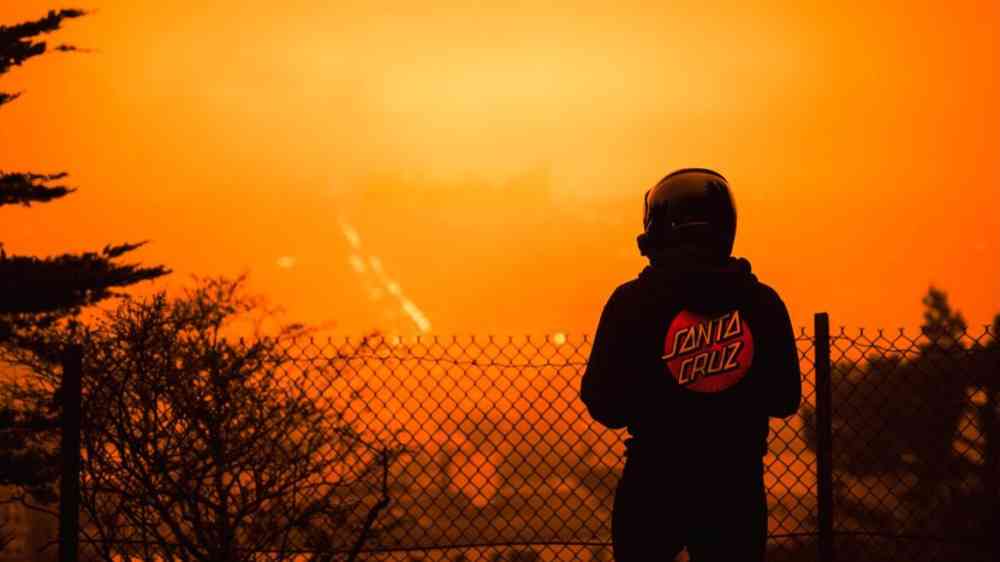
A man overlooks a wildfire visible from San Francisco under a hazy sky turned orange
Research briefs

Three-quarters of all extreme weather events or trends analyzed to date by attribution scientists were made worse by human-caused climate change, Carbon Brief's latest Attribution Map reveals.

The Energy Mix