Research briefs

Keep up to date with the latest research on disaster risk and resilience on the PreventionWeb knowledge base.

Explore cutting-edge research on disaster risk reduction and resilience through PreventionWeb's dedicated research briefs section. Our platform curates and highlights the most recent academic studies, providing valuable insights into disaster risk management. Each research brief distills key findings from peer-reviewed journals and academic publications.

Submit a research brief.

These briefs are designed to keep you informed about the latest scientific advances. Links to the full publications are always included, ensuring easy access to in-depth knowledge. Please note that this section exclusively features academic research, distinct from reports by international organizations or Non-Governmental Organisations.

Uploaded on
Research briefs

In this study, the researchers showed that High Mountain Asia experiences an average of 22.4 rain-on-snow (ROS) days per year, with the Ganges Basin having the highest frequency at 45.8 days.

Chinese Academy of Sciences
Industrial air pollution
Research briefs

Almost half of global average temperature rise and a third of sea-level rise can be attributed to the “carbon majors,” the world’s 122 largest fossil fuel and cement producers, a recent paper shows.

Mongabay
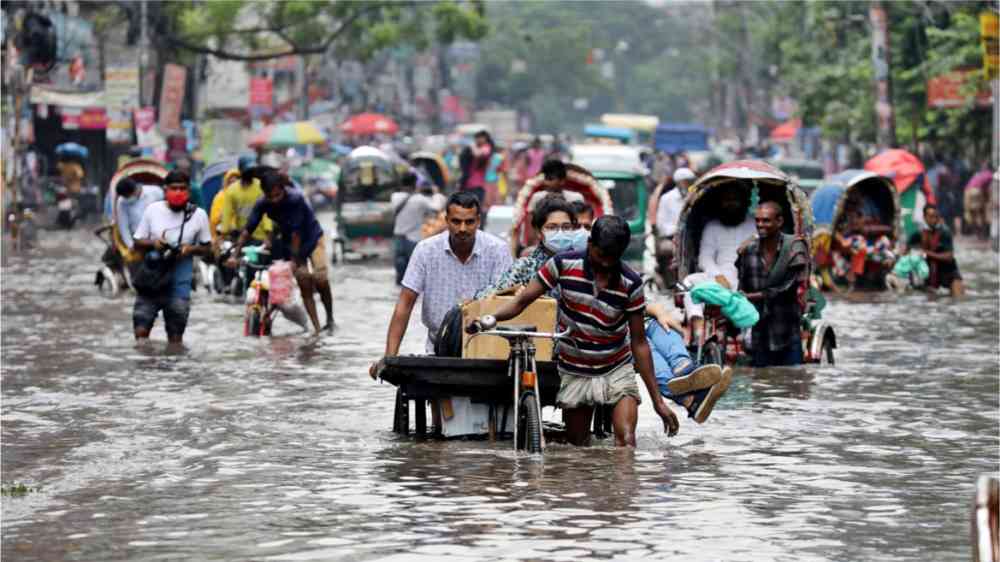
Riksha drivers walking through the flooded streets in Bangladesh in 2020.
Research briefs

With projected global warming, the frequency of extreme storms will ramp up by the end of the century, according to a new study.

MIT News, Massachusetts Institute of Technology
Research briefs

The interdependencies of infrastructure systems mean that the impact of a disaster on one system can have far-reaching effects on others and the communities they serve, potentially causing "functional isolation".

Climate Adaptation Platform (CAP)
Passengers on the street during winter storm.
Research briefs

The relative risk of mortality at the coldest temperatures has decreased by 2% per year since 2003, while the risk from extreme heat has only fallen by 1% per year.

Barcelona Institute for Global Health (ISGlobal)
A large wave crests off the coast of Sydney, Australia
Research briefs

Findings pave the way for improving wave forecasts, helping coastal communities become more resilient as they prepare for floods and storm surge.

University of Miami
Research briefs

Chinese researchers have conducted a new study on the spatio-temporal distribution of snowmelt floods and disaster risk assessments in China's northwestern region, holding promise for disaster prevention and control of this region.

China Daily
A family observes the aftermath of flooding on the banks of the Danube
Research briefs

Rather than relying on isolated or top-down strategies, the researchers advocate for a whole-of-society approach that embraces cross-sectoral, multidisciplinary, and inclusive efforts.

PhysOrg, Omicron Technology Ltd