
Protection of persons in the event of disasters: A treaty to protect people before or after disaster strikes?
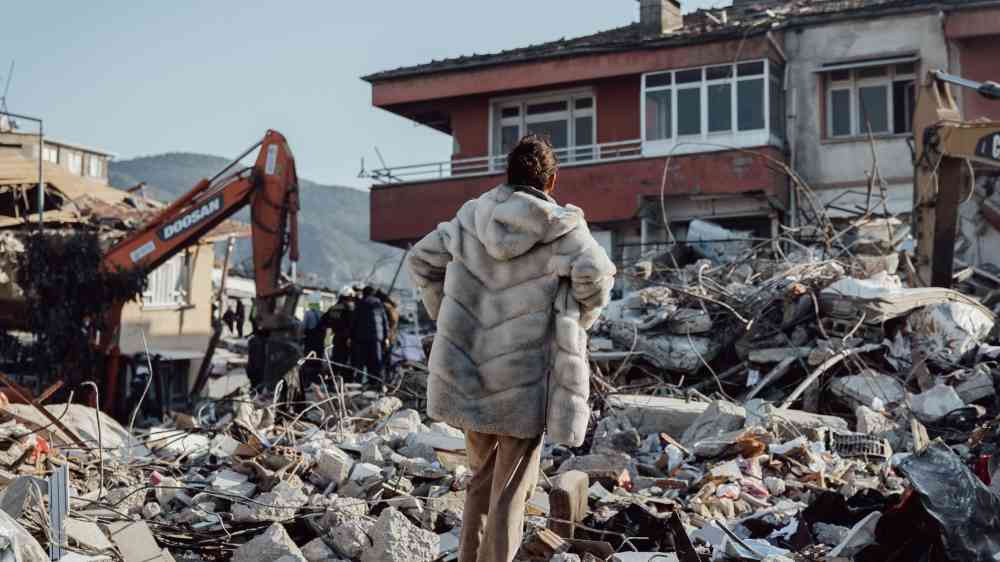
The year 2026 has already been one of the most intense years of my professional life in terms of the number of large-scale crises to which ActionAid has responded to. Starting with floods in Mozambique, and continuing through the past few months, ActionAid and partners have been responding to devastating crises across the world.
In Nepal , catastrophic flash floods swept away homes, bridges and livelihoods, leaving communities scrambling for safety as local volunteers mobilized to support rescue and relief efforts. In Indonesia , communities across Flores were still sleeping in temporary shelters after a powerful earthquake damaged thousands of homes and public facilities. And in Colombia , following the August earthquake local organizations were working around the clock to reach remote communities cut off from assistance.
These experiences raise a fundamental question: what do States actually owe people before, during and after disasters, and how should those obligations be reflected in international law? Furthermore, if protection begins only once disaster strikes, it begins too late. The real test of protection is whether people receive the information, resources and opportunities needed to reduce risk before lives and livelihoods are lost.
In December 2024, the United Nations General Assembly (UNGA) adopted Resolution 79/128 , committing states to conclude a legally binding Convention on the Protection of Persons in the Event of Disasters (PPED) by the end of 2027. The PPED is aiming to achieve a legally obligatory disaster response system to protect people who are affected by disasters. Negotiations are moving quickly. Following states' amendments and a resumed Sixth Committee session in April, the Preparatory Committee met from 31 August to 4 September 2026, while a Diplomatic Conference is expected to take place in early 2027.
The treaty will build on the Draft Articles adopted by the International Law Commission in 2016 and transmitted to the UN General Assembly for consideration, the first serious attempt to codify what states owe people before, during and after disasters.
Where the draft falls short
But for ActionAid, working alongside disaster- and crisis-affected communities in more than 70 countries, and for partners across the Sendai Stakeholder Engagement Mechanism (SEM), the draft contains a significant gap: it speaks far too little about the rights of the people it is meant to protect. Reading the articles of the proposed treaty, we see that much of what women, young people, persons with disabilities, and other minority groups contribute to disaster risk reduction, preparedness and response remains insufficiently recognized.
One sentence of law
The Draft PPED Articles do mention “rights”. Article 4 protects "the inherent dignity of the human person." Article 5 says affected persons "are entitled to the respect for and protection of their human rights in accordance with international law."
That is the entire human rights provision. One sentence, hedged by a qualifier. It does not say a family has the right to be warned before the river takes their home. It gives people no say in whether they are relocated, or where they are relocated. It is silent on non-discrimination in relief, and on any remedy when protection fails. Nor does it clearly establish that reducing disaster risk is itself a protection obligation. Early warning systems, risk communication, preparedness planning and community-led resilience measures save lives precisely because they prevent hazards from becoming disasters.
The framing makes things worse - as the draft speaks of meeting people's "essential needs," as if affected communities were queues of outstretched hands rather than citizens with claims. It asks responders to consider "the particularly vulnerable" — a phrase the disability, women's and displacement movements have spent two decades retiring . Nobody is born vulnerable. People are placed at risk by unequal power relations, by exclusion, by decisions made in rooms they were never invited into.
And nowhere — not once — do the Draft Articles mention women.
The omission matters because disasters do not begin when floodwaters arrive or the ground starts shaking. Disaster risk accumulates over years through poverty, inequality, weak governance, environmental degradation and exclusion from decision-making. The Sendai Framework recognized this a decade ago by placing disaster risk reduction at the centre of protecting people. A modern disaster convention should do the same, embedding prevention, preparedness, resilience-building and risk-informed development as legal obligations rather than policy aspirations.
Our route into the room
Treaty-making can feel like a closed club of capitals and legal advisers. But civil society has a way in. The Sendai Stakeholder Engagement Mechanism (SEM) — the platform through which non-state actors engage in the implementation, review and monitoring of the Sendai Framework for Disaster Risk Reduction — has become our natural coordinating space ahead of 2027. Through its constituencies, organizations representing women, persons with disabilities, displaced people, youth, LGBTIQ+ communities, local responders and the private sector can align positions and speak with a collective voice no single NGO can match.
NGOs with United Nations Economic and Social Council (ECOSOC) consultative status and others with special accreditation can also register directly for the Conference. But being in the room is not the same as being in the text. That takes a shared, disciplined advocacy agenda — and that is what the SEM is for.
Changes that would make it a people's treaty
Working with SEM partners, and listening to colleagues with decades in this sector, I advocate that the negotiations must deliver the following:
- Explicitly recognize the rights most at stake in disasters in accordance with the Universal Declaration of Human Rights (1948) and include the rights to life, information, participation, food, water, shelter, health, education - to ensure protection of dignity.
- Use the wording “ People placed at risk ” instead of "particularly vulnerable” that recognizes agency and obliges states to tackle the structural drivers of risk, including gender inequality.
- Guarantee the leadership of affected communities — women, persons with disabilities, older people, children and youth, indigenous peoples, displaced people — in every phase, from risk reduction to recovery. Participation must be a right, not a best practice.
- Write gender into the treaty. A convention concluded in 2027 that is silent on women, on gender-based violence in disasters, on women's leadership, would be an indefensible anachronism.
- Build in accountability: national monitoring, transparent reporting, and complaint channels that ordinary people can reach, so the treaty's promises belong to the people it protects, not merely to states.
The road to 2027
Moments like this come once in a generation. What states agree now will shape disaster law for decades, in a century when the climate crisis guarantees that disasters will multiply and deepen and fall hardest on those least responsible for them.
So, the question before negotiators is simple. Will this be a treaty about logistics — visas, customs clearance, privileges of relief personnel — or a treaty about people? And will it protect people only after disaster strikes, or will it help societies reduce the risks that make disasters so devastating in the first place? The communities at the frontline of disasters are not asking for charity written into international law; they are asking for the right to be protected before and after disasters strike.
Tanjir Hossain is the Humanitarian and Resilience Lead at ActionAid International, with over 18 years of experience spanning humanitarian action, disaster risk reduction, climate actions and international development. He has contributed to numerous global and regional policy processes on climate, DRR and sustainable development and has designed and led comprehensive resilience-building programmes across multiple continents. Tanjir serves as Co-Chair of the Sendai Stakeholder Engagement Mechanism (SEM) Advisory Group, supporting inclusive and multi-stakeholder approaches to disaster risk reduction. His current work focuses on advancing the Humanitarian-Climate-Peace-Development Nexus, strengthening resilience and locally led responses in disaster- and crisis-affected countries where ActionAid operates.