Climate finance integrity is the next frontier in disaster preparedness

Climate finance integrity ensures funding reaches frontline disaster preparedness.
Centralised financial bottlenecks can stall local infrastructure delivery, leaving communities exposed to disaster risk. This blog post advocates for adaptive governance and vertical policy integration to protect vulnerable populations from disasters and maximise resilience investments.
When funding for drainage networks or coastal protection fails to materialise on the ground, institutional opacity stops being an administrative footnote. It becomes a direct threat to community survival.
The lead
During recent bilateral consultations with 12 primary local authorities in Mauritius, a technical officer told me:
“By the time approvals and funding clear central processes, the problem on the ground has already evolved into a crisis.”
This reflects a wider reality of risk management on the island. If we want to safeguard infrastructure from intensifying natural hazards, we must look beyond physical systems and address the underlying trust layer: climate finance integrity.
Setting the stage
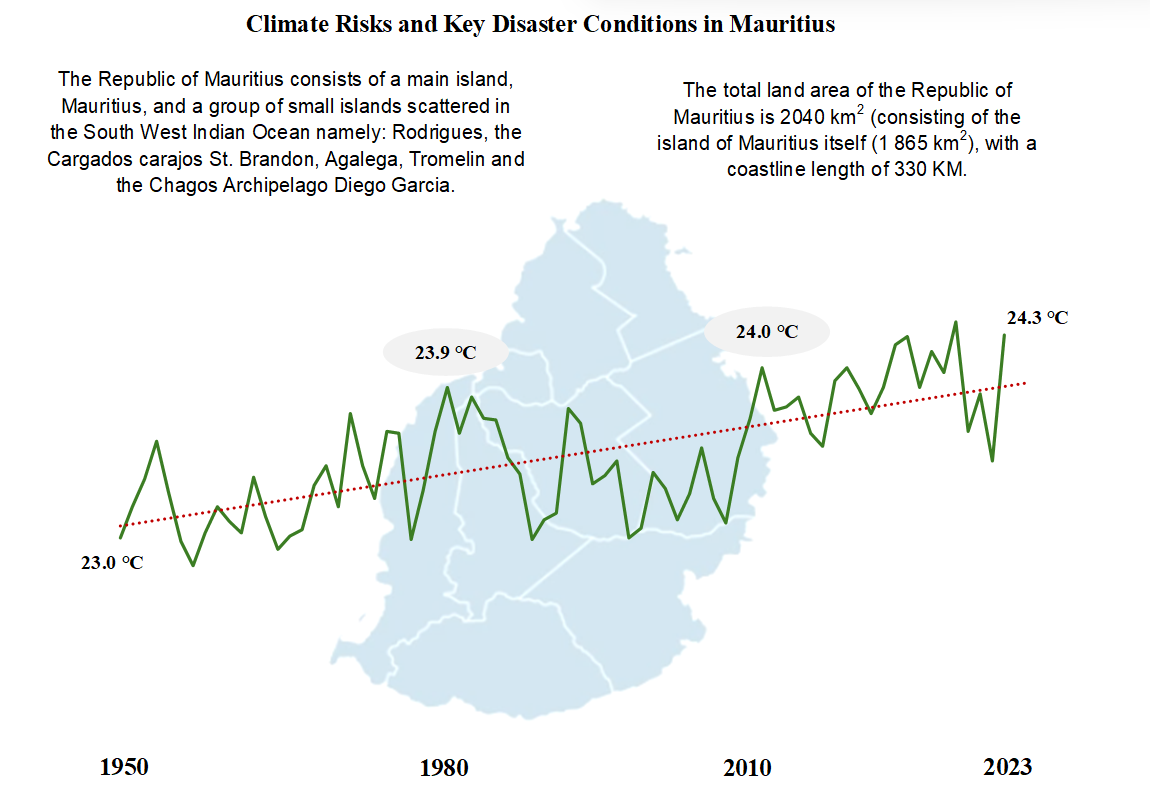
| Climate Disasters | Impact |
| Drought | Mauritius is projected to become a water scarce region by 2030 with a 13 percent decrease in utilizable water by 2050. |
| Rising Sea Level | Coastal flooding and accelerated beach erosion with loss to coastal infrastructure. The projected fall in income from the tourism sector is estimated up to USD 50 million per year by 2050. |
| High Rainfall Variability | Cash crop production with implications on food security and decrease in sugar cane yield of up to 48 percent |
| Cyclone | Local agricultural production suffers - impacting large share of food crop production with considerable damage reaching to 75 percent or more for fragile vegetable crops. |
Credit: Author’s representation based on data from the Stimson Center, World Resources Institute Climate Watch, and Mauritius Nationally Determined Contribution (NDC 3.0).
Mauritius faces increasing climate-related disaster risks, making preparedness essential for protecting water systems, agriculture, coastal infrastructure, and livelihoods. At the same time, effective disaster preparedness depends on strong climate finance oversight and management to ensure resources are transparently allocated, efficiently tracked, and directed towards resilience-building priorities, rather than being lost to fragmentation or inefficiency.
Yet, vulnerability is not only meteorological; it is structural. Across parts of Sub-Saharan Africa, jurisdictions are experiencing localised funding contractions estimated between 16% and 28%, driven by institutional closures and shifts in policy, including the freezing of foreign aid frameworks. At the same time, sudden external changes such as the weakening or suspension of transnational anti-bribery enforcement frameworks—including temporary pauses in Foreign Corrupt Practices Act (FCPA) enforcement—can further heighten fiduciary risk across the Global South.
When donor funding streams narrow and external oversight weakens, institutional integrity is no longer a passive compliance requirement. It becomes an active condition for resilience.
These cross-currents directly affect the five core elements of climate finance management:
- Policy and strategy: Reducing regulatory opacity that slows green investment inflows.
- Disclosure and accountability: Closing loopholes that divert adaptation funding away from intended purposes.
- Risk management: Strengthening risk-based due diligence to protect communities and ecosystems.
- Commitment: Ensuring international agreements translate into local implementation.
- Control environment: Reinforcing the rule of law and anti-corruption safeguards.
Lessons from the ground
My empirical work under Transparency International’s Climate Governance and Integrity Programme (CGIP) revealed a structural mismatch. Local municipal authorities sit at the frontline of disaster preparedness, yet their role is largely confined to reactive maintenance such as post-event cleaning, river desilting, and small-scale beautification.
A recurring concern raised during these engagements relates to the highly centralised nature of financial allocation, particularly through control mechanisms associated with the Land Drainage Authority (LDA). This centralisation limits fiscal autonomy at sub-national level and creates a mismatch between national planning priorities and local implementation needs.
While central systems tend to favour capital-intensive and visible infrastructure projects, locally grounded adaptation measures—such as routine drainage maintenance, community-based risk mapping, and neighbourhood resilience planning—remain consistently underfunded.
This bottleneck is also visible in the experience of Drains Infrastructure Construction Ltd (DICL), a special purpose vehicle established in 2021 to accelerate drainage infrastructure delivery. Parliamentary audit discussions indicate that implementation performance was significantly constrained, with only a small proportion of projects completed while many experienced prolonged delays or remained stalled at administrative stages.
When approvals move too slowly, risk-reduction infrastructure fails to materialise within required timeframes, leaving flood-prone communities exposed to recurring seasonal shocks.
As one municipal stakeholder noted:
“We are expected to manage increasingly complex climate risks, but we are not given the tools or the flexibility to act at the speed that local conditions require.”
The system therefore remains weighted towards reactive response rather than anticipatory risk reduction, despite the existence of formal planning frameworks.
The takeaway for the disaster risk reduction community
The lesson is clear: resilient outcomes are not possible when financial systems lack integrity. Hazards do not automatically become disasters; they become disasters when their impacts exceed a community’s capacity to cope using available resources.
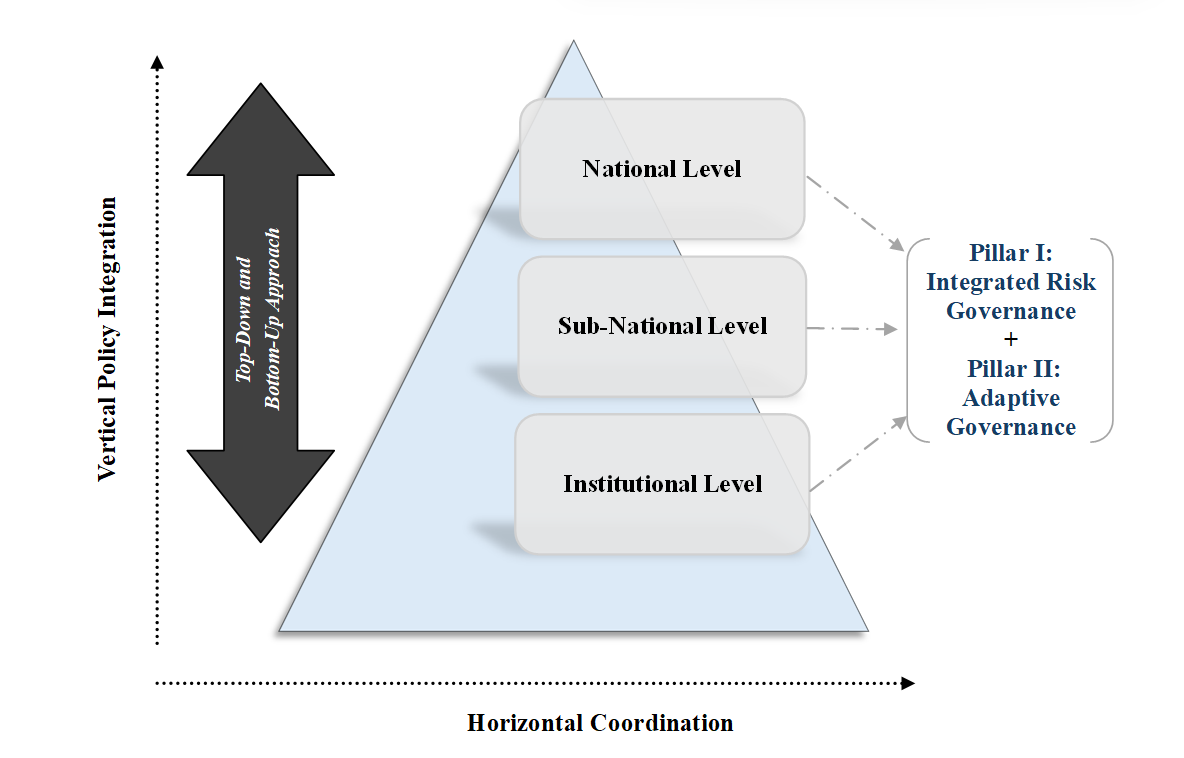
This risk can be reduced by strengthening governance through a multi-level, aligned architecture:
- National level: Improve strategic coordination across fiscal planning, Nationally Determined Contribution (NDC) implementation, and climate finance allocation. This aligns with Pillar 1: integrated risk governance, strengthening cross-sector coordination and integrating disaster risk into investment decisions.
- Sub-national level: Empower local authorities to identify risk hotspots, prioritise adaptation investments, and implement resilient infrastructure. This reflects Pillar 2: adaptive governance, strengthening vertical integration and enabling two-way information flows between national and local systems.
- Institutional level: Strengthen fiduciary oversight through audits, procurement integrity systems, and transparency mechanisms to reduce misuse and fragmentation of funds.
The way forward
Taken together, these approaches show that more effective disaster preparedness in Mauritius depends on moving away from fragmented, sector-by-sector interventions towards a coordinated, anticipatory, system-wide resilience framework.
The priority is to embed integrity into the funding pipeline itself. Anti-corruption safeguards, robust auditing, and procurement transparency must be integrated from the outset so that climate finance translates into real, measurable outcomes on the ground.
Dr. Neekhil Bhowoniah is an industry expert and a postdoctoral fellow specialising in climate finance governance and trade policy. He currently serves as a World Bank Financial Sector Expert for Mauritius and Seychelles, and as a UN FAO Accreditation Expert for GCF Readiness, focusing on building resilient institutional frameworks and strategic climate resource mobilisation.