
Advocate for DRR
If you believe that hazards do not have to turn into disasters, add your voice to our campaign and become a DRR advocate.
Check this page regularly for updates and new material. If you would like to suggest messages, please get in touch.
Help us adovcate for disaster risk reduction and share the following messages on your social media channels. You can select individual graphics or download the whole package.
Hazards don't have to become disasters
We cannot prevent an earthquake, but we can make earthquake resistant buildings.
We cannot stop a tsunami, but we can avoid settlements in exposed coastal areas.
We cannot stop a hurricane, but we can have early warning systems so people can evacuate.
Disaster is a function of the decisions we make: Disaster risk = hazard × exposure × vulnerability
A natural hazard, such as a hurricane, earthquake, or flood, only becomes a disaster when it impacts a community that is not adequately protected, and whose population is vulnerable as a result of poverty, exclusion or socially-disadvantage. Read more.
Explore toolkits
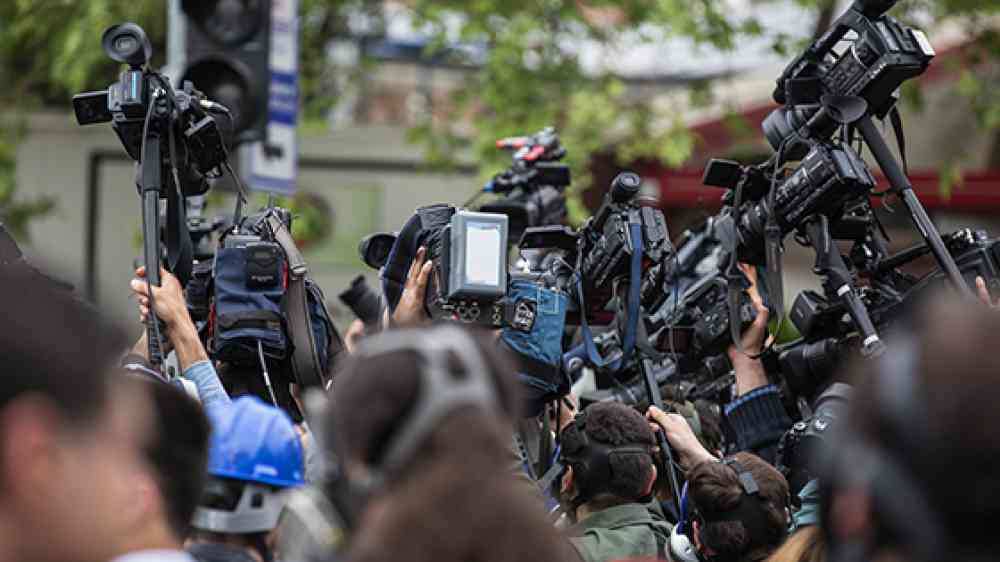
Whether you report or communicate, start with the toolkit built for each role

Discover and get involved in campaigns
Explore campaigns and find ways to raise awareness, amplify key messages and inspire action on disaster risk reduction.
International day in memory of the victims of earthquakes
29 April - Remember. Protect. Build disaster resilience.
The International day is an opportunity for remembrance and renewed commitment to protecting lives and livelihoods from earthquake disasters. The Day echoes the priorities of the Sendai Framework for Disaster Risk Reduction 2015-2030, which underscores the importance of understanding disaster risk, developing disaster risk reduction plans, investing in resilience, and enhancing preparedness to “build back better” after disasters.

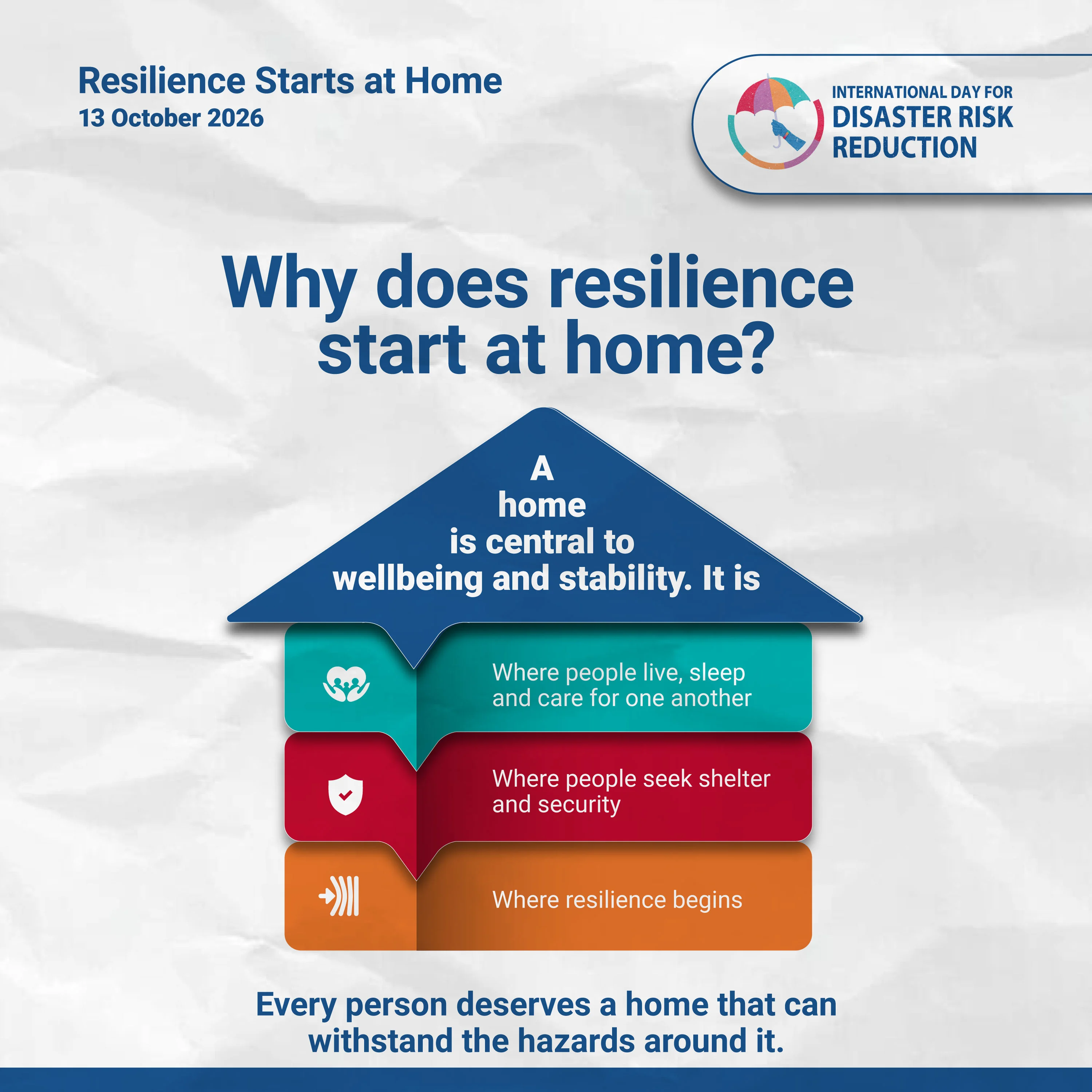
IDDRR 2026: Resilience starts at home
13 October - #ResilienceStartsAtHome #DRRDay
This year's International Day for Disaster Risk Reduction focuses on the home - both where disaster impacts are felt hardest, and where resilience must begin. Help us spread the message: browse the official key messages and share one (or more) on your own channels, tagged #ResilienceStartsAtHome #DRRDay.
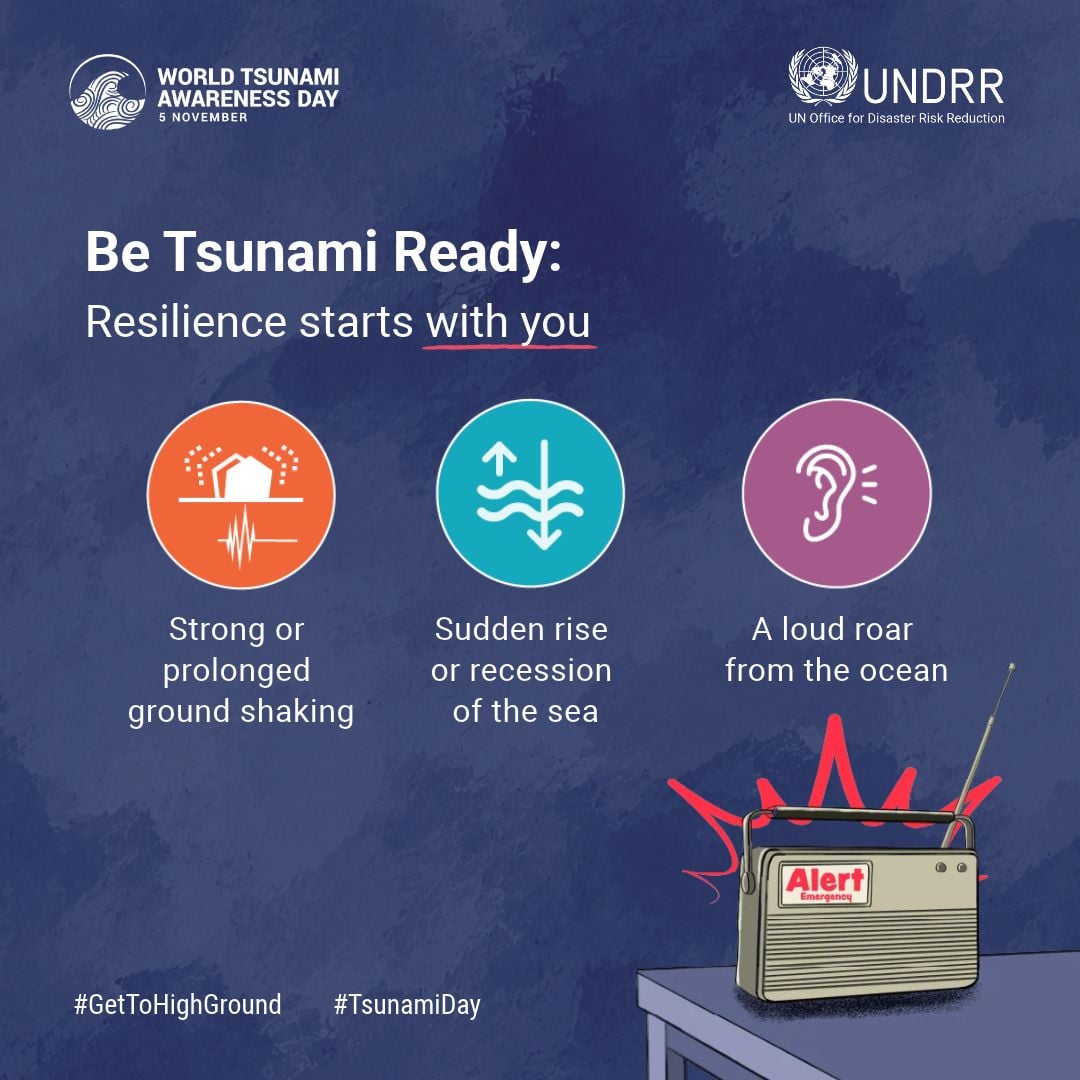
World Tsunami Awareness Day 2026
05 November - Be Tsunami Ready: Resilience starts with you
The 2026 theme promotes tsunami preparedness through recognizing natural warning signs, knowing evacuation routes, practicing emergency plans and drills, and ensuring that everyone, including those who may need additional support, can reach safety.
#GetToHighGround initiative
The #GetToHighGround initiative encourages communities to take action on tsunami preparedness by organizing or participating in a drill, run or walk along a tsunami evacuation route.
Are you ready?
Join the campaign to empower children for a safer future
Every child deserves to be protected from disasters. The Are You Ready? campaign calls for safer schools, disaster risk education and meaningful opportunities for children and young people to become agents of change in their communities.

Discover what you can do


Ready-to-use DRR resources for your communications
Explore, share and inspire action
Help amplify key messages on disaster risk reduction. Explore our collection of social media cards, infographics and videos, and share them across your networks to raise awareness, encourage action and build a more disaster-resilient world.
Early warning
Early warnings save lives. By ensuring that everyone can access, understand and act on timely and reliable warnings, we can reduce disaster risks and protect communities.
Explore the theme on PreventionWeb
- Social media cards
Social media cards

Suggested caption:
Early warning systems must work for everyone, even when technology fails.
Community networks, local knowledge and trusted communication channels help ensure life-saving warnings reach those who need them most.
#EarlyWarningsForAll #DisasterRiskReduction
Suggested caption:
Investing in early warning systems means investing in lives, livelihoods and resilient communities.
With returns of up to 6.8 times the initial investment, the case for acting before disasters strike is clear.
#EarlyWarningsForAll #InvestInResilience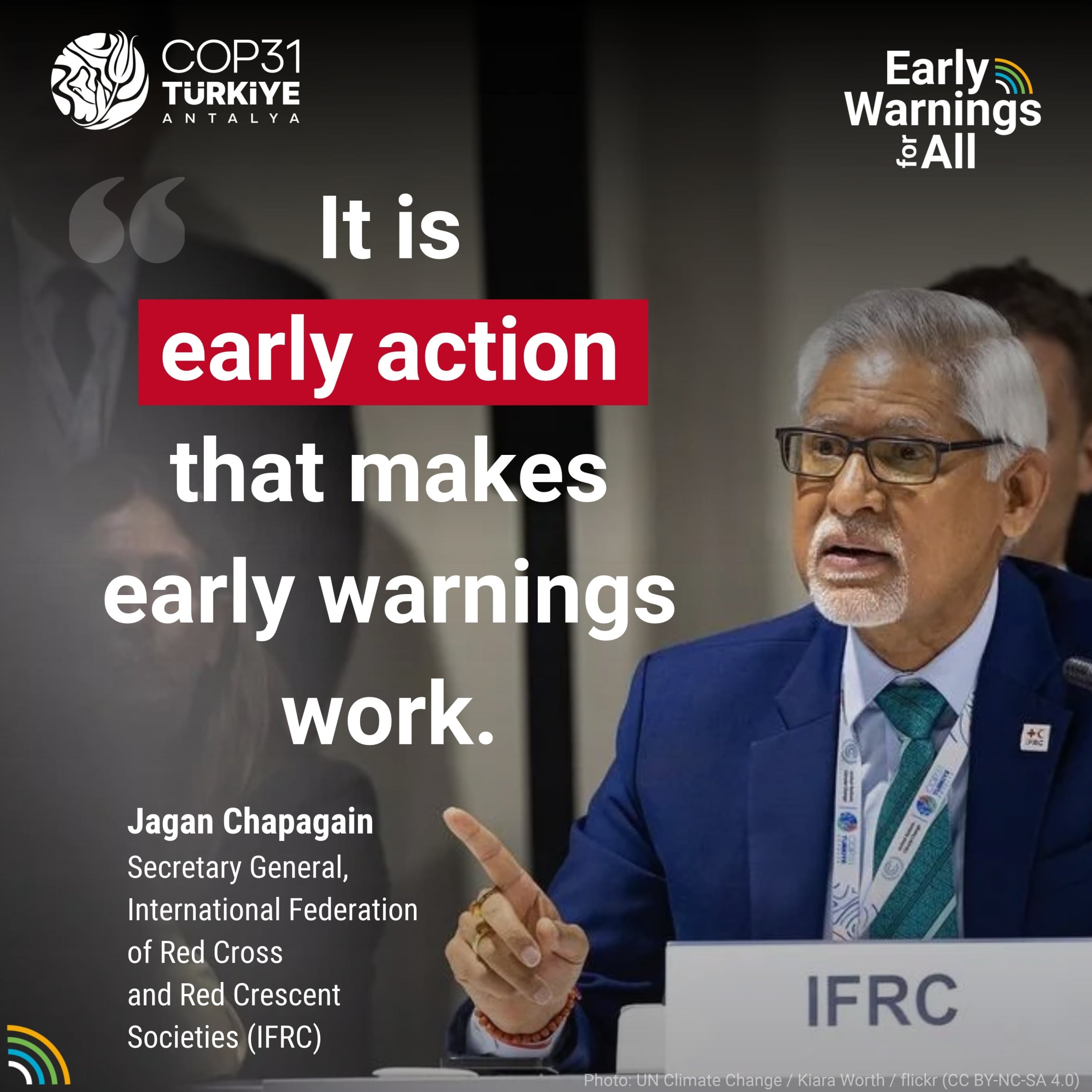
Suggested caption:
An early warning only saves lives when it leads to early action.
As Jagan Chapagain, IFRC Secretary General, reminds us, turning warnings into action is essential to protecting communities from disasters.
#EarlyWarningsForAll #EarlyAction- Infographics
Infographics

Suggested caption:
Effective early warning systems are multi-hazard, end-to-end and people-centred.
They connect monitoring and forecasting with timely warnings and early action, ensuring everyone can receive, understand and act on warnings.
#EarlyWarningsForAll #EarlyWarningSystems
Suggested caption:
A decade of progress in strengthening early warning systems!
Since 2015, CREWS has supported 84 countries and territories, helping strengthen forecasting, early warning services and preparedness.
Investing in early warnings means investing in safer, more resilient communities.
#EarlyWarningsForAll #EarlyWarningSystems #CREWS- Videos
Videos
Suggested caption:
How do early warnings reach the people who need them most?
Discover how the four pillars of people-centred early warning systems work together: risk knowledge, monitoring and forecasting, warning communication, and preparedness and response.
Through the Early Warnings for All initiative, we can work towards ensuring everyone, everywhere is protected by life-saving early warnings by 2027.
#EarlyWarningsForAll #EarlyWarningSystems #DisasterRiskReduction
Suggested caption:
The 2004 Indian Ocean Tsunami claimed over 230,000 lives, highlighting the devastating consequences of limited early warning systems.
Today, early warning systems protect millions across Asia-Pacific, but significant gaps remain.
Investing in early warnings saves lives, protects livelihoods and reduces disaster losses. Through the UN Secretary-General's Early Warnings for All initiative, we can work towards ensuring everyone, everywhere is protected by life-saving alerts.
#EarlyWarningsForAll #EarlyWarningSystems #DisasterRiskReduction
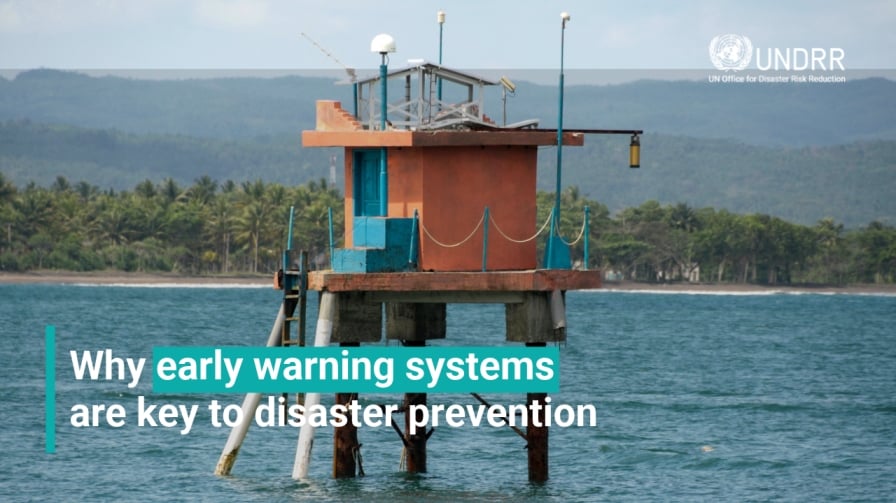
Early warning saves lives and livelihoods
https://bit.ly/31wsdWw via @preventionweb
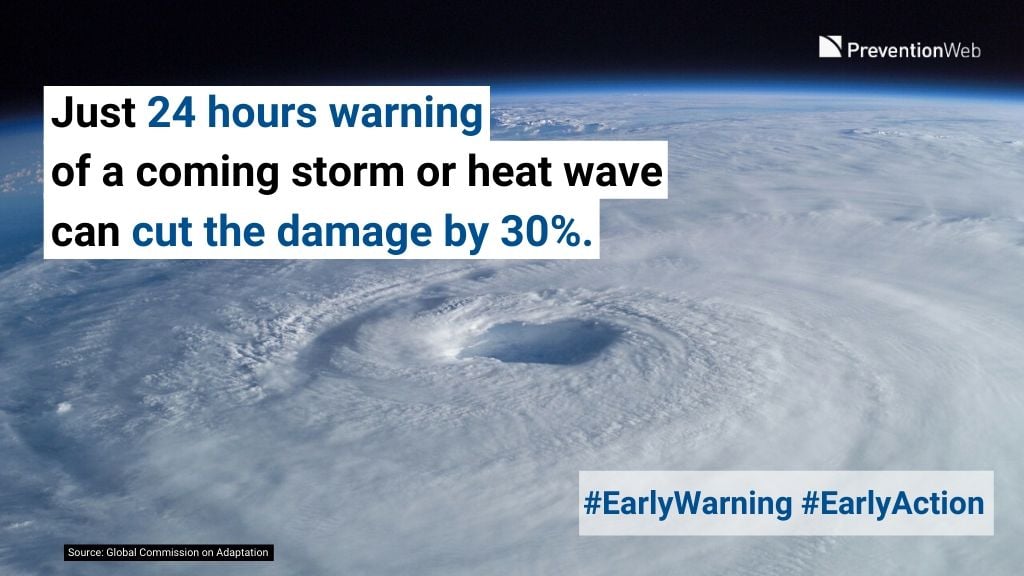

Hazards do not have to turn into disasters. Disaster risk is a function of the decisions we make. #NoNaturalDisasters https://bit.ly/2Zqz551
Download graphic

The era of hazard by hazard risk reduction is over. We must understand the systemic nature of risk
https://bit.ly/3inBExN
Download graphic

Disaster risk reduction must be part of the #prevention agenda in fragile contexts
https://bit.ly/2Zr9bOP
Download graphic

Investing in #DRR saves lives and money. Yet, for every $100 spent on recovery, less than $4 is spent on prevention https://bit.ly/38g97p4
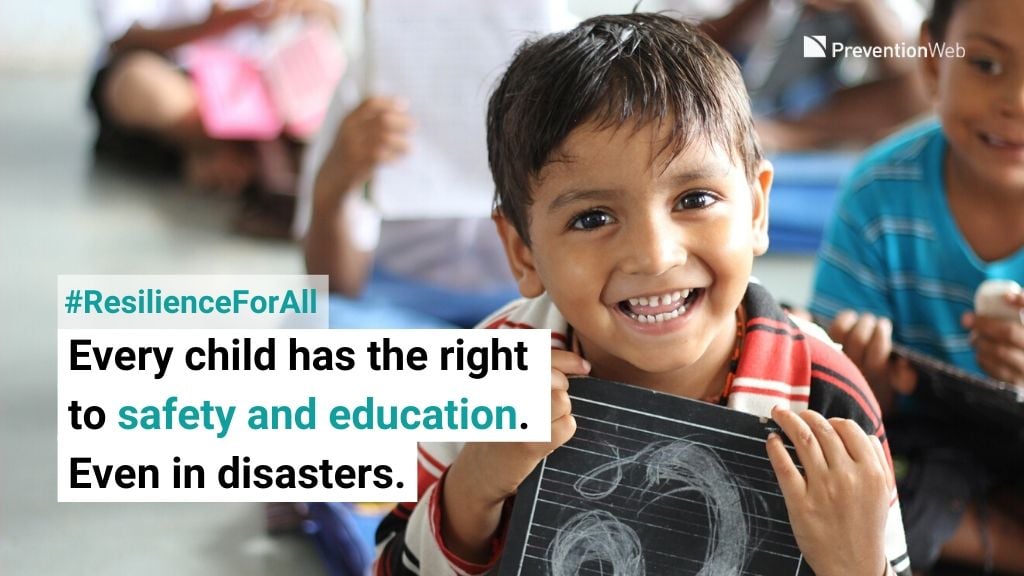
Lost education is often one of the hidden cost of disasters. All children deserve #SafeSchools
https://bit.ly/2Vz4Ac9
Download graphic

Let us break the crisis-response-recovery cycle. Infrastructure must be #BuildToLast
https://bit.ly/3iergbn
Download graphic

Protecting and restoring coral reefs protects coastal communities #NatureBasedSolutions for #DRR
https://bit.ly/3dIG7HL
Download graphic
Additional resources
