UNDRR Logo
My account
Navigation loading…
  • Add
  • Your experience on PreventionWeb

    Please help us improve PreventionWeb by taking this brief survey. Your input will allow us to better serve the needs of the DRR community.

    See the survey

    Last updated 1 Nov 2024

    DRR in humanitarian and fragile contexts

    Upload your content
    Image
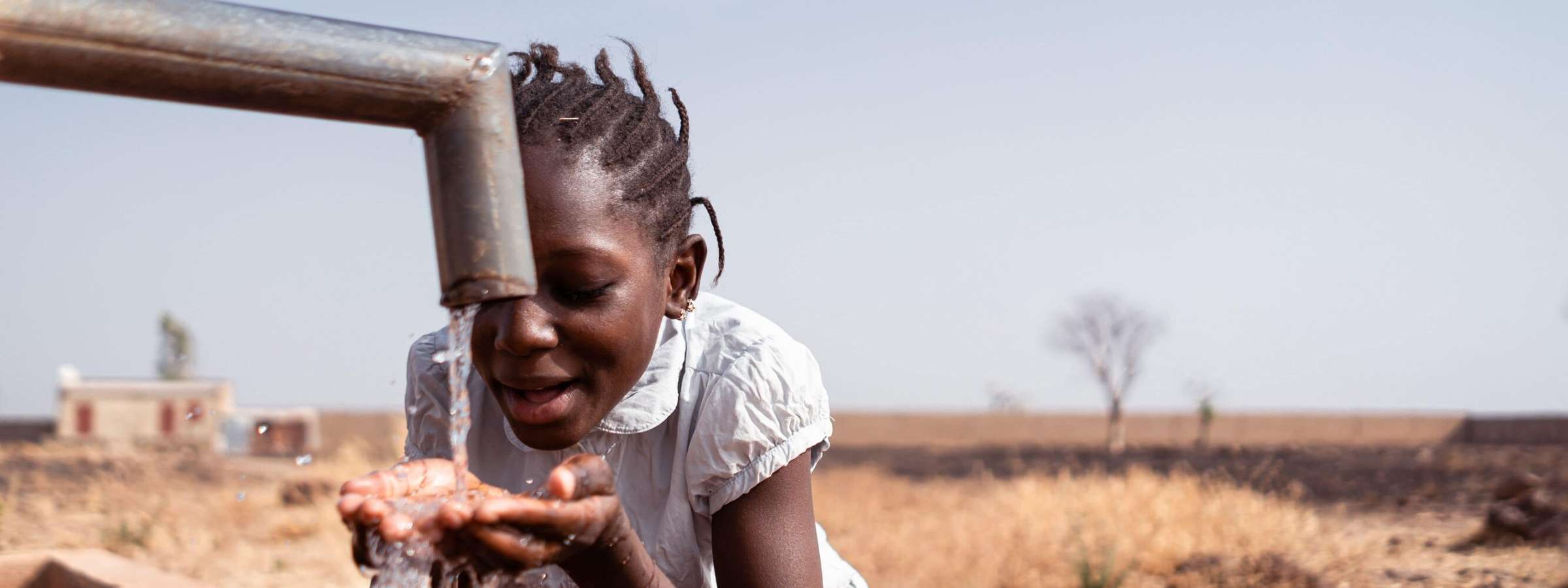
    Young African girl drinking fresh water from a village tap
    Riccardo Mayer/Shutterstock

    Introduction

    According to the Global Humanitarian Overview (GHO) 2023, a record 339 million people will require humanitarian assistance and protection in 2023 – a notable rise from the previous year's 274 million individuals, already the highest figure in decades. 

    Scaling up disaster risk reduction (DRR) in humanitarian and fragile contexts is crucial, as it complements emergency response by concentrating on minimizing exposure and vulnerability. 

    Explore this compilation of resources for deeper insights into disaster risk reduction in humanitarian and fragile contexts.

    Related links
    The Programme Clinic: Designing conflict-sensitive interventions - Approaches t…
    Tool tracking risks and vulnerabilities to inform the Rohingya humanitarian res…
    Themes
    Fragility and conflict

    Knowledge base

    Documents and publications
    19 August 2015
    APELL handbook: a process for improving community awareness and preparedness for technological hazards and environmental emergencies

    Second edition, 2015:

    The updated second edition of the Awareness and Preparedness for Emergencies at Local Level (APELL) handbook builds on the original publication of 1988, drawing on nearly three decades of experience in supporting resilient

    United Nations Environment Programme (UNEP)
    Awareness and Preparedness for Emergencies at Local Level
    Documents and publications
    15 May 2015
    Business engagement in humanitarian response and disaster risk management

    This study differentiates the benefits and risks of different models of engagement between humanitarian organizations and companies in the fields of disaster risk management and humanitarian response. Its aim is to offer a methodology for the European

    Global Public Policy Institute
    GAR 2015 Report
    Documents and publications
    4 March 2015
    Global assessment report on disaster risk reduction 2015

    The fourth edition of the United Nations Global Assessment Report on Disaster Risk Reduction (GAR) is a resource for understanding and analyzing global disaster risk today and in the future.

    United Nations Office for Disaster Risk Reduction (UNDRR)
    Documents and publications
    9 February 2015
    The ND-GAIN Index

    The ND-GAIN Index summarizes a country's vulnerability to climate change and other global challenges in combination with its readiness to improve resilience. It aims to help businesses and the public sector better prioritize investments for a more

    Notre Dame Global Adaptation Initiative
    Documents and publications
    10 September 2014
    Building a roadmap to resilience: tools for field people

    This document provides a step by step approach to resilience systems analysis, a tool for development and humanitarian programming

    Organisation for Economic Co-operation and Development
    Documents and publications
    16 November 2011
    WorldRiskIndex 2011

    The map for the WorldRiskIndex shows the results of the calculations (Exposure X [Susceptibility + Lack of coping capacities + Lack of adaptive capacities]).

    United Nations University - Institute for Environment and Human Security (UNU-EHS)
    Documents and publications
    14 December 2010
    Child Inclusive Community Risk Assessment (CICRA)

    This document provides the rationale and objectives for involving children in the community risk assessment (CRA) and advocates for the incorporation of education, health, protection and water and sanitation related issues into the main framework of DRR

    Asian Disaster Preparedness Center
    Plan International (PI)
    Islamic Relief Worldwide
    European Commission’s Directorate-General for European Civil Protection and Humanitarian Aid Operations (DG ECHO)

    Pagination

    Showing results 91–97 on this page

    • Previous
    • 1
    • …
    • 5
    • …
    • 9
    • 10

    Is this page useful?

    Yes No
    Report an issue on this page

    Thank you. If you have 2 minutes, we would benefit from additional feedback (link opens in a new window).

    PreventionWeb is the global knowledge sharing platform for disaster risk reduction (DRR) and resilience.

    • Newsletter
    • Submit your content
    • Blog pitches
    • Submission and publishing policy
    • About PreventionWeb
    • Contact us

    Hazards

    • Avalanche
    • Cold Wave
    • Cyclone, Hurricane and Typhoon
    • Drought and Desertification
    • Earthquake
    • Epidemic and pandemic
    • Flood
    • Heatwave, extreme heat and heat stress
    • Insect infestation
    • Land subsidence
    • Landslide
    • Nuclear, biological, chemical (NBC)
    • Sea level rise
    • Technological hazard
    • Thunderstorm
    • Tornado
    • Tsunami
    • Volcano
    • Wildfire

    Regions

    • Africa
    • Americas
    • Asia
    • Europe
    • Oceania

    Themes

    Understanding & managing risk

    • Preparedness
    • Early warning
    • GIS and mapping
    • Data and information management
    • Risk identification and assessment
    • Small Island Developing States
    • Earth Observation

    Natural environment

    • Climate change
    • Environment and ecosystems
    • Food security and agriculture
    • Water

    Cross-cutting

    • Systemic risk
    • Recovery

    Human development

    • Capacity development
    • Children and youth
    • Civil society / NGOs
    • Community-based DRR
    • Cultural heritage
    • Gender
    • Human mobility
    • Inclusion
    • Social impacts and resilience

    Science, knowledge & advocacy

    • Disaster risk communication
    • Traditional and Indigenous knowledges
    • Science-policy-practice interface

    State, governance & economy

    • Financing DRR
    • Fragility and conflict
    • Governance
    • Insurance and risk transfer
    • Private sector

    Infrastructure & critical services

    • Critical infrastructure
    • Education and school safety
    • Health and health facilities
    • Structural safety
    • Urban risk and planning
    Loading