UNDRR Logo
My account
Navigation loading…
Your experience on PreventionWeb

Please help us improve PreventionWeb by taking this brief survey. Your input will allow us to better serve the needs of the DRR community.

See the survey

European Commission’s Directorate-General for European Civil Protection and Humanitarian Aid Operations (DG ECHO)

ECHO
Belgium
Regional Intergovernmental Organizations
Propose an edit Upload your content

Mission

The mandate of the European Commission’s Directorate-General for European Civil Protection and Humanitarian Aid Operations (DG ECHO) encompasses humanitarian assistance and civil protection, the two main instruments at the European Union's disposal to ensure rapid and effective delivery of EU relief assistance to people faced with the immediate consequences of disasters.

DG ECHO provides humanitarian aid to the most vulnerable victims of disasters in their immediate aftermath and also in cases of complex and protracted crisis situations

DG ECHO's humanitarian assistance is based on the principles of humanity, neutrality, impartiality and independence, is implemented in partnership with international organisations and humanitarian NGOs and based on solid needs assessment.

DG ECHO strongly supports the central and overall coordinating role of the United Nations in promoting a coherent international response to humanitarian crises and helps to make the EU's voice heard in international fora on humanitarian aid. In order to ensure the lasting impact of relief assistance on populations in countries affected by crisis, DG?ECHO develops and implements policy frameworks aimed at maximising impact and results, including as regards coherent transition strategies towards sustained development.

With regard to its civil protection mandate, DG ECHO encourages and facilitates the cooperation between the 31 States participating in the EU Civil Protection Mechanism (28 EU Member States in addition to Iceland, Norway, and the former Yugoslav Republic of Macedonia) in order to improve the effectiveness of systems for preventing and protecting against natural, technological or man-made disasters in Europe.

Day by day, DG ECHO mobilises help for people in need. This help and assistance is a fundamental expression of the European value of solidarity with people in need, as endorsed and underpinned by new legal bases for both humanitarian aid and civil protection enshrined in the Treaty on the Functioning of the European Union, as resulting from the Treaty of Lisbon.

 
Disaster Reduction Goal

The DIPECHO programme had been expanded over the years and now covers seven disaster prone regions: the Caribbean, Central America, South America, Central Asia, South Asia, South East Asia and South East Africa and South West Indian Ocean (see map). The projects funded by the programme include simple and inexpensive preparatory measures, often implemented by the communities themselves. They have proven extremely effective in limiting damage and saving lives when hazards suddenly strike. DIPECHO-projects will typically emphasize training, capacity-building, awareness-raising, establishment or improvement of local early-warning systems and contingency-planning. There are numerous examples that these simple and community-owned preparedness measures enable communities at risk to save their own lives and livelihoods when disaster strikes. As any other relief provided by ECHO, DIPECHO projects are carried out by European-based aid agencies and UN agencies in close cooperation with local NGOs and authorities.

The best results are only achieved when there is effective co-operation between citizens, civil society groups and local, regional and national authorities. ECHO has found that in most cases, community organisations and municipalities are enthusiastic and actively contribute to DIPECHO activities. In 2008 alone, ECHO has allocated €32.3 million for disaster preparedness in the Central Asia, South East Asia, Central America and South East Africa and South West Indian Ocean.

Contribution to international Disaster Risk Reduction efforts – the Hyogo Framework for Action 2005-2015

ECHO strongly supports all international efforts, including those coordinated by the United Nations, to increase disaster risk reduction worldwide.

ECHO therefore actively supported the World Conference for Disaster Reduction held in Kobe, Japan in January 2005 following the Tsunami. This conference was one of the milestone events that led to the formulation of the Hyogo Framework for Action 2005-2015 and the international commitment to strengthen the International System for Disaster Reduction (ISDR) established within the auspices of UN OCHA. During the first session of the Global Platform for Disaster Risk Reduction, held in 2007, ECHO shared its strategy and experience in a panel on Strengthening Preparedness in Disaster Risk Reduction. Once again, ECHO is actively supporting the 2nd session of the Global Platform (June 2009) during which the EU Strategy supporting Disaster Risk Reduction in developing countries will be presented to government representatives, specialised UN agencies, lead donors, the Red Cross and Red Crescent movement, scientific and regional experts, and civil society representatives.

DRR activities
Reducing underlying risk factors (HFA 4)

Advocacy towards mainstreaming disaster risk reduction into development cooperation:

The DIPECHO programme has been designed to demonstrate measures and initiatives at community-level and can serve as components of integrated disaster risk reduction strategies for a municipality, district or even at national level. However, Disaster Risk Reduction is a long-term development effort and ECHO is therefore encouraging other stakeholders that can provide longer-term financing to systematically integrate disaster risk reduction in their strategies. ECHO has actively participated to the development of the EU Strategy supporting Disaster Risk Reduction in developing countries, adopted in February 2009. This Strategy commits the EU to integrate DRR considerations more effectively into EU development and humanitarian policies. An implementation plan is currently under preparation to turn this strategy into action.

ECHO intends to continue its advocacy work towards development services of the European Commission (DG RELEX and DG Development), the European Union Member States, national governments, international financial institutions and other development partners. As show-cased in the website section with eye-witness accounts, DIPECHO projects have made a real difference to vulnerable communities. The challenge ahead is to ensure that disaster risk reduction becomes an integral part of sustainable development policy – in particular in countries at high risk.

Preparedness for effective response (HFA 5)

Integrating disaster preparedness in relief operations:

ECHO’s contribution to disaster preparedness goes well beyond the DIPECHO programme as many of ECHO’s major humanitarian financing decisions include disaster preparedness or mitigation of disaster impacts as an objective. Even post-disaster emergency responses often have a risk reduction element. Examples of such activities include livestock shelters built after extreme cold snaps to protect against further losses of depleted herds (Peru); training and equipping of community-based fire brigades in forest fire risk zones (Indonesia); cholera preparedness and health information (Malawi); and anti-rust measures to prevent water pollution and protect pipes from the effects of volcanic ash (Ecuador).

These activities are undertaken as an integral part of the ECHO relief operations in areas affected by ongoing humanitarian crises. The establishment of suitable crisis information, alert and rapid damage-assessment systems for the humanitarian community can also be considered as mainstreaming.

In recent years, ECHO has commissioned an evaluation on DRR mainstreaming and launched humanitarian decisions with significant preparedness components such as the 2007 Sahel Global Plan, the 2008 and 2009 decisions on regional drought preparedness in the Great Horn of Africa, or the 2008 Ad hoc decision on Myanmar following cyclone Nargis.

Making Cities Resilient Campaign Activities

- Support the Making Cities Resilient Campaign through activities related to the UNISDR Capacity Building project in 2010-2011: Resilient Cities Campaign website, Development of the Local Government Self Assessment Tool
- Support the Making Cities Resilient Campaign, previous campaigns and the One Million Safe School and Hospitals initiative through several DIPECHO action plans in different regions (e.g. Asia, South Americas, Central America, etc)

Show more
Latest additions
Items: 370
Update
26 August 2014
Once países del Caribe definen sus prioridades en reducción del riesgo de desastres

El Documento País es una iniciativa que busca describir avances y brindar una visión integral de la situación de la RRD, sirviendo como referencia para impulsar políticas públicas y orientar la programación y financiamiento de acciones por parte de las instancias que conforman y colaboran en esta temática...

United Nations Office for Disaster Risk Reduction – Regional Office for the Americas and the Caribbean
European Commission’s Directorate-General for European Civil Protection and Humanitarian Aid Operations (DG ECHO)
El Documento País es una iniciativa que busca describir avances y brindar una visión integral de la situación de la RRD, sirviendo como referencia para impulsar políticas públicas y orientar la programación y financiamiento de acciones por parte de las instancias que conforman y colaboran en esta temática...
Meetings and conferences
Asunción
19 September 2014
In person
Taller: Líneas de acción para la gestión y reducción de riesgos en Paraguay
La Secretaría de Emergencia Nacional (SEN) en conjunto con los socios humanitarios realizará el taller nacional "Líneas de Acción para la Gestión y Reducción de Riesgos en Paraguay”. El Objetivo es socializar las prioridades nacionales en el ámbito de la
La Secretaría de Emergencia Nacional (SEN) en conjunto con los socios humanitarios realizará el taller nacional "Líneas de Acción para la Gestión y Reducción de Riesgos en Paraguay”.
Documents and publications
17 August 2014
Jamaica: country document on disaster risk reduction (final draft revised)

This document provides a comprehensive overview of the status of disaster risk reduction (DRR) in Jamaica.

European Commission’s Directorate-General for European Civil Protection and Humanitarian Aid Operations (DG ECHO)
HelpAge International
University of the West Indies - Mona, the
This document provides a comprehensive overview of the status of disaster risk reduction (DRR) in Jamaica.
Cover
Documents and publications
11 Agosto 2014
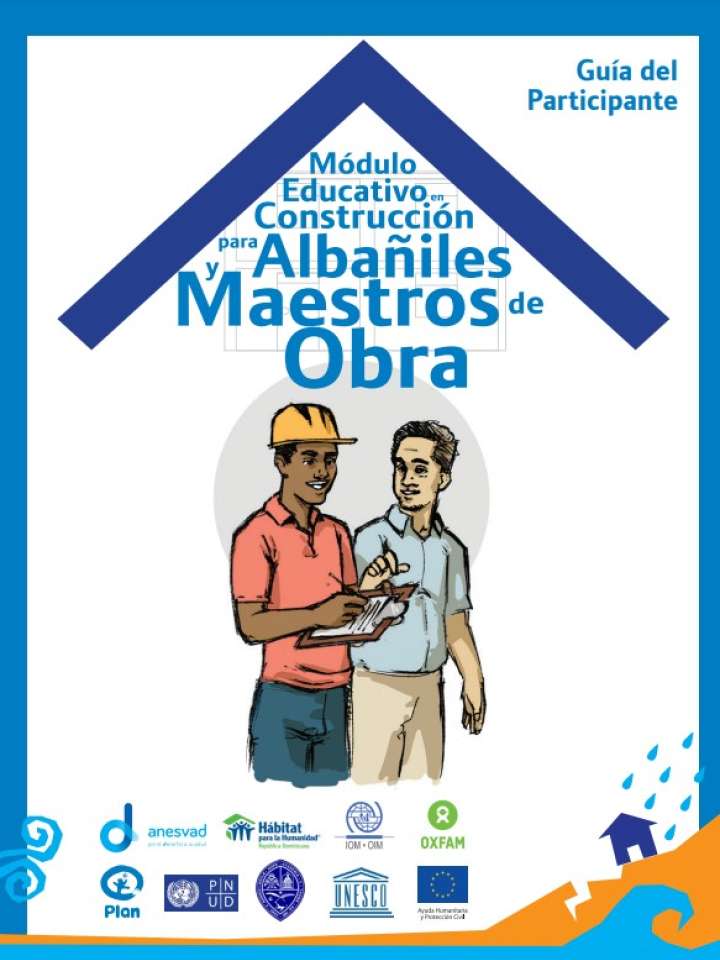
Módulo educativo en construcción para albañiles maestros de obra

El presente material consta de dos documentos desarrollados con el objetivo mencionado presente, cumpliendo además con el doble propósito de servir de guía de estudio para el examen de certificación y la licencia de maestro de obra.

European Commission’s Directorate-General for European Civil Protection and Humanitarian Aid Operations (DG ECHO)
United Nations Development Programme (UNDP)
International Organization for Migration (IOM)
Oxfam International Secretariat
United Nations Educational, Scientific and Cultural Organization (UNESCO)
El presente material consta de dos documentos desarrollados con el objetivo mencionado presente, cumpliendo además con el doble propósito de servir de guía de estudio para el examen de certificación y la licencia de maestro de obra.
Update
28 July 2014
Convocatoria de buenas prácticas y experiencias de los proyectos DIPECHO en los Planes de Acción 2013-2014

La convocatoria de experiencias y buenas prácticas se lleva a cabo con el objetivo de seleccionar a aquellas que puedan ilustrar, a través de unos testimoniales en video, los resultados ya visibles de las intervenciones financiadas por ECHO, su impacto para los beneficiarios y/o la aplicación exitosa de las herramientas y/o productos elaborados en el marco del proyecto...

United Nations Office for Disaster Risk Reduction – Regional Office for the Americas and the Caribbean
European Commission’s Directorate-General for European Civil Protection and Humanitarian Aid Operations (DG ECHO)
La convocatoria de experiencias y buenas prácticas se lleva a cabo con el objetivo de seleccionar a aquellas que puedan ilustrar, a través de unos testimoniales en video, los resultados ya visibles de las intervenciones financiadas por ECHO, su impacto para los beneficiarios y/o la aplicación exitosa de las herramientas y/o productos elaborados en el marco del proyecto...
Cover
Educational materials
9 July 2014
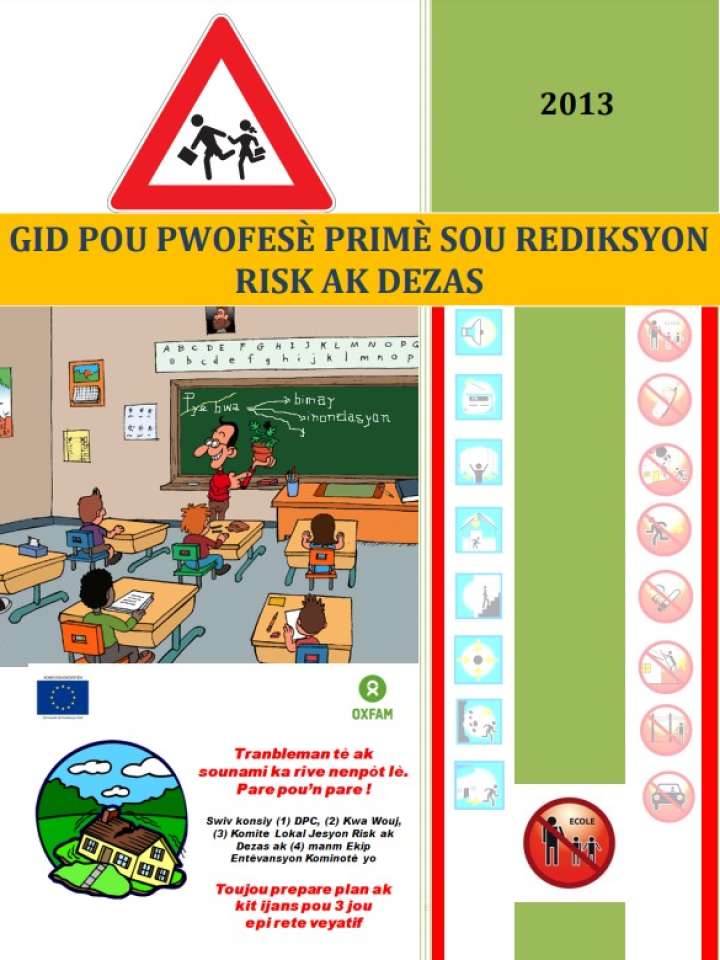
Gid Pou Pwofesè Primè Sou Rediksyon Risk Ak Dezas

Travay chak pwofesè anpil nan peyi d‟Ayiti pliske peyi-a reyini yon bann kondisyon ki mete nou nan yon eta vilnerab. Vilnerabilite-a tèlman sansib sa dwe mande nou pridan e byen kadre chak mesaj n‟ap bay timoun yo.

European Commission’s Directorate-General for European Civil Protection and Humanitarian Aid Operations (DG ECHO)
Oxfam International Secretariat
Travay chak pwofesè anpil nan peyi d‟Ayiti pliske peyi-a reyini yon bann kondisyon ki mete nou nan yon eta vilnerab. Vilnerabilite-a tèlman sansib sa dwe mande nou pridan e byen kadre chak mesaj n‟ap bay timoun yo.
Cover
Documents and publications
17 Junio 2014
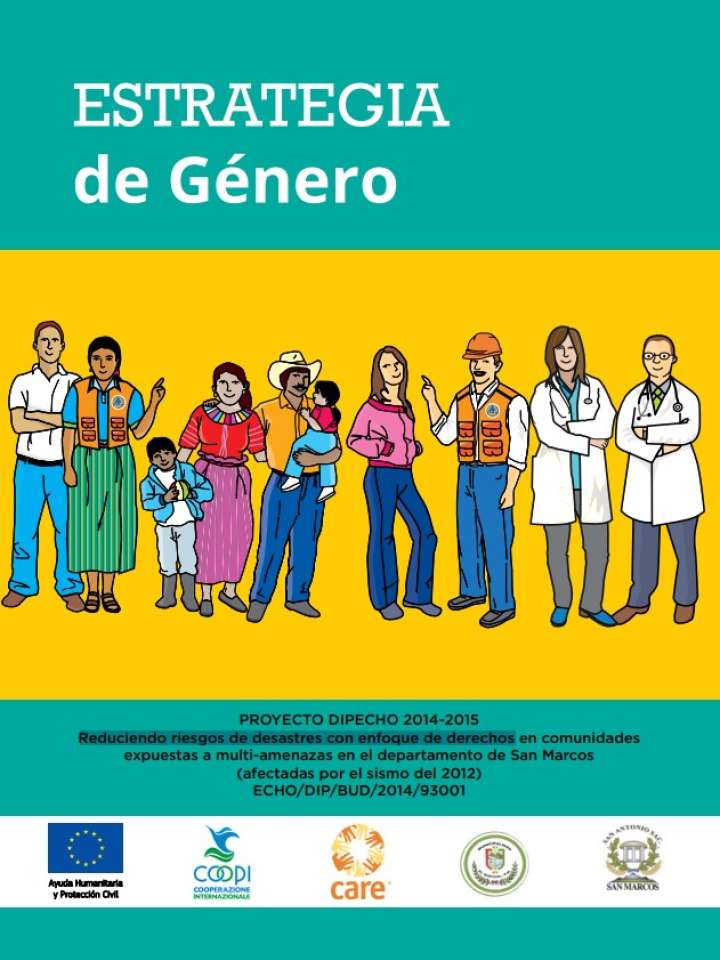
Estrategia de género. Proyecto DIPECHO 2014-2015

Documento sobre la reducción de riesgos de desastres con enfoque de derechos en comunidades expuestas a multi-amenazas en el departamento de San Marcos.

European Commission’s Directorate-General for European Civil Protection and Humanitarian Aid Operations (DG ECHO)
Cooperazione Internazionale
Cooperative for Assistance and Relief Everywhere - International Secretariat
Guatemala - government
Documento sobre la reducción de riesgos de desastres con enfoque de derechos en comunidades expuestas a multi-amenazas en el departamento de San Marcos.
Cover
Documents and publications
17 Junio 2014
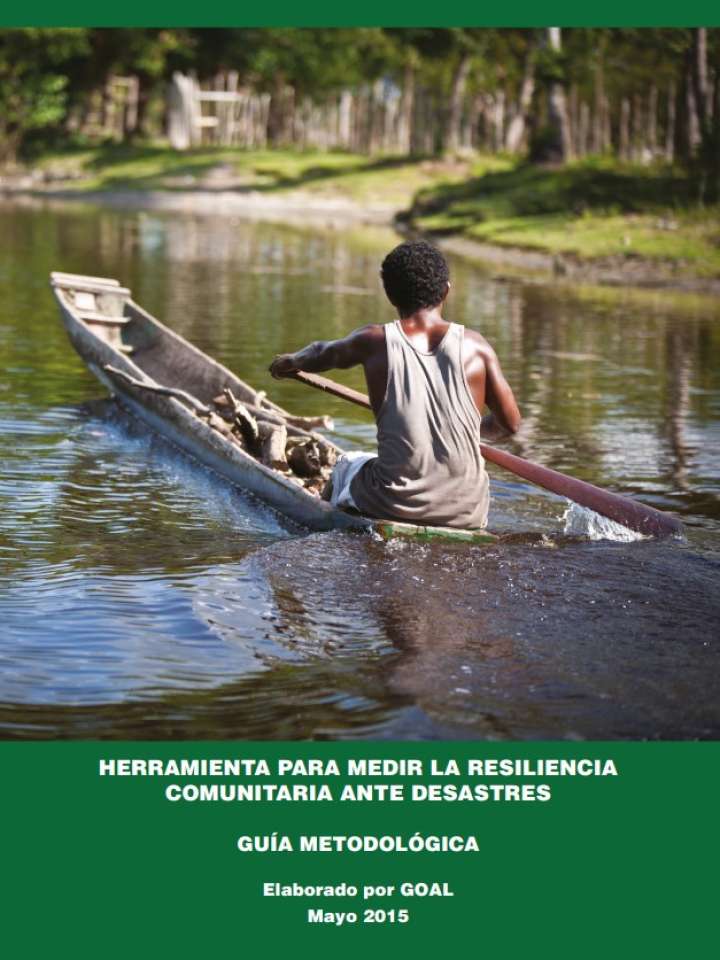
Herramienta para medir la resiliencia comunitaria ante desastres. Guía metodológica

Herramienta para Medir la Resiliencia Comunitaria ante Desastres desarrollada para medir el nivel de resiliencia ante desastres a nivel comunitario a través de la evaluación de una amplia gama de componentes de resiliencia.

European Commission’s Directorate-General for European Civil Protection and Humanitarian Aid Operations (DG ECHO)
GOAL International
Herramienta para Medir la Resiliencia Comunitaria ante Desastres desarrollada para medir el nivel de resiliencia ante desastres a nivel comunitario a través de la evaluación de una amplia gama de componentes de resiliencia.

Pagination

Showing results 161–168 on this page

  • Previous
  • 1
  • …
  • 16
  • …
  • 20
  • 21
  • 22
  • Next

More content for this organization may be available on PreventionWeb or on the site search.

Voluntary Commitments

The organization has no registered commitments.

The Sendai Framework Voluntary Commitments (SFVC) online platform allows stakeholders to inform the public about their work on DRR. The SFVC online platform is a useful toolto know who is doing what and where for the implementation of the Sendai Framework, which could foster potential collaboration among stakeholders. All stakeholders (private sector, civil society organizations, academia, media, local governments, etc.) working on DRR can submit their commitments and report on their progress and deliverables.

Contact information

http://ec.europa.eu/echo/
[email protected]
351.21.392.18.71
Fax:
351.21.395.33.27
Facebook
Twitter

Is this page useful?

Yes No
Report an issue on this page

Thank you. If you have 2 minutes, we would benefit from additional feedback (link opens in a new window).

PreventionWeb is the global knowledge sharing platform for disaster risk reduction (DRR) and resilience.

  • Newsletter
  • Submit your content
  • Blog pitches
  • Submission and publishing policy
  • About PreventionWeb
  • Contact us

Hazards

  • Avalanche
  • Cold Wave
  • Cyclone, Hurricane and Typhoon
  • Drought and Desertification
  • Earthquake
  • Epidemic and pandemic
  • Flood
  • Heatwave, extreme heat and heat stress
  • Insect infestation
  • Land subsidence
  • Landslide
  • Nuclear, biological, chemical (NBC)
  • Sea level rise
  • Technological hazard
  • Thunderstorm
  • Tornado
  • Tsunami
  • Volcano
  • Wildfire

Regions

  • Africa
  • Americas
  • Asia
  • Europe
  • Oceania

Themes

Understanding & managing risk

  • Preparedness
  • Early warning
  • GIS and mapping
  • Data and information management
  • Risk identification and assessment
  • Small Island Developing States
  • Earth Observation

Natural environment

  • Climate change
  • Environment and ecosystems
  • Food security and agriculture
  • Water

Cross-cutting

  • Systemic risk
  • Recovery

Human development

  • Capacity development
  • Children and youth
  • Civil society / NGOs
  • Community-based DRR
  • Cultural heritage
  • Gender
  • Human mobility
  • Inclusion
  • Social impacts and resilience

Science, knowledge & advocacy

  • Disaster risk communication
  • Traditional and Indigenous knowledges
  • Science-policy-practice interface

State, governance & economy

  • Financing DRR
  • Fragility and conflict
  • Governance
  • Insurance and risk transfer
  • Private sector

Infrastructure & critical services

  • Critical infrastructure
  • Education and school safety
  • Health and health facilities
  • Structural safety
  • Urban risk and planning
Loading