UNDRR Logo
My account
Navigation loading…
  • Add
  • Your experience on PreventionWeb

    Please help us improve PreventionWeb by taking this brief survey. Your input will allow us to better serve the needs of the DRR community.

    See the survey

    Cooperazione Internazionale

    COOPI
    Italy
    Non Governmental Organizations
    Propose an edit Upload your content

    Mission

    By making a valuable use of its staff’s commitment, involvement, resolution and professionalism, COOPI aims at fighting poverty and at developing the communities it cooperates with all over the world, by intervening in emergency situations, reconstruction and development, and by reducing the socio-economic gap between northern and southern countries, between developed, under-developed and developing areas

    Disaster Reduction Goal

    To increase resilience of communities and institutions by promoting environmental sustainability, fostering participation and integrating prevention, mitigation and preparedness actions.

    DRR activities
    Policies and Programmes in DRR

    COOPI adopted a specific policy about "Environment and disaster risk reduction".

    Disaster Reduction Focal Point(s)

    Tiziana Vicario, Disaster risk reduction and environment focal point.

    Websites

    http://www.coopi.org;
    http://coopi.wordpress.com/tag/prevenzione-disastri/
    http://coopi.wordpress.com/tag/reduciendo-desastres/
    http://vimeo.com/52621849
    http://www.gi4drrdb.coopi.org/activities;
    http://www.gi4drr.org/

    Making disaster risk reduction a policy priority, institutional strengthening (HFA 1)

    - Promoting the use of land monitoring tools and the creation of planning strategies and regional plans in order to improve crisis and risk management;
    - Fostering decentralisation of responsibilities and resources;
    - Supporting good governance processes in DRR by involving people in reviewing the work of local authorities, particularly in terms of accountability and transparency;
    - strengthening of capacities at community and institutional level;
    - Involving the academic sector in the production of studies and databases, in order to increase the interdisciplinary nature of DRR.

    Risk assessment and early warning systems (HFA 2)

    - Land analysis and identification of resources essential to its functioning, development and crisis management;
    - Creation of georeferenced database and information systems;
    - Creation of cartographic servers;
    - Production of maps to support risk and crisis management;
    - Development of early warning systems and improvement of the understanding of the scientific language, while promoting a tripartite collaboration between communities, institutions and scientific and/or academics bodies;
    - Capacity strengthening in monitoring climatic phenomena and in supporting policy implementation at the regional level.

    Education, information and public awareness (HFA 3)

    -Scientific research and know how transfer at national and regional/international level;
    - Organizing international symposia for knowledge sharing among various scientific institutes and disseminating practices;
    - Creating GIS platforms for coordination at regional level by using open source sites;
    - Inclusion of DRR into school curricula such as the adaptation of "Riesgolandia";
    - Promoting the creation of spaces for informal education of youth in the field of DRR, for example by organizing "disaster preparedness games";
    - Involving children and adolescents, especially including youth at-risk, in sports, theater, radio, photography, graffiti and music related activities;
    - Raising awareness on ‘environment and DRR’ subject by involving media and developing communications
    strategies;
    - Participating in international events for the dissemination of innovative practices;

    Reducing underlying risk factors (HFA 4)

    -Support to DRR oriented land management;
    - Urban requalification of degraded contexts;
    - Natural resources conservation activities integrated with climate change adaptation;
    - Mitigation of the risk of desertification/flooding by protecting water sources, forest resources protection and reforestation;
    - Prevention of soil erosion by natural engineering solutions (these systems are also used to mitigate the risk of landslides or river flooding);
    - Integrating DRR measures in food security programmes;
    - Strengthening of community livelihoods in areas exposed to drought or other recurring events (El Niño or Niña phenomena), specifically where agriculture and livestock farming are the main activities the communities depend on;
    - Support to DRR oriented land management and urban requalification of degraded contexts;
    - Creation of water systems, pumps, structures collecting rainwater in tanks or directly into the houses;
    - Biodiversity conservation by protecting native and/or endangered plants species as well as of the knowledge associated with them;
    - Starting income generating activities aiming at reducing vulnerability;
    - Strengthening and/or building of emergency operation centers;
    - Construction and/or rehabilitation of roads/bridges for evacuation or emergency gathering points, taking into account the removal of architectural barriers for people with disabilities or elderly;
    - Construction and rehabilitation of shelter centers, especially in countries where these are also used as schools in order to guarantee the right to education and ensure the psychosocial assistance during crisis;
    - Realization of and support to alternative infrastructures for the management of emergencies, such as spaces for the placement of tents serving as temporary hospitals, shelters for displaced people, spaces for debris disposal, etc.;
    -Implementation of photovoltaic systems for supplying alternative energy;
    - Strengthening capacity of self-building by using local materials;
    - Support to health centers in the epidemiological and biological risk monitoring and in activating risk mitigation processes by installing water chlorination systems and/or direct intervention on the infrastructures;
    - Protection of the historical and cultural heritage by the application of methods such as temporary shoring and other permanent mitigation works.

    Preparedness for effective response (HFA 5)

    - Encouraging community organization by creating local emergency committees as well as local committees for the storage and conservation of subsistence resources (emergency barns to ensure food security, water committees, committees for the control of early warning systems);
    - Creation of contingency and coordination plans while supporting the development of communication systems that should be tested by simulations;
    - Training of institutions (municipalities, emergency organizations, bodies in charge of environmental management, etc.) on the response to emergencies and land management, creating groups for damage assessment, needs assessment and risk management, either it be anthropic or natural;
    - Creating and strengthening emergency operation committees at different intitutional level (church, municipal, provincial/departmental and regional levels) by providing tools and equipment, know-how transfer and material for awareness;
    - Supporting institutions in DRR oriented land use planning and managament, identifying vulnerable groups and resources to be protected;
    - Supporting the creation of emergency warehouses and control systems to manage the flow of goods in emergencies;
    - Promoting corporate social responsibility, supporting inventory of companies having logistical skills and stimulating agreements that ensure normalization of prices in case of crisis.

    Other activities

    - The activation of processes specifically targeted to different age groups of a given community. In this sense, COOPI has developed different methodologies to actively involve children, youth, adults and elderly;
    - The conformity to and promotion of a gender approach to revaluate the role of women and reduce the vulnerability embedded in the role they have in their own society;
    -The involvement of minority groups, due to either ethnic, racial, religious or nationality reasons, in the definition of tools that meet the cultural, linguistic and social differences and claim for the principle of non-discrimination;
    -The definition of methods for involving people with disabilities in risk and crisis management and the removal of architectural barriers or others that could increase their vulnerability (alert systems that take into account deafness, blindness , etc.);
    - The collection of oral knowledge, as well as the understanding of the perceptions and attitudes of communities.
    Show more
    Latest additions
    Items: 32
    Update
    12 January 2016
    Haiti: An interview with AGERCA

    According to the International Red Cross and the UN, the catastrophic earthquake struck Haiti affected more than 3 million people. COOPI conducted an interview with two members of the Haitian Alliance for Disaster Management and Business Continuity (AGERCA): Marie-Louise Augustin Russo, Board Advisor, and Sarah Taluy, Executive Director...

    Cooperazione Internazionale
    According to the International Red Cross and the UN, the catastrophic earthquake struck Haiti affected more than 3 million people. COOPI conducted an interview with two members of the Haitian Alliance for Disaster Management and Business Continuity (AGERCA): Marie-Louise Augustin Russo, Board Advisor, and Sarah Taluy, Executive Director...
    Update
    5 January 2016
    #EvacuationUrbaine: COOPI launches a new hashtag and trains partners on social media in Haiti

    Last week more than 30 people were trained on social media. It is important to motivate people and build communication skills since it is they who are actively involved in evacuation exercises. The idea is to introduce people to the world of social media, explaining how to use the hashtag to promote activities within their communities, ranging from raising awareness on DRR to community mobilization in case of emergency...

    Cooperazione Internazionale
    Last week more than 30 people were trained on social media. It is important to motivate people and build communication skills since it is they who are actively involved in evacuation exercises. The idea is to introduce people to the world of social media, explaining how to use the hashtag to promote activities within their communities, ranging from raising awareness on DRR to community mobilization in case of emergency...
    Cover
    Documents and publications
    1 Diciembre 2015
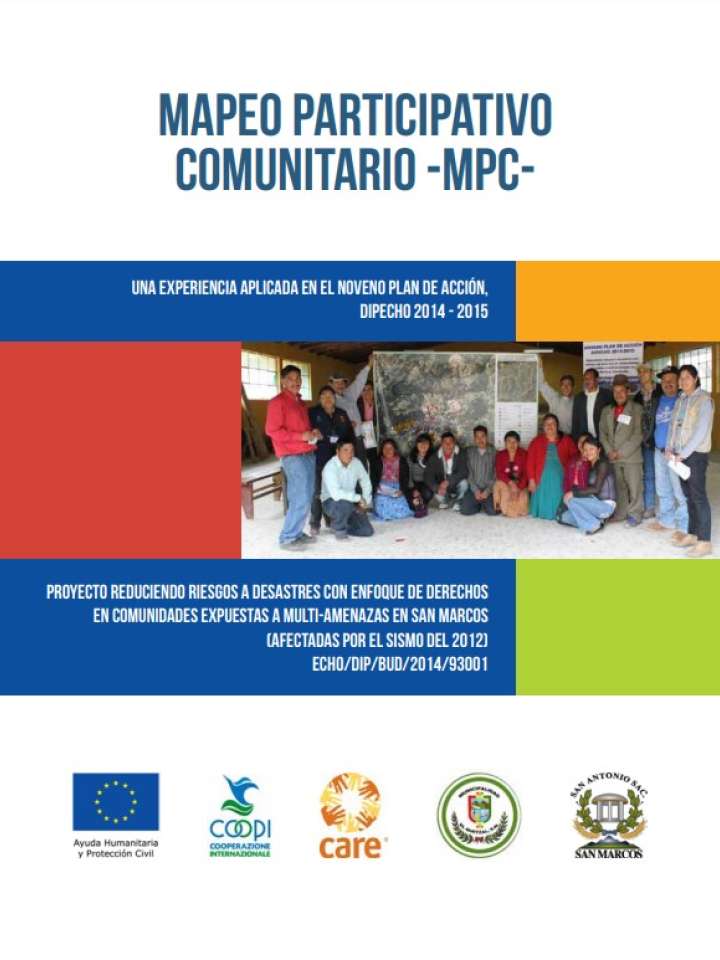
    Mapeo participativo comunitario DIPECHO 2014 - 2015

    El Mapeo Participativo Comunitario – MPC es una herramienta de mapeo dinámico y visual para el desarrollo basado en la comunidad.

    European Commission’s Directorate-General for European Civil Protection and Humanitarian Aid Operations (DG ECHO)
    Cooperazione Internazionale
    Cooperative for Assistance and Relief Everywhere - International Secretariat
    El Mapeo Participativo Comunitario – MPC es una herramienta de mapeo dinámico y visual para el desarrollo basado en la comunidad.
    Update
    11 December 2015
    Volunteer: the case of the Community Intervention Units in Haiti

    'Civil protection in Haiti works at different levels from national to local. After the earthquake of January 12, 2010, it recognized that it was crucial to build community level capacity to help the system,’ explained Ms. Mercedes Aguerre, DIPECHO project manager of COOPI for the DIPECHO project, in consortium with GOAL...

    Cooperazione Internazionale
    'Civil protection in Haiti works at different levels from national to local. After the earthquake of January 12, 2010, it recognized that it was crucial to build community level capacity to help the system,’ explained Ms. Mercedes Aguerre, DIPECHO project manager of COOPI for the DIPECHO project, in consortium with GOAL...
    Update
    4 December 2015
    COOPI simule des activités d’évacuation en cas de catastrophes avec les communautés urbaines d’Haïti

    Une des façons les plus effective pour faire face aux cyclones, ouragans, tempêtes tropicales, pluies torrentielles, crues et inondations qui touchent régulièrement Haïti est le niveau de préparation à faire face à ces désastres. C’est pourquoi COOPI – Cooperazione Internazionale a commencé un travail d’exercices d’évacuation dans les communautés urbaines de Tabarre, en Haïti...

    Cooperazione Internazionale
    Une des façons les plus effective pour faire face aux cyclones, ouragans, tempêtes tropicales, pluies torrentielles, crues et inondations qui touchent régulièrement Haïti est le niveau de préparation à faire face à ces désastres. C’est pourquoi COOPI – Cooperazione Internazionale a commencé un travail d’exercices d’évacuation dans les communautés urbaines de Tabarre, en Haïti...
    Update
    29 October 2015
    Haiti: What would you bring in case of an emergency? 'Yon kit byen vit!'

    a

    Cooperazione Internazionale
    a
    Meetings and conferences
    Port au Prince
    13 October 2015
    In person
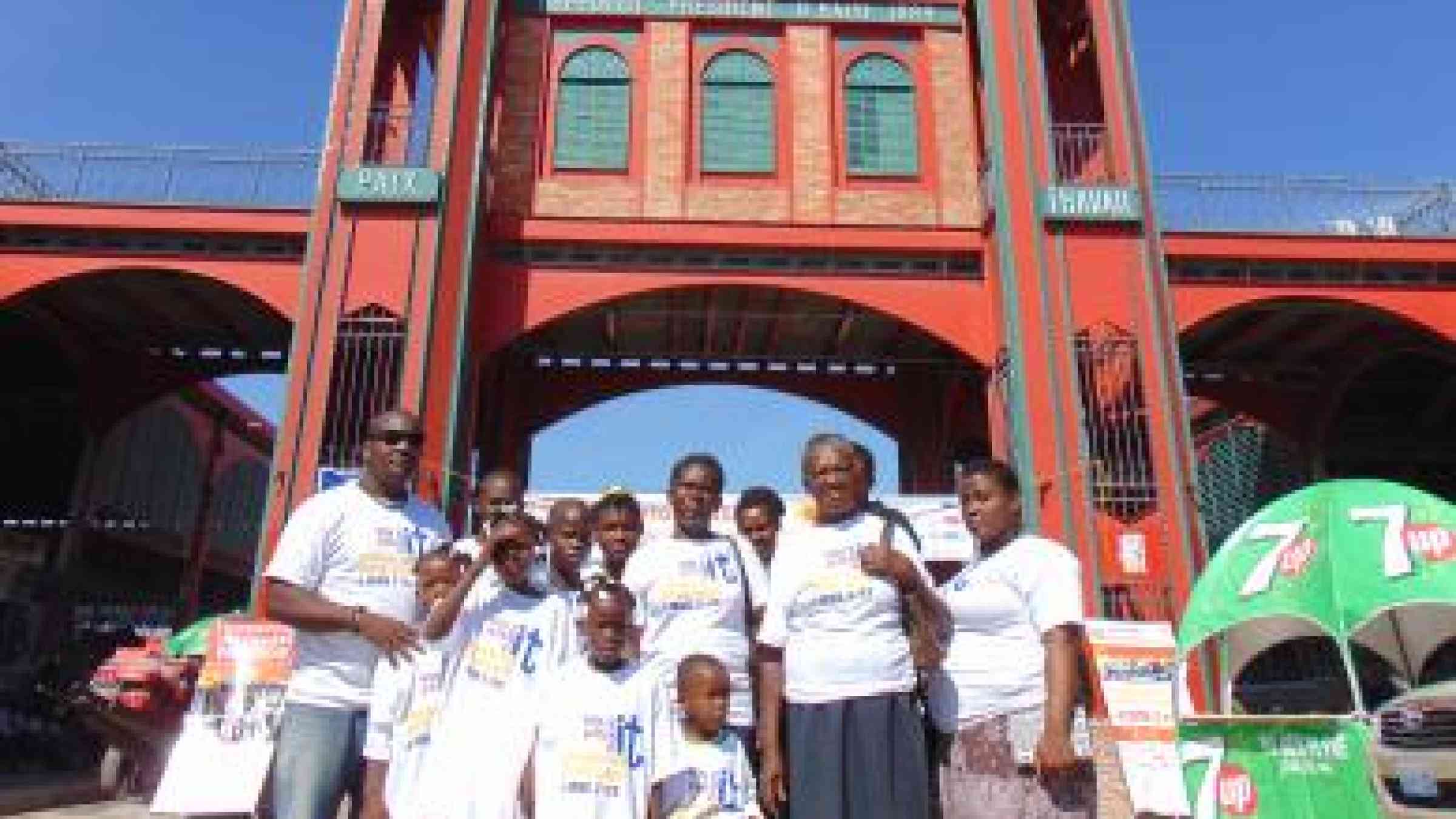
    Haiti: Celebrating the International Day for Disaster Reduction 2015 - Cooperazione Internazionale
    Cooperazione Internazionale (COOPI) in Haiti is celebrating the International Day for Disaster Reduction 2015 in strict collaboration with its local partner AGERCA (Alliance for Disaster Management and Business Continuity committee) and the CTESP (Comité
    Cooperazione Internazionale (COOPI) in Haiti is celebrating the International Day for Disaster Reduction 2015 in strict collaboration with its local partner AGERCA (Alliance for Disaster Management and Business Continuity committee) and the CTESP
    Cover
    Documents and publications
    8 October 2015
    International Day of Disaster Risk Reduction Haiti - COOPI activities

    COOPI's participation to various activities with beneficiary of COOPI’s project funded by dipECHO.

    Cooperazione Internazionale
    COOPI's participation to various activities with beneficiary of COOPI’s project funded by dipECHO.

    Pagination

    Showing results 9–16 on this page

    • Previous
    • 1
    • 2
    • 3
    • Next

    More content for this organization may be available on PreventionWeb or on the site search.

    Voluntary Commitments

    The organization has no registered commitments.

    The Sendai Framework Voluntary Commitments (SFVC) online platform allows stakeholders to inform the public about their work on DRR. The SFVC online platform is a useful toolto know who is doing what and where for the implementation of the Sendai Framework, which could foster potential collaboration among stakeholders. All stakeholders (private sector, civil society organizations, academia, media, local governments, etc.) working on DRR can submit their commitments and report on their progress and deliverables.

    Contact information

    http://www.coopi.org/en/home/
    [email protected]
    +3329874130 ó 41 22 917 8517
    Fax:
    +41 229178047 ó 41 22 917 8062

    Is this page useful?

    Yes No
    Report an issue on this page

    Thank you. If you have 2 minutes, we would benefit from additional feedback (link opens in a new window).

    PreventionWeb is the global knowledge sharing platform for disaster risk reduction (DRR) and resilience.

    • Newsletter
    • Submit your content
    • Blog pitches
    • Submission and publishing policy
    • About PreventionWeb
    • Contact us

    Hazards

    • Avalanche
    • Cold Wave
    • Cyclone, Hurricane and Typhoon
    • Drought and Desertification
    • Earthquake
    • Epidemic and pandemic
    • Flood
    • Heatwave, extreme heat and heat stress
    • Insect infestation
    • Land subsidence
    • Landslide
    • Nuclear, biological, chemical (NBC)
    • Sea level rise
    • Technological hazard
    • Thunderstorm
    • Tornado
    • Tsunami
    • Volcano
    • Wildfire

    Regions

    • Africa
    • Americas
    • Asia
    • Europe
    • Oceania

    Themes

    Understanding & managing risk

    • Preparedness
    • Early warning
    • GIS and mapping
    • Data and information management
    • Risk identification and assessment
    • Small Island Developing States
    • Earth Observation

    Natural environment

    • Climate change
    • Environment and ecosystems
    • Food security and agriculture
    • Water

    Cross-cutting

    • Systemic risk
    • Recovery

    Human development

    • Capacity development
    • Children and youth
    • Civil society / NGOs
    • Community-based DRR
    • Cultural heritage
    • Gender
    • Human mobility
    • Inclusion
    • Social impacts and resilience

    Science, knowledge & advocacy

    • Disaster risk communication
    • Traditional and Indigenous knowledges
    • Science-policy-practice interface

    State, governance & economy

    • Financing DRR
    • Fragility and conflict
    • Governance
    • Insurance and risk transfer
    • Private sector

    Infrastructure & critical services

    • Critical infrastructure
    • Education and school safety
    • Health and health facilities
    • Structural safety
    • Urban risk and planning
    Loading