Research briefs

Keep up to date with the latest research on disaster risk and resilience on the PreventionWeb knowledge base.

Explore cutting-edge research on disaster risk reduction and resilience through PreventionWeb's dedicated research briefs section. Our platform curates and highlights the most recent academic studies, providing valuable insights into disaster risk management. Each research brief distills key findings from peer-reviewed journals and academic publications.

Submit a research brief.

These briefs are designed to keep you informed about the latest scientific advances. Links to the full publications are always included, ensuring easy access to in-depth knowledge. Please note that this section exclusively features academic research, distinct from reports by international organizations or Non-Governmental Organisations.

Uploaded on
Research briefs

A study shows that even modest increases in river flows can dramatically raise flood frequency, with major implications for infrastructure and community safety.

University of British Columbia
A woman carrying a child through the heated streets.
Research briefs

In Karachi, Pakistan, a heatwave is not simply a matter of high temperatures. It's a public health emergency that seeps into every corner of life: physical health, sleep, mood and the invisible care work that keeps families and neighbours alive.

Conversation Media Group, the
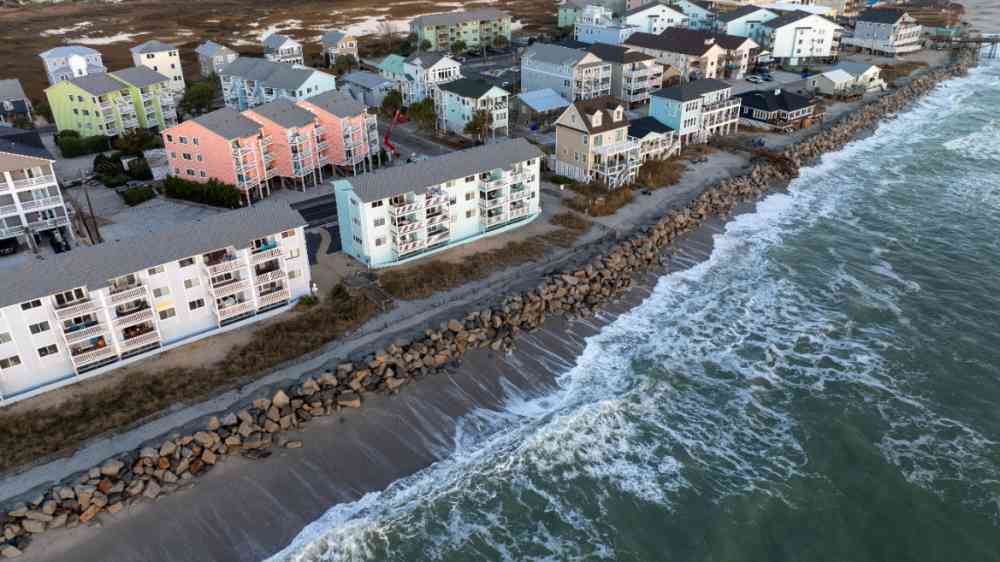
Coastal homes in Carolina Beach, NC, USA facing the Atlantic Ocean.
Research briefs

Sea level rise could put more than 100 million buildings across the Global South at risk of regular flooding if fossil fuel emissions are not curbed quickly, according to a new McGill-led study published in npj Urban Sustainability.

McGill University
Covid-19 Vaccination Drive
Research briefs

A new study reveals that vaccines designed to protect against a wide range of coronaviruses could dramatically reduce deaths and economic disruption and limit the need for lockdowns in the event of another global coronavirus pandemic.

Coalition for Epidemic Preparedness Innovations
Research briefs

Earth's nastiest and costliest wildfires are blazing four times more often now than they did in the 1980s because of human-caused climate change and people moving closer to wildlands, a new study found.

PhysOrg, Omicron Technology Ltd
Research briefs

A paper recently published in the ASCE Journal of Waterway, Port, Coastal, and Ocean Engineering explores coastal flooding patterns and mitigation strategies throughout the bay region.

University of California, Santa Cruz
Porto Cesareo beach with tourists and buildings by the sea, Lecce, Puglia, Italy
Research briefs

A new study predicts how flooding may expand with rising sea levels in a specific area, offering actionable guidance for urban planning and coastal resilience. The research identifies where seawater is most likely to pass through gaps in dunes.

Centro Euro-Mediterraneo sui Cambiamenti Climatici (CMCC)
A photo from a training session showing attendees learning about EUMETSTAT satellite data
Research briefs

Artificial intelligence models have improved weather forecasting, but their inner workings are largely opaque. A new approach could make their predictions more interpretable by scientists.

Eos - AGU