Research briefs

Keep up to date with the latest research on disaster risk and resilience on the PreventionWeb knowledge base.

Explore cutting-edge research on disaster risk reduction and resilience through PreventionWeb's dedicated research briefs section. Our platform curates and highlights the most recent academic studies, providing valuable insights into disaster risk management. Each research brief distills key findings from peer-reviewed journals and academic publications.

Submit a research brief.

These briefs are designed to keep you informed about the latest scientific advances. Links to the full publications are always included, ensuring easy access to in-depth knowledge. Please note that this section exclusively features academic research, distinct from reports by international organizations or Non-Governmental Organisations.

Uploaded on
Houses with wildfire smoke in the background
Research briefs

A 20-year study found that global exposure to wildfires and heat waves occurring on the same days rose by 287 million from 2000 to 2019, with over half the world’s population experiencing these combined events.

Monash University
Motorcyclists navigate through a flooded street in Kolkata, India.
Research briefs

An Indian Institute of Technology Madras (IIT Madras)-led international study has found that atmospheric air pollution could play a critical role in improving the forecasting of rainfall and urban floods.

Indian Institute of Technology Madras
Research briefs

A study of doctors’ experiences during the 2023 Türkiye earthquakes highlights gaps in disaster preparedness and calls for practical training, psychological support and policies that recognize healthcare workers may also be disaster survivors.

Bioengineer.org
Research briefs

A study of 465 cities across 107 countries reveals global land subsidence trends from 2014 to 2023, identifying hotspots including Mexico City and several Asian cities. The findings highlight the need for continued monitoring and targeted action.

Phys.org
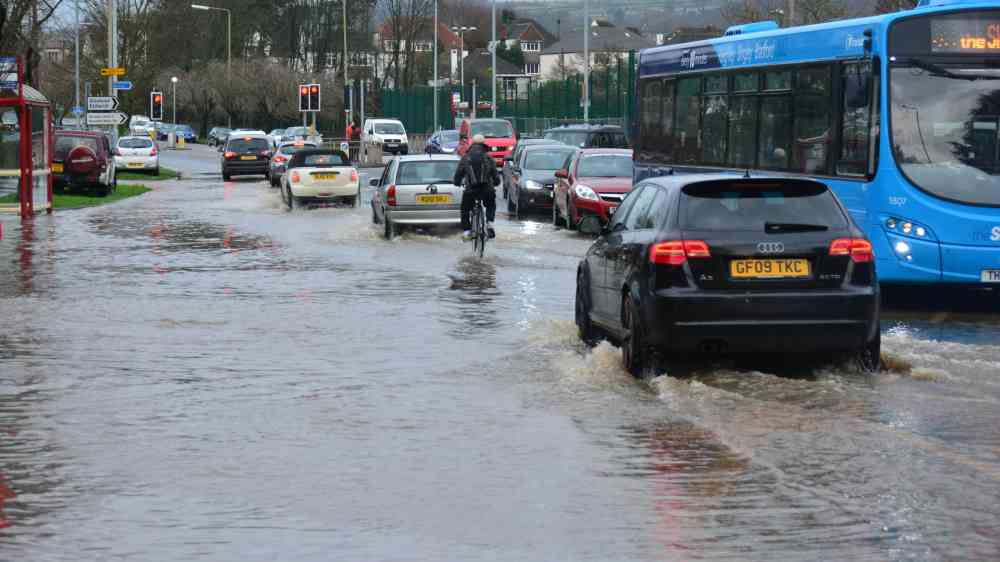
A flooded road with vehicles
Research briefs

Researchers developed advanced deep learning models incorporating attention mechanisms to identify important patterns in rainfall and river flow data, then combined the models’ predictions using a fusion approach to improve flood forecasting accuracy.

University of Technology Sydney
Dhunge Bazaar near Trishuli in Nuwakot, Nepal, shows extensive damage following severe flooding in the Bhotekoshi River. Floodwaters have damaged houses, roads, bridges, public buildings and other infrastructure, while security forces and rescue teams work to evacuate affected residents and clear blocked roads. Aerial footage shows the scale of destruction across the flood-affected area.
Research briefs

Study finds built-up areas potentially exposed to flooding in Nepal and neighbouring river catchments grew by 46% between 2016 and 2023. Rising exposure in valleys highlights the need to integrate disaster risk into land-use and infrastructure planning.

Conversation Media Group, the
Drought in the Amazon River, a consequence of the lack of rainfall in the Amazon
Research briefs

An international study reveals that the unprecedented heat stress of 2023–2024 will likely recur in the coming decades unless emissions are reduced. The Amazon is the most vulnerable region.

EurekAlert
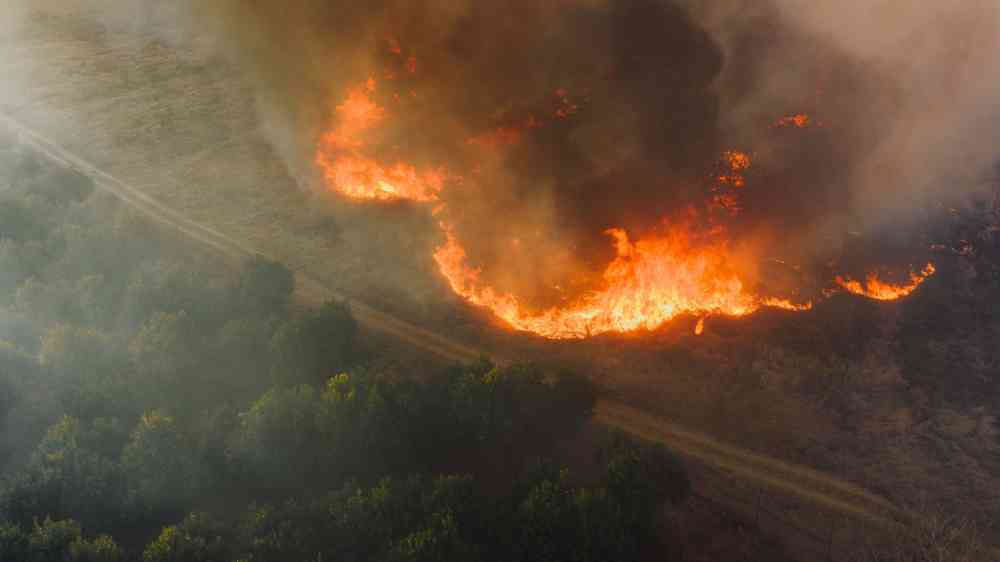
Aerial shot of a wildfire raging through a forest in Mpumalanga, South Africa.
Research briefs

Forest expansion and thickening after British colonization has created landscapes more prone to burning, amplifying the influence of climate change and propelling Australia’s bushfire crisis, a new study has found.

University of Melbourne