Research briefs

Keep up to date with the latest research on disaster risk and resilience on the PreventionWeb knowledge base.

Explore cutting-edge research on disaster risk reduction and resilience through PreventionWeb's dedicated research briefs section. Our platform curates and highlights the most recent academic studies, providing valuable insights into disaster risk management. Each research brief distills key findings from peer-reviewed journals and academic publications.

Submit a research brief.

These briefs are designed to keep you informed about the latest scientific advances. Links to the full publications are always included, ensuring easy access to in-depth knowledge. Please note that this section exclusively features academic research, distinct from reports by international organizations or Non-Governmental Organisations.

Uploaded on
Research briefs

The paper reveals rather than responding only when climate risks become urgent, it showcases how political momentum, public support, availability of resources, technological innovation and/or routine maintenance cycles may accelerate adaptation action

Deltares
Research briefs

Despite being the biggest carbon emitter, the US is already paying a disproportionate price for the climate crisis

British Broadcasting Corporation (BBC)
Research briefs

A study published in Science Advances reveals that sinking land — not just rising oceans alone — will be the main cause of future coastal flooding along Indonesia’s densely populated Java Island, putting millions at risk sooner than expected.

Virginia Tech
Flat, agricultural area in a valley flooded with water
Research briefs

Forests play a crucial and often underestimated role in reducing flood risk of all magnitudes, highlighting the need to integrate nature-based solutions with traditional infrastructure for more effective climate adaptation.

Conversation Media Group, the
Research briefs

Study covering five major economies finds smaller communities face the longest economic recoveries, with damage persisting for up to four months.

The Society for Risk Analysis (SRA)
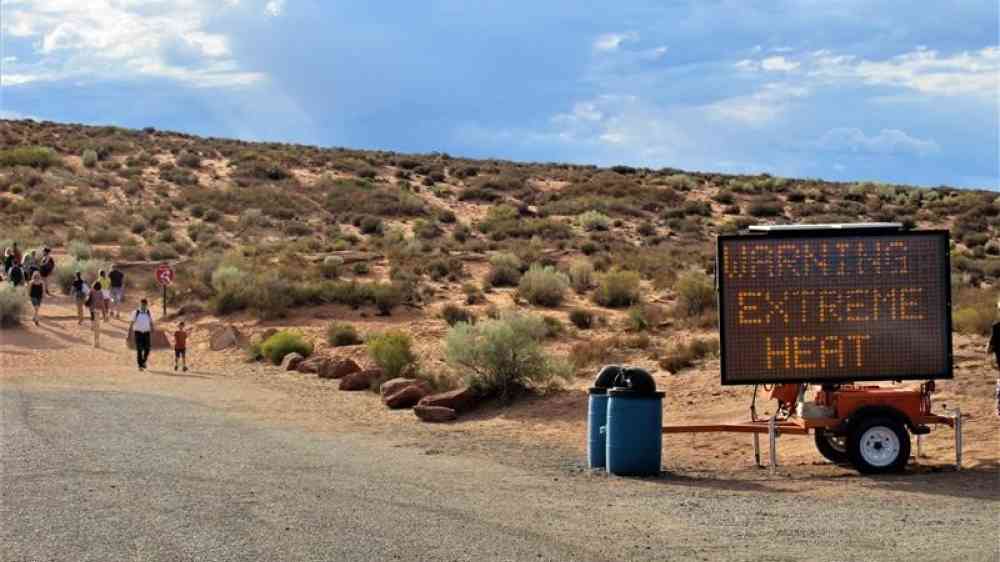
 Extreme heat danger sign by Horseshoe Bend touristic site
Research briefs

The increase may hit nearly 30% of the global population with extreme events more dangerous than heat or drought alone, especially in low-income tropical nations.

American Geophysical Union
Children doing outdoor activities in a school in China
Research briefs

In many countries across the Northern Hemisphere, school reopens in early autumn — a time that is supposed to offer a welcome break from the intense summer heat.

Institute of Atmospheric Physics, Chinese Academy of Sciences
Earthquake sign seismic richter scale
Research briefs

By combining the power of artificial intelligence with advanced physics simulations, a new framework called “SPIDER” allows us to map seismic activity with unprecedented clarity.

Eos - AGU