Research briefs

Keep up to date with the latest research on disaster risk and resilience on the PreventionWeb knowledge base.

Explore cutting-edge research on disaster risk reduction and resilience through PreventionWeb's dedicated research briefs section. Our platform curates and highlights the most recent academic studies, providing valuable insights into disaster risk management. Each research brief distills key findings from peer-reviewed journals and academic publications.

Submit a research brief.

These briefs are designed to keep you informed about the latest scientific advances. Links to the full publications are always included, ensuring easy access to in-depth knowledge. Please note that this section exclusively features academic research, distinct from reports by international organizations or Non-Governmental Organisations.

Uploaded on
Uncounted costs - heat
Research briefs

Considering that extreme heat events have been becoming increasingly frequent in recent decades and are also expected to do so in the future, effective control strategies to reduce ozone pollution risks are urgently needed.

Chinese Academy of Sciences
Research briefs

In this article, world-leading water specialists from academic and practitioner communities reflect on, and share examples of, the importance of keeping people and politics at the centre of work on climate resilient water security.

weADAPT
Research briefs

A new prediction method fueled by an MIT-derived algorithm helps forecast frequency of extreme weather.

MIT News, Massachusetts Institute of Technology
Research briefs

In a new study, researchers from the WSL Institute for Snow and Avalanche Research SLF show that in every third case, atmospheric drought is followed by low water levels. More rarely does drought have a negative impact on groundwater.

Swiss Federal Research Institute for Forest, Snow and Landscape Research (WSL)
Bird eyes view of Singapore City skyline in Singapore.
Research briefs

A real-world study by researchers at NTU Singapore has shown that the use of cool paint coatings in cities can help pedestrians feel up to 1.5 degrees Celsius cooler, making the urban area more comfortable for work and play.

Nanyang Technological University
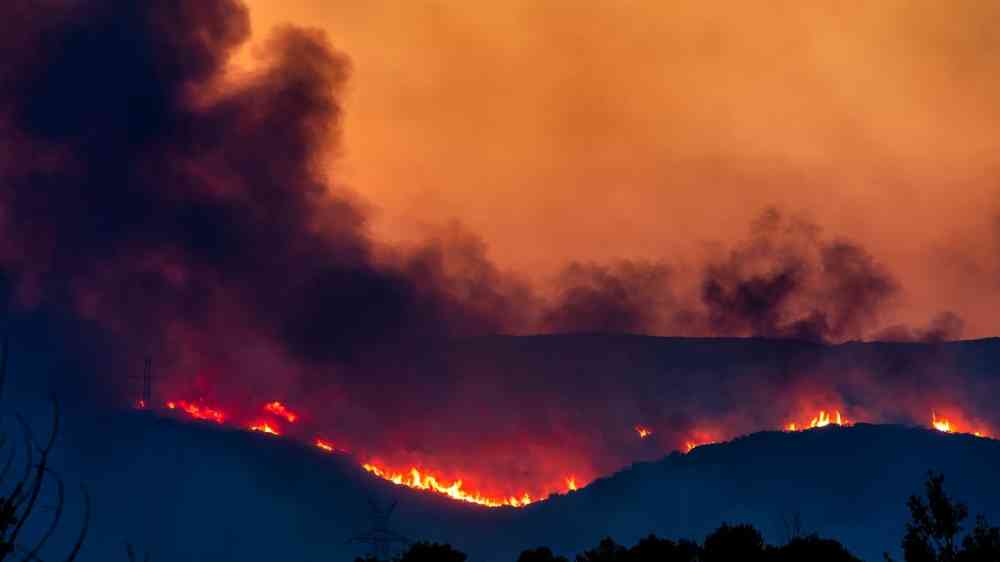
Forest fire in the prefecture of Evros in northern Greece, 21 August 2023
Research briefs

When forests aren’t allowed to burn, they become more dense, and dead branches, leaves and other biomass accumulate, leaving more fuel for the next fire. This buildup leads to more extreme fires that are even harder to put out.

Conversation Media Group, the
Research briefs

Scientists have been looking for better ways to make weather forecasts more accurate. Despite the maturity of ensemble numerical weather prediction (NWP), the resulting forecasts are still, more often than not, under-dispersed.

Institute of Atmospheric Physics, Chinese Academy of Sciences
Research briefs

An artificial intelligence (AI) model could improve the accuracy of flood forecasting, according to a new study published in Nature.

Springer