Research briefs

Keep up to date with the latest research on disaster risk and resilience on the PreventionWeb knowledge base.

Explore cutting-edge research on disaster risk reduction and resilience through PreventionWeb's dedicated research briefs section. Our platform curates and highlights the most recent academic studies, providing valuable insights into disaster risk management. Each research brief distills key findings from peer-reviewed journals and academic publications.

Submit a research brief.

These briefs are designed to keep you informed about the latest scientific advances. Links to the full publications are always included, ensuring easy access to in-depth knowledge. Please note that this section exclusively features academic research, distinct from reports by international organizations or Non-Governmental Organisations.
Uploaded on
Research briefs

Earth's air circulation systems, which help spread and disperse moisture and heat throughout the world, have been weakening over the years. New studies point to human activity.

Weizmann Institute of Science
Research briefs

Research, published in the journal Scientific Reports, highlights the substantial advantages of using AI models over conventional drought indices in predicting the causes and onslaught of conditions leading to scarcity of rain and water.

University Of Sharjah (UOS)
Research briefs

The average longest periods of drought could be ten days longer by the end of the century than previously predicted by climate models, according to research published in Nature.

Springer
Research briefs

A team of researchers from the CNRS and the Paris Institute of Planetary Physics1 has developed an innovative imaging method that can probe the bowels of a volcano with unparalleled resolution and depth.

Centre National de la Recherche Scientifique
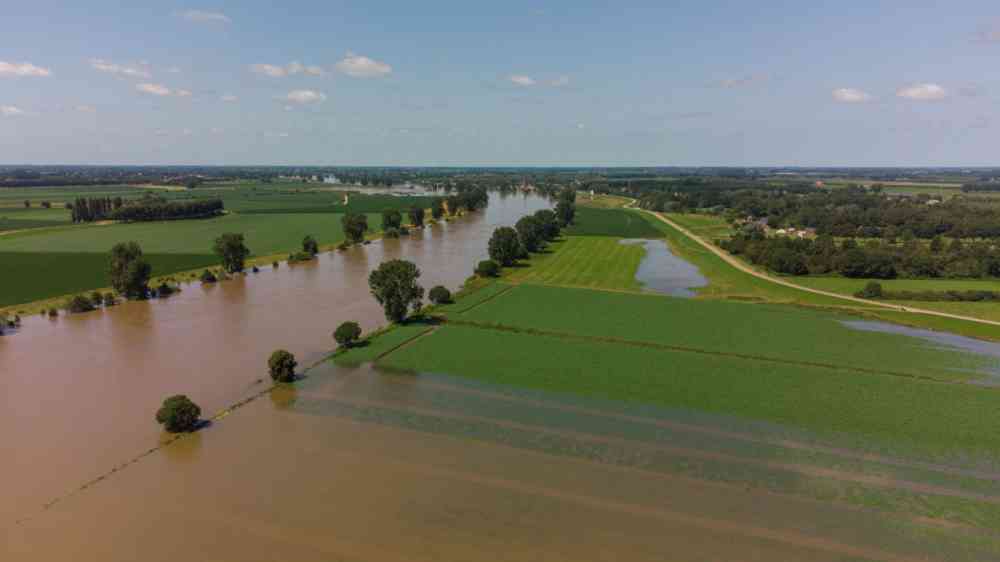
Flooded plain adjacent to a river
Research briefs

A new study uncovers evidence suggesting that, contrary to expectations, most U.S. cities are not doing too badly in avoiding development in areas prone to flooding.

Oxford University Press
Research briefs

Increased temperatures and drought are leading to more wildfires. And wildfire smoke aerosols can suppress precipitation, drying out soils and further increasing fire risk.

Eos - AGU
Research briefs

The researchers found that at a certain threshold point of the ocean mixed layer depth, the effect of surface winds on sea surface temperature cooling is reduced, leading to increasing surface temperatures that helps strengthen tropical cyclones.

PhysOrg, Omicron Technology Ltd
2020 floods in Wuhan China
Research briefs

This breakthrough study sheds light into the dangerous phenomenon of “river avulsion," a process that has shaped human history through devastating floods and continues to threaten millions of people worldwide.

Indiana University