Research briefs

Keep up to date with the latest research on disaster risk and resilience on the PreventionWeb knowledge base.

Explore cutting-edge research on disaster risk reduction and resilience through PreventionWeb's dedicated research briefs section. Our platform curates and highlights the most recent academic studies, providing valuable insights into disaster risk management. Each research brief distills key findings from peer-reviewed journals and academic publications.

Submit a research brief.

These briefs are designed to keep you informed about the latest scientific advances. Links to the full publications are always included, ensuring easy access to in-depth knowledge. Please note that this section exclusively features academic research, distinct from reports by international organizations or Non-Governmental Organisations.

Uploaded on
Research briefs

A team of climate scientists reveal how the ability to predict the WPSH has transformed over the past century. It has significantly improved since the 1960s and this is due to robust oceanic signals from the Indo-Pacific region.

Chinese Academy of Sciences
Hurricane Beryl as seen from space from the International Space Station
Research briefs

Destructive hurricanes followed by deadly heatwaves will become far more common by the end of this century, new research from Princeton University shows.

Princeton University
Research briefs

A research team from the Alfred Wegener Institute has for the first time gained insights into a current in the Barents Sea which affects Arctic sea ice

Alfred Wegener Institut
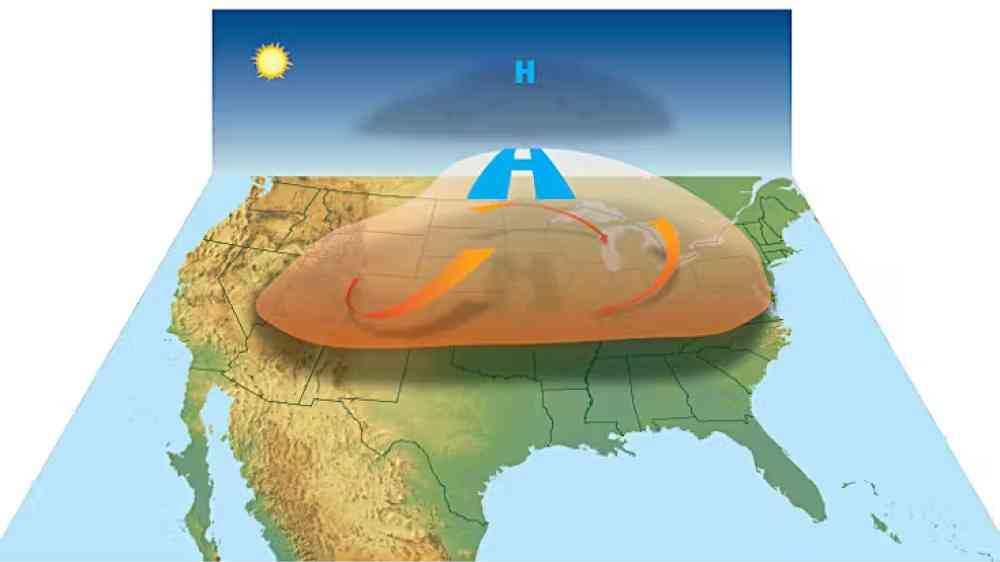
A diagram of a heat dome over a map of the continental USA.
Research briefs

The study finds that atmospheric patterns known to lock in extreme weather, like heat domes and flooding, have nearly tripled since the 1950s, and highlights a growing gap between real-world risks and what climate models currently capture.

University of Pennsylvania
Overview of a Lake Skadar in Montenegro
Research briefs

the study provides concrete numbers that give insight to water managers across the Western U.S. Researchers hope the results provide better direction on informing future planning efforts for increasing wildfire resilience.

Cooperative Institute for Research in Environmental Sciences (CIRES)
Cloudburst over green fields.
Research briefs

The areas covered by highly reflective clouds are shrinking. At the same time, the areas containing broken, less reflective clouds are growing. The net effect is that additional energy from sunlight is reaching Earth’s surface leading to extra heating.

Conversation Media Group, the
Research briefs

How does climate change affect the way humans organize themselves? How has it influenced the course of human evolution?

Université de Montréal
Pattern with warming stripes from Earth global average surface temperature
Research briefs

Human-caused greenhouse gas (GHG) emissions in 2024 continued to drive global warming to record levels.

Carbon Brief