Research briefs

Keep up to date with the latest research on disaster risk and resilience on the PreventionWeb knowledge base.

Explore cutting-edge research on disaster risk reduction and resilience through PreventionWeb's dedicated research briefs section. Our platform curates and highlights the most recent academic studies, providing valuable insights into disaster risk management. Each research brief distills key findings from peer-reviewed journals and academic publications.

Submit a research brief.

These briefs are designed to keep you informed about the latest scientific advances. Links to the full publications are always included, ensuring easy access to in-depth knowledge. Please note that this section exclusively features academic research, distinct from reports by international organizations or Non-Governmental Organisations.

Uploaded on
Research briefs

New research has for the first time tracked ice shelf, sea ice and ocean swell wave conditions over multiple years in the lead-ups to three large-scale iceberg ‘calving’ events in Antarctica, revealing common patterns

University of Melbourne
Research briefs

A patch of the Atlantic Ocean just south of Greenland is cooling while much of the world warms. The origin of this “cold blob” has been linked to weakening ocean currents that help regulate global climate.

Pennsylvania State University
A satellite map showing the floodwater depth map of Florida’s coast near Cape Coral
Research briefs

A group of researchers recently developed a computational model to streamline flood prediction in the continental United States, stating that their model offers predictions at unprecedented levels of efficiency and accuracy compared to traditional models.

Pennsylvania State University
Research briefs

As sea levels continue to rise, coastal areas face threats of submersion and increasing salinity.

Yale School of the Environment
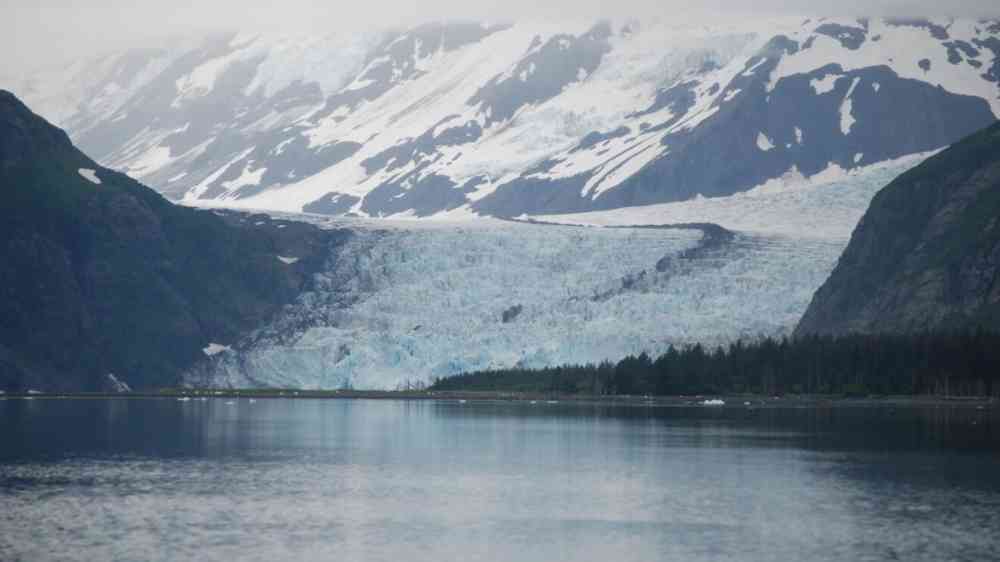
A view of Surprise Glacier from the ocean in western Prince William Sound, AK
Research briefs

Fine satellite monitoring offers novel way to track glacier melt, study finds

Ohio State University
Research briefs

Saltier surface water allows deep ocean heat to rise more easily, melting sea ice from below. It's a dangerous feedback loop: less ice leads to more heat, which leads to even less ice.

University of Southampton, the
Panoramic overview of Santorini, Thira, Greece, over the Caldera, the volcano crater, and Aegean sea.
Research briefs

Magma movement is often guided by structural features of the crust, like cracks in the fault system, which means future volcanic unrest may occur outside traditional volcanic centers.

University of Oregon
Research briefs

AI can assist early warning systems that predict impacts of extreme weather events such as droughts and heavy rainfall

The Max Planck Society for the Advancement of Science (Max Planck Society)