
Common challenges and practical recommendations

Advances in technology are enabling false information to spread at an unprecedented speed and scale.
In disasters, timely and accurate information saves lives. Yet the same conditions that make communication vital — confusion, fear, and uncertainty — also make it fragile. As situations evolve rapidly and emotions run high, disasters become fertile ground for information pollution. Misinformation and disinformation are now recognized as major global risks. The UN Global Risk Report* lists misinformation and disinformation as the top current global risk.
Misinformation and disinformation in disaster risk communication can significantly increase disaster risk by causing confusion and eroding credibility and trust in disaster risk management practices and disaster responses.
The UN Global Risk Report* lists misinformation and disinformation as the top current global risk.
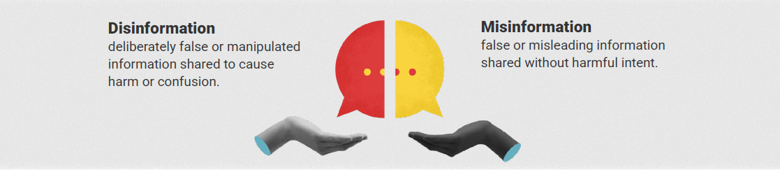
For example, misinformation about the severity and timing of natural hazards can lead to delayed evacuations and inadequate preparations – or alternatively heightened stress and fear through unnecessarily alarmist content. Inaccurate reports about evacuation routes and shelter locations can lead to dangerous decisions around relocation. Misleading information about the extent of damage or aid availability can also hamper disaster recovery efforts.
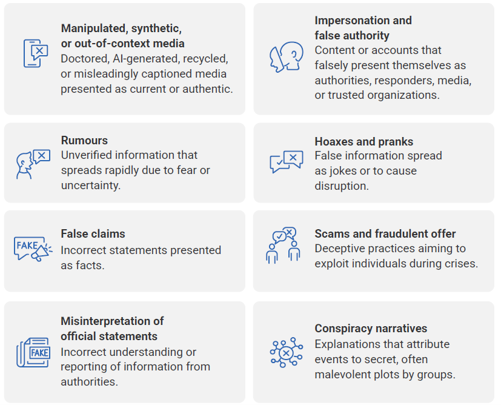
Box 1. Common forms of harmful information in disasters
What drives harmful information in disasters?
- Structural and information environment factors
- Technological and platform dynamics
- Human and cognitive factors
- Deliberate creation and amplification by actors
Harmful information must be addressed before, during and after crisis.
Before the crisis
Integrate harmful information into risk communication strategies
Build trust and strengthen communication presence before crises
Build partnerships and strong community networks
Establish crisis communication readiness
During the crisis
Monitor the information environment
Keep it simple and actionable
Adapt your format
Acknowledge emotions
Help people move from fear to action
Ensure clear source attribution and traceability
Help people move from fear to action
Communicate under uncertainty
Test and adjust messages over time
Use trusted messengers
Inoculate against false narratives
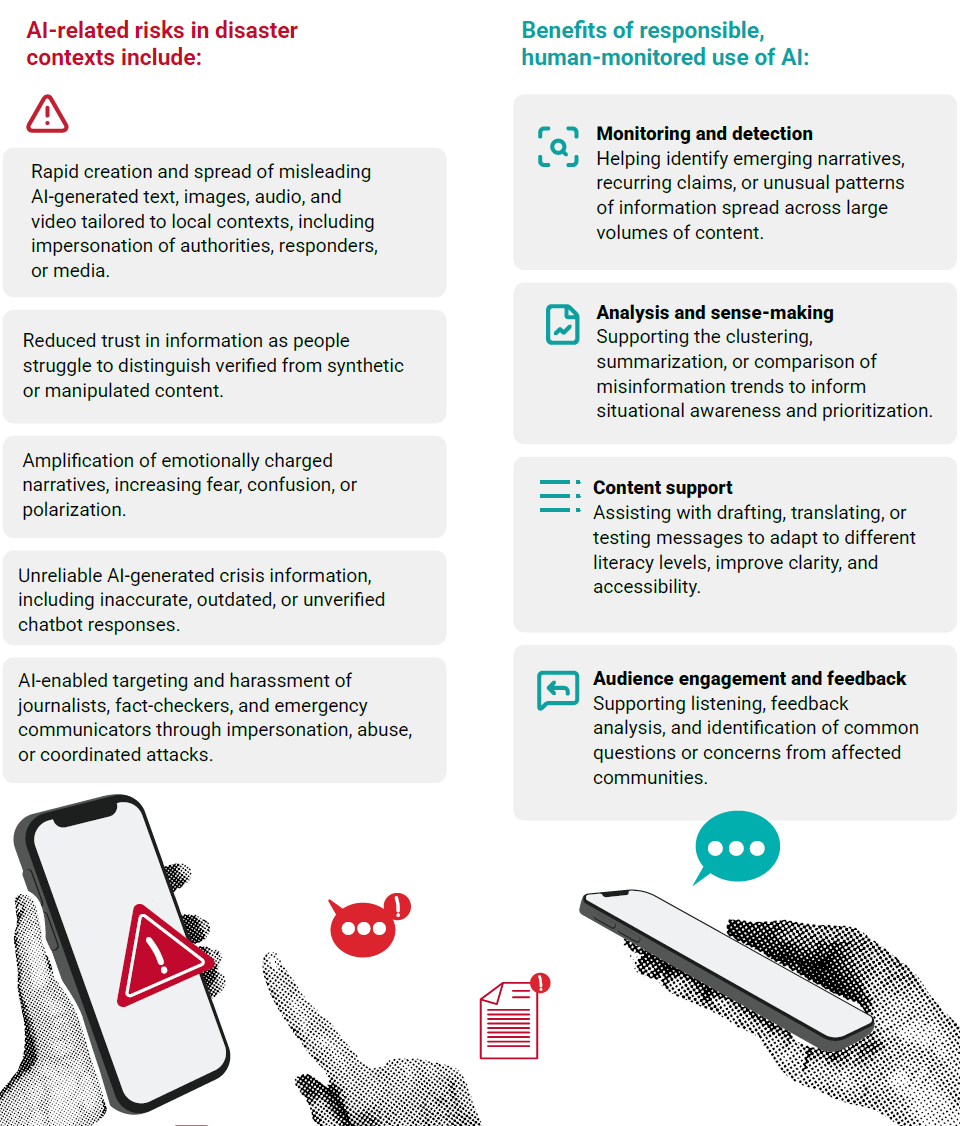
Box 2. Artificial intelligence and harmful information in disasters
Responding to harmful information
- Act quickly and keep a steady cadence
- Lead with action, acknowledge emotions
- Correct without repeating the falsehood
- Leverage the crowd
After the crisis
Ask the questions:
What happened in the information environment?
How was harmful information addressed in practice?
What worked well and what did not?
What was the impact of communication efforts?
How did coordination and systems perform?
What should change for next time?